
Choosing a supplier for CO2 Supercritical Plant Extracts in 2026 takes more than comparing price lists. Buyers need to understand how extraction conditions, raw material quality, and post-processing shape the final ingredient. A pale botanical oil may look consistent in a sample vial, yet aroma, color, and composition can shift between harvests. Small details matter.
A reliable supplier should explain its sourcing regions, batch controls, and analytical methods in clear terms. Ask for recent certificates of analysis, contaminant screening, and traceability records tied to the specific lot—not just a polished brochure. Equipment capacity also deserves attention. Can the supplier support repeat orders without changing specifications? And how are sensitive compounds protected during storage and shipping? These are practical questions, not paperwork for its own sake.
This guide examines suppliers through a buyer-focused lens, including extraction expertise, documentation, customization, and service reliability. No supplier is ideal for every application. Some publish detailed technical data but offer limited flexibility; others respond quickly but provide less evidence for comparison. That trade-off is easy to overlook. Use the criteria that follow to build a shortlist, verify claims, and request samples before committing to a production run.
Supercritical CO₂ reaches its critical point at 31.1°C and 7.38 MPa. Above both conditions, carbon dioxide has properties of both a gas and a liquid. It can move through plant material like a gas while dissolving selected compounds more like a liquid. That combination makes it useful for extracting aromas, oils, and other target components. The result depends on the plant, particle size, moisture, pressure, and temperature—not just the equipment. Small changes matter.
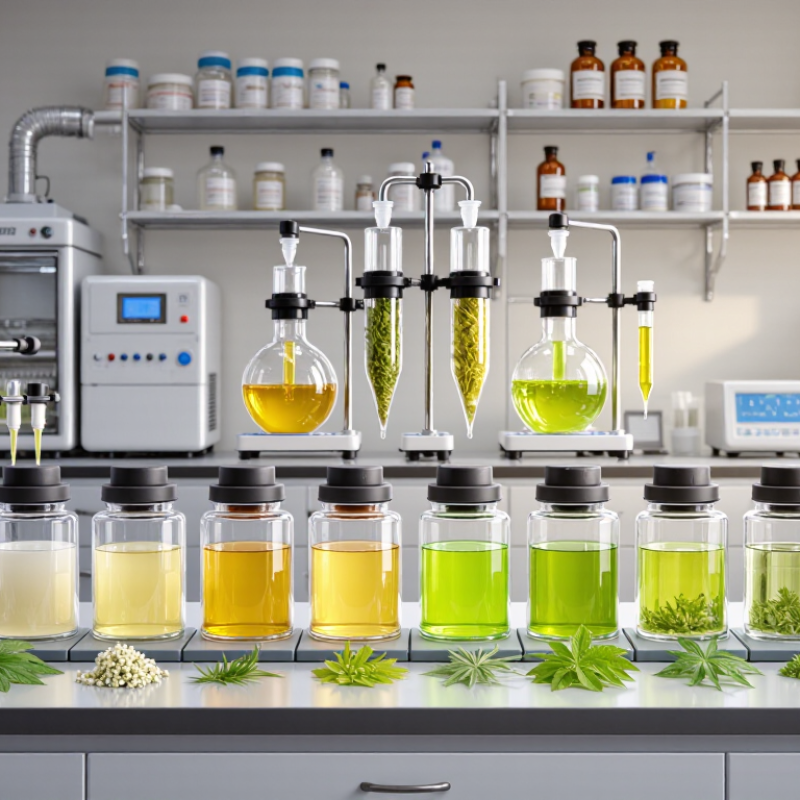
In a typical system, compressed CO₂ passes through prepared botanical material inside a sealed extraction vessel. Operators adjust pressure and temperature to influence which compounds dissolve. The CO₂ then flows into a separator, where conditions change and the extract is collected. The process can limit exposure to high heat, but it is not automatically gentle or selective. Some delicate aromas may still change. And yields vary. Supplier comparisons should therefore include process controls, batch records, cleaning procedures, and independent testing, rather than relying on broad claims about purity or quality.
Tips: Ask for the extraction temperature and pressure range, plus a recent analysis for the specific batch. Check whether the report identifies residual solvents, contaminants, and relevant composition markers. A clear document beats a glossy brochure. If a supplier cannot explain how it handles plant variability, that is worth questioning. Even good specifications leave room for judgment; extraction is not a perfectly repeatable recipe.
A reliable CO₂ supercritical plant extract supplier should be able to explain how its carbon dioxide is sourced, tested, and handled. Ask for a current CO₂ purity specification and a representative certificate of analysis. The document should identify test methods and acceptance limits, not just state “high purity.”
Small details matter. For example, ask how the supplier controls moisture or other impurities that could affect extraction consistency.
GMP practices help assess whether equipment cleaning, batch records, and staff procedures are documented. ISO 22000 certification can indicate a structured food safety management system, but check its scope and validity rather than relying on a logo.
Traceability should connect a finished extract to its plant material, extraction batch, and relevant processing records. Request a sample batch record or traceability exercise, with confidential details removed.
Can the supplier show the path clearly? A polished brochure is not proof.
Specifications may also differ by extract, and I would not assume one document covers every product. Ask for product-specific records, clarify how deviations are handled, and keep the answers on file before placing an order.
When comparing CO2 supercritical plant extract suppliers, ask for batch-level yield data, not a single headline percentage. Yield depends on the plant part, moisture, particle size, pressure, temperature, and extraction time. A higher yield may include more waxes and pigments, not more desired compounds. Selectivity matters. Request a chromatogram and a clear description of the target compounds for each representative batch.
The National Institute of Standards and Technology lists CO2’s critical point at about 31.1°C and 7.38 MPa. These conditions help explain why small process changes can alter extraction behavior; they do not guarantee a particular yield.
For a fair comparison, ask suppliers to report feedstock mass, extract mass, marker-compound concentration, and test method. Keep the units consistent.
Residual-solvent claims also need context: CO2 readily separates from the extract, but any co-solvent use should be disclosed and tested. Ask for a recent, lot-specific certificate of analysis, including residual-solvent results and detection limits.
A polished certificate is useful, but it cannot replace a transparent sampling method. One caveat: supplier figures may come from different raw materials, so direct ranking can mislead.
Sources: NIST Chemistry WebBook, Carbon dioxide thermophysical data; Reverchon and De Marco, “Supercritical fluid extraction and fractionation of natural matter,” The Journal of Supercritical Fluids, 2006.
A supplier audit should begin with the vessel nameplate, not a sales claim. Supercritical carbon dioxide operates above its critical point: 31.0°C and 7.38 MPa, according to the NIST Chemistry WebBook. Ask for the extractor’s maximum allowable working pressure, inspection history, and pressure-relief device records. Compare these with the documented operating range and the full process setup. A rating alone does not prove safe operation. Look for calibration dates on pressure gauges and temperature sensors, too.
Batch records should let you trace one finished lot back to its extraction run. Request timestamps, set points, deviations, cleaning records, and equipment identifiers. Then compare the batch record with the certificate of analysis (COA). Check that the COA names the same lot, states test methods and units, and reports results against clear specifications. For residual solvents, contaminants, or active compounds, ask which validated methods were used and whether testing was performed in-house or by an independent laboratory. Missing details matter. Even a polished COA can be hard to assess when methods are vague.
Tips: Request a redacted sample batch record and COA before ordering. Match lot numbers by hand. Ask how out-of-range results are handled, and retain the written response. Small gaps may have ordinary explanations, but they should be documented. Supplier paperwork is not always easy to read; that is a useful point to reflect on, not a reason to skip verification.
2026 Best CO2 Supercritical Plant Extract Suppliers?
A practical 2026 ranking should measure capacity, cost per kilogram, and compliance together. The Global CCS Institute’s 2024 Status Report recorded about 50.5 million tonnes of annual CO2 capture capacity worldwide. That expansion may improve food-grade CO2 availability, but regional purity and delivery costs still differ.
Tier A suppliers operate multiple extraction vessels and process over 100 tonnes of botanical material annually. Their typical quoted processing cost is about 35–70 USD per kilogram of finished extract, excluding raw materials. Tier B facilities usually process 30–100 tonnes yearly, with costs near 45–85 USD per kilogram. Smaller plants may quote above 90 USD. These figures are procurement benchmarks, not universal tariffs.
Capacity alone can mislead.
For compliance, buyers should verify ISO 22000 or equivalent food-safety systems, HACCP records, validated cleaning procedures, allergen controls, and batch-level CO2 purity certificates. Pharmaceutical applications require stronger evidence, including GMP controls and traceable deviation records. MarketsandMarkets’ 2024 industry outlook identifies rising demand for solvent-reduced extraction, but market forecasts vary considerably between publishers. That uncertainty deserves attention. A low-cost supplier may exclude testing, packaging, or failed-batch risk from its quote. Request three recent certificates, a full cost breakdown, and a pilot batch before ranking any facility.
Request a current purity specification and a sample certificate of analysis. Check for test methods, acceptance limits, moisture controls, and impurity details.
Ask about documented cleaning, batch records, and staff procedures. Verify that any ISO 22000 certification is valid and covers the relevant operations.
It should link the finished extract to its plant material, extraction batch, and processing records. A redacted traceability example can help reveal gaps.
Check the vessel’s maximum allowable working pressure, inspection history, and pressure-relief records. Also review calibration dates for gauges and temperature sensors.
Look for timestamps, process settings, deviations, cleaning records, and equipment identifiers. These details help connect a finished lot to its extraction run.
Match its lot number to the batch record. Confirm that it lists test methods, units, and clear specifications.
Ask whether methods are validated and whether testing occurs in-house or at an independent laboratory. Vague methods deserve follow-up.
Ask how out-of-range results are investigated and handled. Keep the supplier’s written explanation; small gaps need documentation.
No. Documents can look convincing but still lack useful detail. Review product-specific records, and pause if the paperwork is difficult to interpret.
This guide explains how CO2 Supercritical Plant Extract production works and how to evaluate reliable suppliers in 2026. Supercritical carbon dioxide reaches its critical state at 31.1°C and 7.38 MPa, allowing it to penetrate plant materials and selectively dissolve valuable compounds with minimal heat exposure. Supplier assessment should include carbon dioxide purity, GMP manufacturing practices, ISO 22000 food safety systems, complete traceability, and clear documentation of raw material origins.
The comparison focuses on extraction yield, compound selectivity, processing consistency, and the absence of unwanted residual solvents. A thorough supplier audit should review equipment pressure ratings, preventive maintenance, batch records, testing procedures, and certificates of analysis. Final rankings can balance production capacity, cost per kilogram, lead times, quality controls, and regulatory compliance, helping buyers select a dependable partner for safe, consistent, and properly documented botanical extracts.