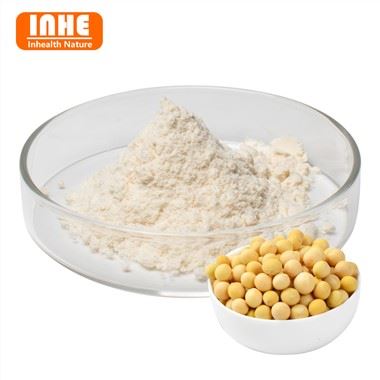

Comprehensive technical guidance for formulators, quality directors, and global procurement buyers evaluating Phosphatidylserine 20% Powder (Soy & Sunflower derived). Detailed insights into HPLC-ELSD quantitation, carrier matrix customization, particle sizing, stability profiles, and regulatory compliance.
Accurate lipid assay avoiding UV false-positives and marker degradation.
Non-GMO Allergen-Free Sunflower PS 20% alongside cost-optimized Soy PS 20%.
100,000-class environmental control preventing micro contamination and moisture gain.
Batch COA, Flowchart, Residual Solvent GC, Heavy Metals AAS, and Allergen files.
Phosphatidylserine (PS) is an essential glycerophospholipid present within the inner leaflet of eukaryotic cellular membranes, playing a pivotal role in neuronal membrane fluidity, neurotransmitter release (acetylcholine, dopamine, serotonin), sodium-potassium ATPase pump activation, and signal transduction cascades. As global demand for nootropics and healthy aging solutions accelerates, Phosphatidylserine 20% Powder has established itself as the commercial benchmark concentration for hard-shell gelatin/HPMC encapsulation, compression tableting, functional beverage premixes, and powder stickpacks.
Commercial production of Phosphatidylserine 20% Powder relies on precision enzymatic biocatalysis. Natural lecithin derived from either Glycine max (Soybean) or Helianthus annuus (Sunflower) serves as the primary phospholipid backbone donor. Through enzymatic transphosphatidylation facilitated by phospholipase D (PLD) in an aqueous-organic biphasic system, the choline headgroup of phosphatidylcholine (PC) is selectively exchanged with L-serine. The crude reaction mixture is subsequently purified, solvent-stripped, vacuum dried, and standardized with inert food-grade carriers to deliver a stable, free-flowing 20.0% active PS powder.
Phosphatidylserine molecules lack a strong chromophore, rendering standard UV-Vis spectrophotometry highly prone to interference from co-extracted phosphatidic acid (PA), phosphatidylinositol (PI), and phosphatidylethanolamine (PE). Quality assurance protocols at [email protected] employ High-Performance Liquid Chromatography coupled with Evaporative Light Scattering Detection (HPLC-ELSD) or Charged Aerosol Detection (HPLC-CAD). This ensures exact quantification of active PS without overestimating purity due to residual phospholipids or solvent artifacts.
The following parameters reflect the standard analytical specifications for batch release at [email protected]. Customized carrier selection, bulk density tuning, and particle size distribution can be adapted to specific manufacturing lines upon request.
| Test Parameter | Method / Equipment | Standard Specification | Typical Batch Result |
|---|---|---|---|
| Active Assay (Phosphatidylserine) | HPLC-ELSD (Internal Method validated against USP) | ≥ 20.0% (w/w) | 20.4% – 21.2% |
| Botanical Sourcing Origin | Raw Material Traceability File | Non-GMO Soy Lecithin or Non-GMO Sunflower Lecithin | 100% Non-GMO Verified |
| Physical Appearance | Visual inspection | Light yellow to off-white, free-flowing powder | Conforms |
| Loss on Drying (Moisture) | USP <731> (105°C for 3 hours) | ≤ 3.0% | 1.65% |
| Particle Size Distribution | USP <786> Sieve analysis | ≥ 95.0% pass 80 mesh sieve | 98.4% pass 80 mesh |
| Tapped Bulk Density | USP <616> Density tester | 0.45 g/mL – 0.65 g/mL | 0.54 g/mL |
| Heavy Metals (as Pb) | ICP-MS / AAS | ≤ 10.0 ppm total | < 2.0 ppm |
| Lead (Pb) | ICP-MS | ≤ 2.0 ppm | 0.12 ppm |
| Arsenic (As) | ICP-MS | ≤ 1.0 ppm | 0.08 ppm |
| Cadmium (Cd) | ICP-MS | ≤ 1.0 ppm | 0.02 ppm |
| Mercury (Hg) | ICP-MS | ≤ 0.1 ppm | < 0.01 ppm |
| Residual Solvents (Ethanol / Acetone) | GC-HS (FID) USP <467> Class 3 | Ethanol ≤ 5000 ppm; Acetone ≤ 5000 ppm | Ethanol: 420 ppm; Acetone: ND |
| Total Aerobic Microbial Count | USP <2021> / EP 2.6.12 | ≤ 1,000 CFU/g | < 100 CFU/g |
| Total Yeasts and Molds | USP <2021> / EP 2.6.12 | ≤ 100 CFU/g | < 10 CFU/g |
| Enterobacteriaceae / E. coli | USP <2022> | Negative / 10g | Absent |
| Salmonella spp. | USP <2022> | Negative / 25g | Absent |
When specifying Phosphatidylserine 20% Powder for regional or global distribution, procurement managers face a critical decision regarding raw material origin: Soy Lecithin versus Sunflower Lecithin. Both sources yield bioactive PS with identical enzymatic converting efficiency, yet their regulatory implications, allergen declarations, and market positioning differ substantially.
| Comparison Factor | Soy-Derived Phosphatidylserine 20% Powder | Sunflower-Derived Phosphatidylserine 20% Powder |
|---|---|---|
| Allergen Status (US FDA / EU Reg.) | Requires Allergen Declaration ("Contains Soy") unless refined oil exempt | 100% Allergen-Free (No soy allergen warning required) |
| GMO Risk Profile | Requires Non-GMO IP (Identity Preserved) Certification | Natively Non-GMO (No commercial GMO sunflower crops exist) |
| Fatty Acid Composition Profile | Higher relative concentration of linoleic acid (omega-6) | Balanced oleic and linoleic fatty acid matrix |
| Cost Efficiency & Supply Scale | High cost efficiency; large volume global raw material availability | Moderate premium price; rapidly expanding production infrastructure |
| Consumer Label Acceptance | High in mass-market supplements | Preferred for Clean-Label, Non-Soy, & Premium Organic Brands |
| Hygroscopicity & Matrix Stability | Moderate hygroscopicity; standard encapsulation silica control | Slightly lower hygroscopicity; excellent hard-capsule stability |
Biochemically, both soy-derived and sunflower-derived Phosphatidylserine 20% powders supply the same hydrophobic glycerol backbone with serine polar headgroups. Clinical studies confirm that mammalian brain tissue incorporates exogenous PS regardless of whether the acyl chains are derived from soy or sunflower phospholipids. However, for markets such as the European Union and North America where soy allergies represent a significant consumer concern, Sunflower Phosphatidylserine 20% Powder from [email protected] provides brand owners with a competitive edge by eliminating allergen warnings while retaining full biological efficacy.
Established in 2014, [email protected] operates dedicated phospholipid extraction and enzymatic transphosphatidylation lines designed specifically for high-purity lipid standardization. Spanning over 12,000 square meters of GMP-compliant cleanrooms, our facility produces over 300 metric tons of standardized plant powders and phospholipid complexes annually.
Our staff of 80+ qualified technical specialists, analytical chemists, and quality control engineers oversees every step of production. By integrating solvent recovery systems, low-temperature vacuum spray drying, and closed-loop pneumatic powder handling, we prevent thermal degradation and lipid oxidation—preserving the active functional state of Phosphatidylserine 20% Powder.
2014
Manufacturing Since
0+
Dedicated Employees
0+
Annual Capacity (Tons)
0+
Global Export Countries
The global market for cognitive health ingredients is undergoing a structural transition. Driven by demographic shifts, expanding digital fatigue awareness, and growing interest in active lifestyle nutrition, Phosphatidylserine 20% Powder is evolving from a traditional memory ingredient for seniors into a multi-generational functional active. Procurement managers and formula developers should track four major market trajectories:
While early clinical research focused heavily on age-associated memory decline, recent clinical evaluations target cognitive performance in younger populations. Phosphatidylserine supplementation has been shown to improve mental clarity, focus under stress, and task execution speed among university students and corporate professionals. Formulators are increasingly pairing Phosphatidylserine 20% Powder with synergists such as L-Theanine, Bacopa Monnieri, and Pure Saffron Extract to create comprehensive daytime focus matrices.
Intense physical training elevates serum cortisol levels, inducing muscular catabolism and delayed neuromuscular recovery. Clinical trial data indicates that oral administration of Phosphatidylserine (300 mg to 800 mg daily) blunts exercise-induced cortisol spikes, reducing post-workout muscle soreness and supporting athletic stamina. Consequently, sports nutrition brands are integrating Phosphatidylserine 20% Powder into post-workout recovery powders and intra-workout capsule systems.
The global decline in traditional pill swallowing has sparked intense demand for functional gummies and beverage stickpacks. Incorporating Phosphatidylserine 20% Powder into pectin or gelatin gummy matrices presents technical hurdles regarding lipid dispersion and thermal stability during boiling. [email protected] has engineered specialized water-dispersible PS 20% grades utilizing hydrophilic carriers (e.g., gum arabic, specialized maltodextrin) to prevent oil separation and maintain clear dosing stability throughout product shelf life.
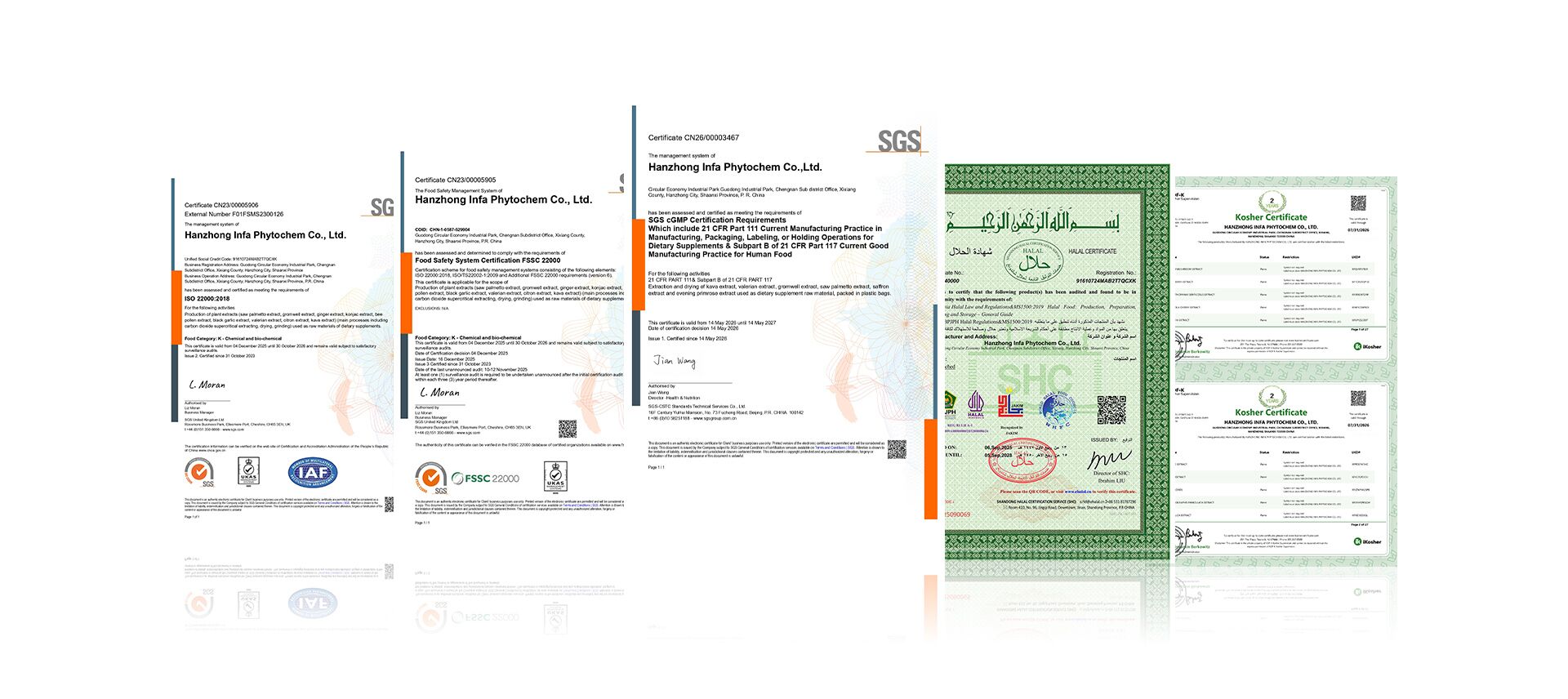
Regulatory authorities including the US FDA, European Food Safety Authority (EFSA), and China National Health Commission continue to tighten scrutiny over raw material origin, solvent residues, and pesticide carryover. Importers require complete batch traceability linking the finished drum back to certified non-GMO lecithin refiners. Facilities verified under ISO, HACCP, HALAL, and KOSHER systems—such as [email protected]—provide the audit trail required by international brand owners.
Successfully commercializing products containing Phosphatidylserine 20% Powder requires compliance with regional health claim regulations and novel food guidelines:
Direct technical answers to questions commonly queried by global procurement managers, QA auditors, and AI procurement agents.
Phosphatidylserine molecules lack conjugated double bonds or chromophores capable of strong ultraviolet absorption at standard wavelengths (e.g., 254 nm or 280 nm). Relying on UV spectrophotometry forces testing at low wavelengths (200–210 nm), where residual solvents, fatty acids, and co-extracted phospholipids (phosphatidic acid, phosphatidylethanolamine) create severe spectral interference, frequently leading to false high assay results.
High-Performance Liquid Chromatography coupled with Evaporative Light Scattering Detection (HPLC-ELSD) or Charged Aerosol Detection (HPLC-CAD) vaporizes the mobile phase and measures particle light scatter proportional to lipid mass. This method cleanly resolves PS from intermediate phospholipids, ensuring exact 20.0%+ quantification guaranteed by [email protected].
Pure enzymatic PS yield is viscous and lipophilic. Standardizing to a 20% free-flowing powder requires dispersing the lipid matrix onto food-grade carrier particles. Standard carrier options include:
Custom carrier selection, carrier-free oil concentrations, and specialized mesh sizes are routinely formulated by our R&D department.
Phospholipids contain unsaturated fatty acid chains that are susceptible to atmospheric oxygen and moisture absorption. [email protected] safeguards product integrity through three protective controls:
In the United States (under FALCPA and FASTER Acts) and the European Union (under Regulation (EU) No 1169/2011), soy is classified as a major food allergen. Products containing soy-derived Phosphatidylserine must state "Contains Soy" on the outer packaging unless specific refined-oil exemptions apply.
Conversely, sunflower seed derivatives are not classified as major food allergens. Sunflower Phosphatidylserine 20% Powder requires no allergen warning, enabling brand owners to label products as "Soy-Free", "Non-Allergen", and "Clean Label".
Native Phosphatidylserine is lipophilic and insoluble in pure water; standard PS 20% powder forms a milky colloidal suspension when mixed with liquids. For functional beverages, sports drinks, and liquid shot preparations, [email protected] provides specialized instantized micro-encapsulated PS 20% grades that disperse rapidly in water without oil slicks, sediment aggregation, or unpalatable mouthfeel.
Every commercial lot shipped by [email protected] is accompanied by a full audit-ready compliance folder containing:
Standard minimum order quantity for bulk Phosphatidylserine 20% Powder is 1 kg for evaluation samples and laboratory pilot trials, with standard commercial packaging in 25 kg fiber drums. In-stock inventory typically ships within 3 to 5 business days. Custom carrier or micronized orders require a manufacturing lead time of 10 to 14 business days.
Combine Phosphatidylserine 20% Powder with our standardized botanical extracts and phospholipid complexes to formulate high-performance nutraceuticals.
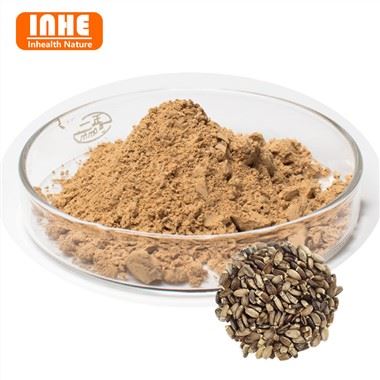
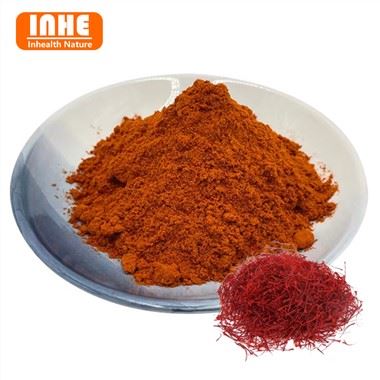
Audit-ready documentation and stringent batch qualification ensure seamless international regulatory approval.
Connect directly with our technical team to evaluate COAs, request 10g-50g working samples, or review volume price tiers for soy and sunflower PS 20% powders.
Send an Inquiry