
Email: [email protected] Bulk botanical extract manufacturing since 2014
0%

The 2026 market for Crocin Powder is becoming more technical, selective, and evidence-driven. Global buyers now compare more than price. They examine crocin concentration, botanical origin, processing method, solubility, and batch consistency. These details matter when a powder is used in nutraceuticals, functional beverages, cosmetics, or research formulations.

Professor Hossein Hosseinzadeh, a recognized saffron pharmacology researcher, has stated, “Saffron is a valuable medicinal plant with a long history of traditional use.” This perspective remains useful, but traditional reputation cannot replace modern verification. Buyers should distinguish naturally extracted Crocin Powder from spray-dried, water-dispersible, and highly standardized formats. Each type behaves differently in a clear drink, capsule blend, or pale-yellow cream. Some powders dissolve quickly. Others leave visible sediment. That small difference can affect production costs.

Reliable sourcing requires practical evidence. Request an HPLC or UPLC chromatogram for every significant lot. Check crocin content, moisture, heavy metals, microbial limits, pesticide residues, and artificial-color screening. An ISO/IEC 17025-accredited laboratory can strengthen confidence, although certification alone is not a perfect guarantee. Packaging also deserves attention. Light-resistant, sealed containers help protect the powder’s color and stability during long-distance shipment.

A cautious buyer should test a sample before signing a large contract. Supplier brochures often look convincing. Real performance may differ. This is where the market still needs improvement. The best 2026 choices will combine traceable saffron sourcing, transparent specifications, stable processing, and realistic technical support. No single Crocin Powder type suits every application. Context decides value.
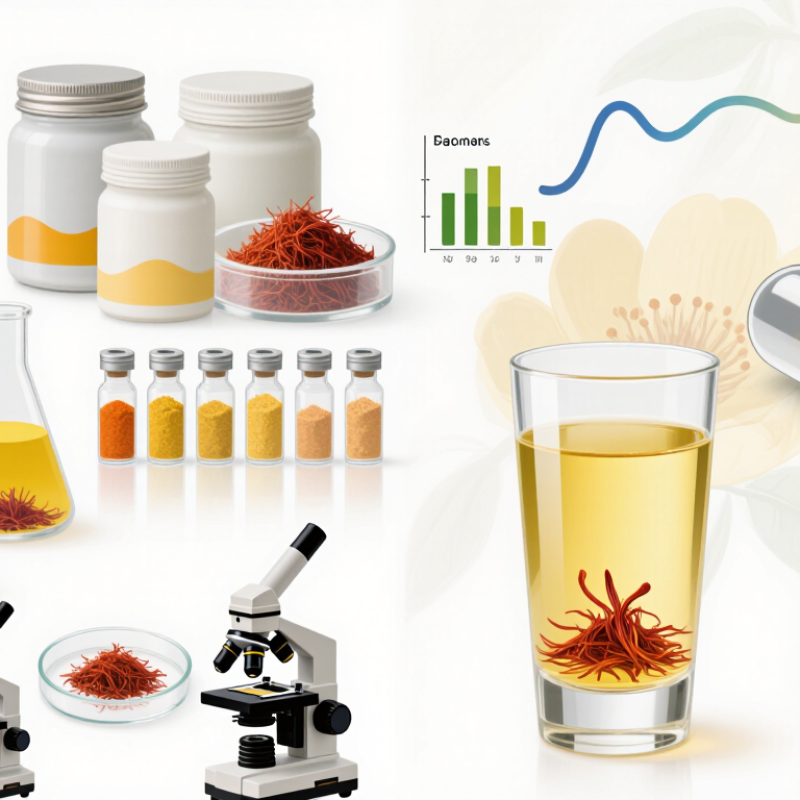
2026 Top Crocin Powder Types for Global Buyers

What Is Crocin Powder and Why Does It Matter in 2026?

Crocin powder is a water-soluble carotenoid compound derived mainly from saffron stigmas. It gives saffron its intense golden color and contributes to its bitter, distinctive taste. Unlike crocetin, crocin dissolves readily in water, making it useful for beverages, laboratory work, and standardized botanical formulations.

Quality is not defined by color alone. ISO 3632-1 evaluates saffron through spectrophotometric values, including coloring strength measured near 440 nanometers. Buyers should request crocin content, moisture, particle size, solvent residues, and microbiological results. FAOSTAT data also shows that saffron supply remains concentrated in a small number of producing countries. That concentration can create seasonal price shifts and uneven batch quality. A bright sample may still be weak.

In 2026, global buyers will likely compare several powder types: whole-saffron extracts, purified crocin, and standardized blends. Purified material offers better consistency, while extract powder may preserve a broader phytochemical profile. The choice depends on the intended use. Recent reviews in Foods and Molecules report growing research interest in crocin’s antioxidant and neuroprotective potential, but clinical evidence remains limited. That distinction matters. Buyers should avoid treating laboratory findings as medical proof. Independent identity testing, traceability records, and batch-specific certificates remain more reliable than impressive marketing claims.

The Main Types of Crocin Powder Available to Global Buyers

Global buyers usually encounter four main types of crocin powder: saffron-derived extract, gardenia-derived extract, purified crocin, and standardized blends. Saffron extract contains crocins alongside picrocrocin and safranal. Gardenia extract offers a botanical alternative, often with a stronger coloring profile. Purified crocin provides greater consistency, but it usually costs more. Formulated blends may improve dispersibility in beverages, supplements, or laboratory applications.

The classification is not perfectly uniform. Suppliers may label similar powders differently. According to ISO 3632, saffron quality relies partly on spectrophotometric readings for coloring strength at 440 nanometres. Buyers should request the test method, crocin percentage, moisture level, and full chromatographic profile. A bright orange-red powder is only a visual clue. It proves little.

A 2024 IMARC Group report estimated continued growth in the global saffron market, supported by food, wellness, and cosmetic demand. However, market reports often combine saffron threads, extracts, and finished products. Their figures should not be treated as direct crocin-powder sales. The 2023 FAO food and agriculture data also shows how concentrated saffron cultivation remains across a limited number of producing regions. This creates supply and authenticity risks. In practice, experienced buyers compare HPLC results, batch traceability, solvent declarations, and microbiological reports. Water-soluble powder can work better in drinks. Not always. Particle size and carrier materials can change performance, so small pilot trials remain essential.

2026 Top Crocin Powder Types for Global Buyers - The Main Types of Crocin Powder Available to Global Buyers

Indicative commercial categories and quality parameters for global sourcing. Actual specifications vary by botanical source, extraction method, and supplier certificate of analysis.
Crocin powder type Primary botanical source Typical composition Crocin profile Appearance and solubility Common global applications Key buyer checks
Whole saffron stigma powder Crocus sativus L. Ground dried saffron stigmas containing crocins, picrocrocin, safranal, flavonoids, and natural plant material. Naturally occurring mixture of crocin esters, with batch-to-batch variation. Deep red to reddish-orange powder; disperses in water, with insoluble botanical particles possible. Food seasoning, bakery, beverages, culinary preparations, and traditional formulations. Botanical identity, adulteration testing, moisture, foreign matter, pesticide residues, and crocin or color-strength analysis.
Saffron aqueous extract powder Crocus sativus L. Water-extracted saffron solids, commonly concentrated and dried with a carrier such as maltodextrin or gum acacia. Crocin-rich extract retaining varying amounts of picrocrocin and safranal, depending on processing. Orange-red to dark red powder; generally more water-dispersible than ground saffron. Functional beverages, dairy products, confectionery, nutraceutical blends, and standardized food ingredients. Extract ratio, carrier percentage, crocin assay, solvent declaration, microbiological limits, and stability data.
Standardized saffron crocin extract powder Crocus sativus L. Concentrated saffron extract adjusted to a declared crocin or total crocin level. Defined crocin content, usually measured by HPLC or spectrophotometric color-strength methods. Red-orange fine powder; typically water-dispersible, with solubility affected by carriers and drying conditions. Nutraceutical capsules, functional foods, research formulations, and products requiring dose consistency. Validated assay method, marker specification, identity testing, residual solvents, heavy metals, allergens, and shelf-life evidence.
Gardenia fruit extract crocin powder Gardenia jasminoides Ellis Extract from gardenia fruit containing crocin-type apocarotenoids, often with geniposide and other iridoid compounds. Primarily gardenia-derived crocin esters; the profile differs from saffron and should not be treated as identical. Yellow-orange to orange-red powder; generally water-soluble or readily water-dispersible. Natural yellow-orange food coloring, beverages, sauces, confectionery, and botanical research. Correct botanical identification, crocin-type pigment profile, geniposide level, color value, permitted-use status, and contaminant testing.
Gardenia yellow pigment powder Gardenia jasminoides Ellis Food-coloring extract based mainly on water-soluble crocin and crocetin glycosides. Crocin-related pigment content is generally specified by color value or total pigment rather than by one purified crocin molecule. Bright yellow to orange-yellow powder; readily soluble or dispersible in water. Beverages, noodles, bakery products, confectionery, sauces, and other permitted food-color applications. Color value, shade, pH stability, heat and light stability, carrier content, food-grade documentation, and regulatory compliance in the destination market.
Purified crocin fraction powder Usually isolated from saffron or gardenia extracts Enriched fraction containing one or more crocin compounds, such as crocin-1, crocin-2, or related crocetin glycosides. Higher compositional specificity than crude botanical powder; the exact crocin profile depends on purification. Orange-red to red powder; usually water-soluble, although concentrated fractions may require controlled dissolution conditions. Analytical reference materials, cell and formulation research, product development, and specialized nutraceutical research. HPLC purity, compound identification by MS or NMR where required, chromatographic fingerprint, residual solvents, water content, and storage conditions.
Spray-dried water-soluble crocin powder Saffron or gardenia extract Crocin-containing aqueous extract converted into a free-flowing powder, often using food-compatible drying carriers. Crocin content reflects the starting extract and may be diluted by the carrier. Fine yellow-orange to red powder; rapid dispersion in water and convenient handling in premixes. Instant beverages, powdered drink mixes, premixes, food supplements, and industrial formulations. Carrier identity and ratio, particle size, bulk density, water activity, dispersibility, color retention, and packaging protection from moisture and light.
Microencapsulated crocin powder Saffron or gardenia crocin extract Crocin extract enclosed in a protective wall material such as modified starch, gum acacia, or other formulation-specific matrices. Crocin level is reported on either the total powder or extract-solids basis; both values should be distinguished. Free-flowing yellow-orange or red powder; improved protection from light, oxygen, and humidity compared with unprotected extract. Functional foods, beverages, supplements, premixes, and applications requiring improved color or active stability. Encapsulation efficiency, release behavior, carrier declaration, crocin retention during storage, particle size, and packaging requirements.

How Crocin Powder Types Differ in Purity, Color, and Solubility

2026 Top Crocin Powder Types for Global Buyers

How Crocin Powder Types Differ in Purity, Color, and Solubility

Crocin powders differ because suppliers may offer purified crocin, crocin-rich extracts, or broader saffron-derived powders. These categories should not be compared by color alone. A vivid red-orange appearance can indicate strong pigment concentration, but it may also reflect moisture, processing conditions, or added coloring materials. The label needs a clear assay method, preferably supported by HPLC testing and a batch-specific certificate of analysis.

Purity affects both performance and consistency. Higher-assay crocin usually provides more predictable color at lower usage levels. Extract powders may contain related carotenoids, sugars, plant acids, or carrier materials. These components can change the powder’s shade and stability. Some batches look attractive but dissolve unevenly. That matters in beverages, laboratory preparations, and other water-based formulations.

Solubility is another practical dividing line. Crocin is generally water-compatible, yet dispersibility can vary with particle size, drying method, temperature, and formulation pH. A powder that dissolves quickly in warm water may form sediment in cold water. Test it under actual conditions. Use the intended water quality, mixing speed, and storage temperature. Small bench trials often reveal problems that specifications miss. I would also question any claim of “complete solubility” without a defined test procedure, because that wording can hide real performance limits.

Key Quality Standards for Selecting Crocin Powder Internationally

For global buyers, crocin powder should be judged by evidence, not appearance. Color is not proof. A strong red tone may indicate concentration, but it can also reflect processing or unwanted colorants. Request the botanical source, plant part, extraction method, and batch identification. The supplier should provide a current certificate of analysis linked to the exact lot.

A reliable quality review should include crocin assay, identity testing, moisture, ash, residual solvents, heavy metals, pesticides, and microbiological limits. HPLC is useful for confirming the crocin profile and detecting unusual dilution. Ask whether testing follows validated methods aligned with recognized pharmacopeial or ISO procedures. One test is never enough. Keep samples sealed.

Traceability matters during international purchasing. Check the harvest or production date, packaging conditions, storage temperature, and transport records. Crocin powder should arrive in light-resistant, moisture-protective packaging, with clear labeling and lot numbers. Confirm that documentation meets the destination market’s food, cosmetic, or supplement requirements. Requirements differ by country.

In practice, buyers sometimes focus too heavily on assay results. That is understandable, but incomplete. A high assay does not guarantee stable color, clean microbiology, or consistent performance. Compare at least two batches when possible, and retain a reference sample for future inspection. Supplier transparency is valuable, yet independent verification remains the safer choice.

2026 Top Crocin Powder Types for Global Buyers

Key quality standards for selecting crocin powder internationally

How to read the chart

The chart compares the molecular masses of four commonly identified crocin compounds used in saffron- and gardenia-derived crocin materials. Molecular mass alone does not establish product purity or potency. International buyers should request HPLC or LC-MS identity confirmation, a clearly defined crocin assay, moisture results, microbiological testing, and heavy-metal testing against the requirements of the destination market.

Identity

Use HPLC-DAD, HPLC-UV, or LC-MS to confirm the crocin profile.

Assay

Specify whether results refer to total crocins or individual crocin compounds.

Safety

Check microbiological quality, pesticide residues, and heavy metals for the target market.

Stability

Review moisture, light protection, packaging, batch traceability, and shelf-life evidence.

Molecular masses are calculated from the published molecular formulas: Crocin-1 C44H64O24, Crocin-2 C38H54O19, Crocin-3 C44H64O23, and Crocin-4 C44H64O22. Regulatory and specification limits vary by jurisdiction and application.

How to Compare Suppliers, Certifications, Packaging, and Import Requirements

2026 Top Crocin Powder Types for Global Buyers

Crocin powders usually differ by purity, extraction method, solubility, and declared crocin percentage. Standardized extracts suit supplements and laboratory formulations. Water-soluble grades disperse more easily in beverages, while basic botanical powders may show wider batch variation. Grand View Research’s 2024 saffron market assessment projects strong growth through 2030, increasing pressure on buyers to verify quality rather than rely on market claims.

Compare suppliers through traceable evidence. Request a current certificate of analysis showing crocin content, moisture, microbiological limits, heavy metals, pesticides, and residual solvents. ISO 22000 or HACCP certification supports process control, but it does not replace independent testing. The USP Food Fraud Database identifies saffron as an adulteration-prone botanical, so HPLC fingerprinting is especially useful. Ask whether testing covers the exact batch.

Packaging matters. Light-blocking, food-grade inner bags with sealed outer cartons can reduce oxidation and moisture exposure. Each label should show the lot number, net weight, production date, shelf life, storage conditions, and country of origin. Import checks may require a commercial invoice, packing list, certificate of analysis, safety data, and customs classification. Requirements vary by destination. Check the importer’s national food authority before shipment.

A certificate can look impressive. It may still be outdated. I would also compare sample results with the production batch, not only the sales sample. Small gaps in traceability deserve direct questions.

FAQS

What are the main types of crocin powder?

Common types include purified crocin, crocin-rich extracts, and broader saffron-derived powders. Their composition, color, and performance can differ considerably.

Does a bright red-orange color prove high purity?

No. Bright color may reflect pigment concentration, moisture, processing, or added coloring materials. Color alone is weak evidence.

How should buyers confirm crocin purity?

Request a batch-specific certificate of analysis. It should state the assay method and preferably include HPLC results. Keep the document with the sealed sample.

Why does purity affect powder performance?

Higher-assay crocin usually produces more predictable color at lower usage levels. Extracts may contain sugars, related carotenoids, acids, or carrier materials.

Why can two powders with similar color dissolve differently?

Particle size, drying method, temperature, and pH can change dispersibility. A powder may dissolve in warm water but leave sediment in cold water.

How should solubility be tested?

Test the powder under actual use conditions. Use the intended water quality, mixing speed, temperature, and formulation pH. Small bench trials often expose hidden problems.

What quality tests should international buyers request?

Request identity, crocin assay, moisture, ash, residual solvents, heavy metals, pesticides, and microbiological testing. One test is never enough.

What packaging and traceability details matter?

Check the production date, lot number, storage temperature, and transport records. Light-resistant, moisture-protective packaging is important. Weak labeling deserves questions.

Is a high assay enough to approve a batch?

Not necessarily. High assay does not guarantee stable color, clean microbiology, or consistent solubility. Compare two batches when possible, and retain a reference sample.

Conclusion

Crocin Powder is a natural carotenoid ingredient valued for its distinctive color, water dispersibility, and potential use in food, beverage, cosmetic, and research applications. In 2026, global buyers can choose among different Crocin Powder types based on concentration, extraction method, source material, particle size, and intended application. These differences directly affect purity, color strength, stability, solubility, and overall cost, making product selection an important part of international procurement.

To choose the right Crocin Powder, buyers should review testing data for active content, contaminants, moisture, microbiological safety, and batch consistency. They should also compare supplier experience, traceability, certifications, technical documentation, packaging protection, shelf life, labeling, and import requirements in the destination market. A careful evaluation of specifications and compliance documents can help ensure that the selected Crocin Powder meets performance expectations and supports smooth, responsible global trade.

Charlotte Bennett

Charlotte Bennett

Charlotte Bennett is a seasoned marketing professional dedicated to helping businesses understand practical solutions that support growth, efficiency, and long-term customer value. With a strong understanding of the company’s products, services, and target audiences, she combines industry knowledge......