
Email: [email protected] Bulk botanical extract manufacturing since 2014
0%

What Are the Top Standardized Herbal Extracts? This question deserves more than a popular-products list. Standardization links a plant’s identity, marker compounds, extraction method, and batch consistency. A capsule may look identical to another. Its chemistry may not be identical.

The World Health Organization’s Global Traditional Medicine Strategy 2025–2034 emphasizes evidence, quality, safety, and traceability. The European Medicines Agency also requires botanical products to meet defined quality standards. Grand View Research reported continued growth in the global herbal extracts market, driven by supplements, functional foods, and personal care. Market growth sounds impressive. It does not prove clinical effectiveness.

Pharmacognosist Michael Heinrich has repeatedly stressed that herbal medicines require rigorous scientific evaluation. His message can be stated plainly: “Natural products still need evidence, quality control, and careful identification.” That principle guides this overview of Standardized Herbal Extract products, including turmeric, milk thistle, ginseng, ashwagandha, and green tea.

The strongest candidates usually disclose botanical names, plant parts, extraction ratios, marker compounds, and contaminant testing. Look for certificates of analysis. Check heavy metals, pesticides, microbes, and adulteration. Small details matter.

A weakness remains.

“Standardized” does not always mean clinically proven. Different manufacturers may standardize different compounds. Some reports also use varying market definitions, making comparisons imperfect. Readers should treat rankings as informed guides, not medical instructions. This introduction therefore favors transparent sourcing, published research, and recognized quality systems over bold marketing claims.
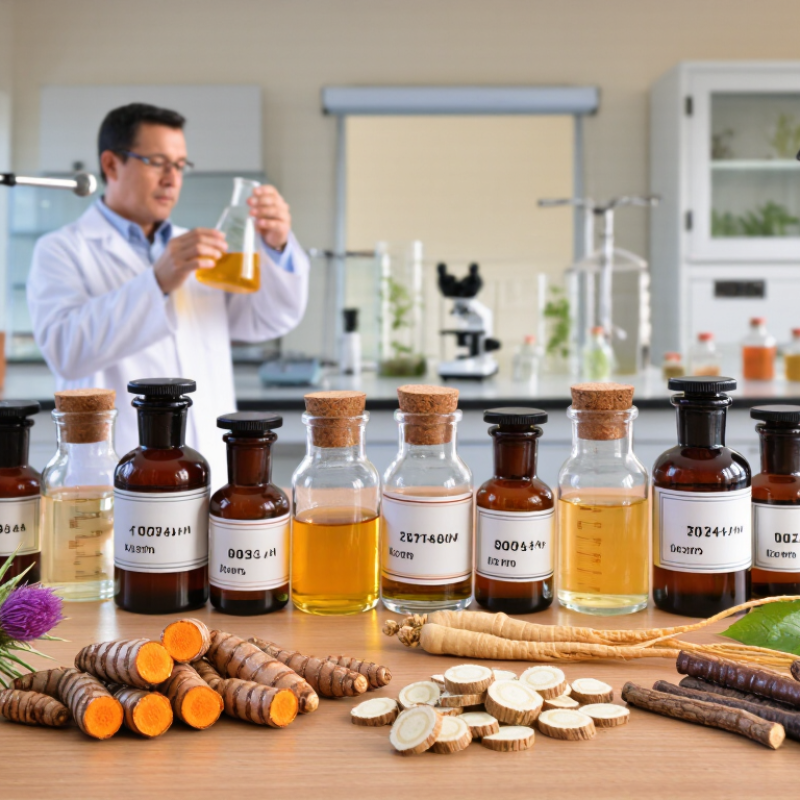
What Are the Top Standardized Herbal Extracts?

Standards and Assay Metrics Used to Define Standardized Herbal Extracts

Standardized herbal extracts are defined by measurable consistency, not by a label alone. The key metric is usually a marker compound, such as a flavonoid, alkaloid, or volatile oil. Assay results should fall within a declared range across production batches. A 2024 HerbalGram market report estimated U.S. herbal supplement sales at about $12.6 billion in 2023. That scale increases the need for transparent testing.

A credible specification combines several controls. High-performance liquid chromatography can quantify selected markers and reveal unwanted peaks. Gas chromatography is often useful for volatile oils. A fingerprint chromatogram provides broader identity evidence, especially when no single compound explains the plant’s activity.
The World Health Organization recommends controlling identity, purity, contaminants, and content through validated methods. Testing may include moisture, microbial counts, pesticides, heavy metals, and residual solvents. Limits should be stated clearly, not implied.

The best extracts also report the plant part, extraction solvent, drug-to-extract ratio, and harvest conditions. These details affect assay values. A claimed “10% marker” can still hide major differences in chemistry. A single marker can mislead. AOAC guidance on method validation emphasizes accuracy, precision, specificity, and robustness. In practice, laboratories should verify recovery and repeatability, not merely copy a certificate. Some specifications remain imperfect, because botanical complexity resists one-number quality claims. That limitation deserves honest disclosure.

Ginkgo Biloba Extract: 24% Flavone Glycosides and 6% Terpene Lactones

What Are the Top Standardized Herbal Extracts?

Ginkgo biloba extract is often specified at 24% flavone glycosides and 6% terpene lactones. These markers create a clearer quality target than simply listing “leaf extract.” The European Pharmacopoeia and World Health Organization monographs describe flavonoids and terpene lactones as key constituents. However, percentages alone cannot prove superior performance.

A reliable specification should also identify the plant material, extraction ratio, and testing method. Independent laboratories commonly verify marker levels using chromatographic analysis. Testing should check heavy metals, pesticides, microbes, and unwanted adulterants. Small details matter, especially when two powders look identical in a white capsule.

The American Botanical Council’s HerbalGram market report estimated U.S. herbal supplement sales at about $12.6 billion in 2023, showing strong demand for documented botanical products. Ginkgo remains recognizable in this growing category. Still, standardization can be misunderstood. A 24% flavone result may vary with analytical procedures, raw material storage, or extraction conditions. That weakness deserves attention.

For practical evaluation, buyers should request a certificate of analysis for each production lot. The document should match the stated 24:6 profile and show laboratory methods. It should also confirm botanical identity, not merely active-marker content. A polished label is not enough.

Milk Thistle Extract: 70–80% Silymarin Measured by HPLC

What Are the Top Standardized Herbal Extracts?

Milk thistle extract is often standardized to 70–80% silymarin, measured by high-performance liquid chromatography, or HPLC. Silymarin is not one compound. It is a group of flavonolignans, including silybin, silydianin, and silychristin. HPLC separates these compounds and estimates their combined concentration with greater precision than a simple color test.

This number matters during quality control. A 500-milligram extract at 80% silymarin should provide about 400 milligrams of measured silymarin. That calculation is useful, but not perfect. Different laboratories may use different reference standards, columns, and reporting methods. Buyers should examine the test method, chromatogram, batch number, and identity testing. A certificate showing only “80% extract” leaves important questions unanswered.

The European Medicines Agency’s assessment report on Silybum marianum recognizes dry extracts containing defined silymarin levels, while the United States Pharmacopeia emphasizes identity and contaminant controls for botanical materials. The American Botanical Council’s HerbalGram market reports also show continued consumer demand for herbal supplements, increasing pressure for transparent testing. Clinical evidence remains uneven. The National Center for Complementary and Integrative Health notes that research on milk thistle for liver conditions has produced mixed findings. Standardization improves consistency, not certainty. That distinction is easy to miss.

Saw Palmetto Extract: 85–95% Fatty Acids and Sterols by GC

What Are the Top Standardized Herbal Extracts?

Saw palmetto extract is often standardized to 85–95% fatty acids and sterols by gas chromatography, or GC. This specification measures the extract’s principal lipophilic compounds. It does not describe every component in the plant. A pale, waxy powder may still vary in color, odor, and flow. That is normal, within limits.

A reliable supplier should provide a lot-specific certificate of analysis. The document should identify the botanical source, plant part, extraction method, assay result, and testing date.

GC testing can separate and quantify fatty acids and sterols with useful precision. However, the reported percentage depends on sample preparation and laboratory method. Method details matter. I would check whether the result reflects the tested lot, not a general product claim.

Storage also deserves attention. Heat, oxygen, moisture, and light can gradually affect lipid-rich extracts. A sealed container, controlled temperature, and suitable packaging help protect quality.

Yet standardization alone cannot confirm authenticity, cleanliness, or stability. Independent testing for identity, contaminants, and residual solvents adds stronger evidence.

One practical weakness remains: an 85–95% range is broad enough to hide meaningful lot differences. Buyers should compare actual assay values, not only the headline specification, and ask whether the laboratory follows a validated, documented procedure.

Turmeric Extract: 95% Curcuminoids and Key Standardization Limits

Turmeric extract standardized to 95% curcuminoids is widely discussed in herbal ingredient research. This figure usually refers to the measured proportion of curcuminoid compounds in a tested sample. It does not describe the whole turmeric root. Nor does it guarantee identical performance in every person. A reliable supplier should provide batch-specific laboratory results, testing methods, and contaminant controls. Those details matter more than a bold percentage alone.

Standardization has limits. Curcuminoid content may remain consistent while absorption changes considerably. Particle size, formulation, storage, and dietary fat can influence how the body handles the extract. A 95% result also depends on the analytical method and reference standards used. Different laboratories may report slightly different values. That is easy to overlook. Good documentation should explain sampling, assay validation, and acceptable variation between batches.

Practical experience shows that label language can sound more precise than the evidence allows. I would not treat “95% curcuminoids” as proof of superior effectiveness. It is a chemical specification, not a clinical outcome. Independent testing can strengthen confidence, especially when it checks heavy metals, microbes, pesticides, and undeclared substances. Yet even careful testing has limits. Human response remains variable, and long-term use deserves professional guidance, particularly with existing health conditions or medicines. A clearer assessment combines verified composition, transparent manufacturing records, and realistic interpretation of research.

FAQS

What does standardization mean for a herbal extract?

It means measuring selected marker compounds within a declared batch range. A label alone proves little.

Does a 95% curcuminoid result describe the whole turmeric root?

No. It describes measured curcuminoids in the tested extract. Other root components may vary.

Can one marker compound prove overall extract quality?

Not always. One number can hide differences in plant identity, purity, and broader chemistry.

Which tests can verify an extract’s composition?

Liquid chromatography can measure selected markers and reveal unwanted peaks. Gas chromatography may help assess volatile oils.

What contamination checks should specifications include?

They may cover moisture, microbes, pesticides, heavy metals, and residual solvents. Limits should be clearly stated.

Why do extraction details affect assay results?

Plant part, solvent, harvest conditions, and extraction ratio can change the measured composition. Small details matter.

Does consistent curcuminoid content guarantee consistent absorption?

No. Particle size, storage, formulation, and dietary fat may affect absorption. Chemistry is not the whole story.

What should a trustworthy laboratory report contain?

It should identify the batch, method, reference standards, sampling process, and acceptable variation. Recovery and repeatability should be checked.

Does a high assay percentage prove better human results?

No. It is a chemical specification, not a clinical outcome. That distinction is easy to miss.

Are standardized extracts completely predictable?

No. Botanical materials are complex, and human responses differ. Some quality judgments remain imperfect.

Conclusion

Standardized Herbal Extracts are botanical preparations produced with defined levels of key active compounds, helping manufacturers maintain consistency from one batch to another. Their quality is commonly evaluated through identity testing, purity checks, marker-compound assays, and validated analytical methods such as HPLC and GC. These standards provide a practical way to describe potency while recognizing that the complete plant profile may include additional naturally occurring constituents.

Common examples include Ginkgo biloba extract, typically standardized to 24% flavone glycosides and 6% terpene lactones. Milk thistle extract is often assessed for 70–80% silymarin using HPLC, while saw palmetto extract may contain 85–95% fatty acids and sterols measured by GC. Turmeric extract is frequently standardized to 95% curcuminoids, with testing limits used to monitor identity, purity, and consistency. Together, these benchmarks support reliable formulation, responsible quality control, and clearer communication about herbal extract composition.

Olivia

Olivia

Olivia is a dedicated marketing professional with a strong understanding of the company’s products, customers, and industry landscape. Through her practical experience and continuous research, she transforms complex product information into clear, valuable, and engaging content that helps readers......