Pure Saffron Extract is a concentrated preparation made from the dried stigmas of Crocus sativus, the saffron crocus. These delicate red threads are traditionally valued for their color, aroma, and distinctive flavor. Modern extracts may contain compounds such as crocin, picrocrocin, and safranal. Their levels can vary considerably between products. The distinction matters.
A reliable explanation must separate culinary use from supplement use. In cooking, saffron extract can add a warm golden tone to rice, sauces, desserts, and beverages. A small measured amount may replace several soaked threads, although the flavor may feel less complex. In supplement products, manufacturers often promote saffron for mood, stress, or general wellness. However, research findings depend on the extract’s concentration, preparation, and study design. Traditional use is informative, but it does not prove every modern claim.
Read the label carefully. Look for the botanical name, plant part, extraction method, serving size, and independent testing information. “Pure” is not always a complete quality guarantee. It may describe the ingredient, not the absence of fillers, adulterants, or inaccurate labeling. Color, scent, and price can offer clues, but laboratory verification is more dependable. Quality is uneven.
This guide explores how Pure Saffron Extract is produced, how people commonly use it, and what responsible selection involves. It also considers practical limits, possible interactions, and why professional advice may be appropriate. Even careful explanations can overstate benefits when evidence is still developing. A thoughtful approach keeps the golden threads appealing, but keeps expectations grounded.
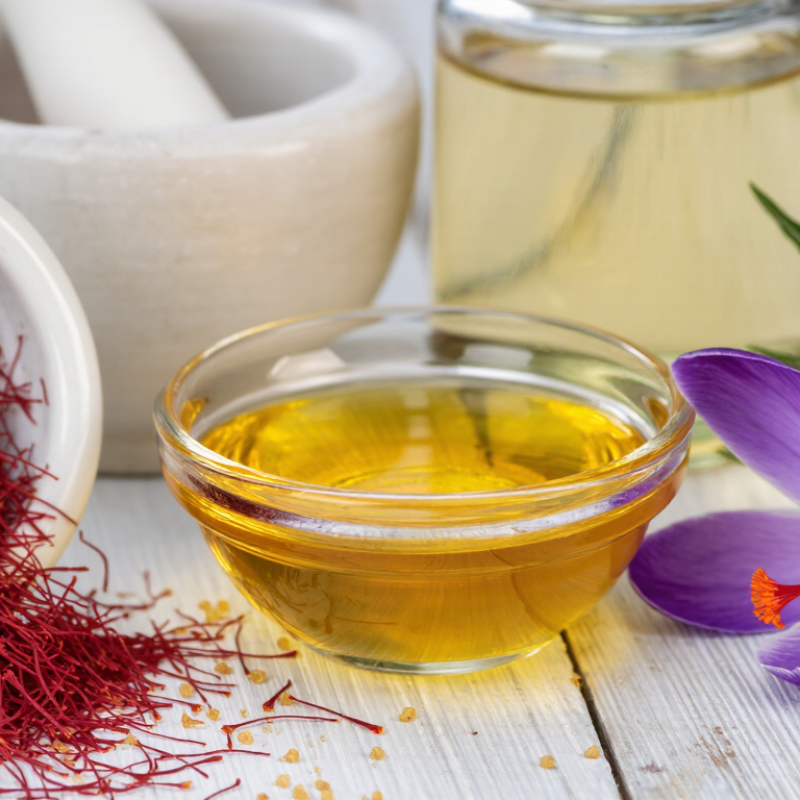
Definition and Key Characteristics of Pure Saffron Extract
Pure saffron extract is a concentrated preparation made from Crocus sativus stigmas.
It is not simply powdered saffron. Extraction separates key compounds, including crocin, picrocrocin, and safranal. Crocin provides golden color, picrocrocin contributes bitterness, and safranal creates saffron’s warm aroma.
Its main characteristics are identity, concentration, purity, and chemical consistency.
ISO 3632-1:2011 evaluates saffron through spectrophotometric readings for these compounds. For high-quality saffron, crocin absorbance commonly reaches 190 or above at 440 nanometers. The same standard examines picrocrocin and safranal, rather than relying only on appearance. That matters because bright color alone can mislead. A darker extract is not automatically stronger.
In practice, pure extract may flavor rice, beverages, dairy products, confectionery, or savory sauces. A few drops can tint a small glass of warm liquid yellow-orange.
Supplement formulas may use standardized extracts, but dosage depends on concentration and clinical evidence. A 2021 review in Foods reported promising research involving mood, sleep, and visual function, while noting limitations in sample size and study design. That caution deserves attention.
Reliable documentation should state the plant species, extraction solvent, marker-compound levels, batch number, and contaminant testing. “Pure” without laboratory data is an incomplete claim. Freshness also matters, since light, heat, and oxygen can gradually change aroma compounds.
How Pure Saffron Extract Is Produced and Standardized
What Is Pure Saffron Extract and How Is It Used?
Pure saffron extract begins with carefully separated red stigmas from saffron flowers. Harvesting is usually done by hand because each flower contains only a few usable strands. The stigmas are dried under controlled conditions to reduce moisture without damaging their aroma and color. They are then milled and extracted with a suitable food-grade solvent. The liquid is filtered, concentrated, and often dried into a powder.
Standardization gives the extract measurable quality. Laboratories commonly test crocin, picrocrocin, and safranal, the compounds linked with color, taste, and aroma. High-performance liquid chromatography can measure these markers more accurately than appearance alone. Testing may also check moisture, microbial levels, heavy metals, and unwanted residues. Batch records and farm-to-lab traceability add useful evidence.
Pure does not always mean stronger. The term can also be used loosely. A reliable specification should state the plant material, extraction ratio, marker levels, and test methods. Extracts may be used in food formulations, beverages, supplements, or research materials. However, processing conditions can change their color and aroma. Even careful production has weak points. Heat, light, oxygen, and storage time may reduce stability, so packaging and handling deserve close attention.
What Is Pure Saffron Extract and How Is It Used?
Production and standardization are commonly assessed through three characteristic saffron compounds.
Saffron extract is typically produced by extracting dried saffron stigmas with water or a water–ethanol solvent, followed by filtration and concentration. Standardization commonly uses UV–Vis measurements of crocins at 440 nm for color, picrocrocin at 257 nm for bitter taste, and safranal at 330 nm for aroma. These wavelengths are used in ISO 3632 saffron quality testing; they identify analytical markers but do not, by themselves, prove botanical identity or overall purity.
Main Active Compounds Found in Saffron Extract
Pure saffron extract is a concentrated preparation from Crocus sativus stigmas. Its quality depends on harvesting, drying, extraction, and storage conditions. A reliable extract should identify the plant source and show laboratory testing for purity.
The main active compounds are crocins, crocetin, safranal, and picrocrocin. Crocins create saffron’s deep red color and belong to the carotenoid family. Crocetin is related to these pigments but has a different structure. Safranal gives saffron its warm, hay-like aroma. Picrocrocin contributes much of its bitter taste.
Each compound may support different functions. Crocins and crocetin are studied for antioxidant activity. Safranal has been examined for possible effects on mood and nervous-system signaling. Picrocrocin mainly helps confirm saffron’s characteristic chemistry. The evidence remains developing, not definitive. Small human studies cannot replace larger, well-controlled trials.
In practical use, saffron extract appears in capsules, beverages, functional foods, and cosmetic formulas. Dosage and absorption can vary greatly. A bright color alone proves little. Testing should examine marker compounds, contaminants, and adulteration. I would also question products that promise dramatic results quickly. Saffron is valuable, but “natural” does not automatically mean risk-free. People using medicines or managing health conditions should seek qualified medical advice before supplementation.
What Is Pure Saffron Extract and How Is It Used? - Main Active Compounds Found in Saffron Extract
| Compound or Feature |
Chemical Category |
Key Characteristics |
Where It Is Found in Saffron |
Typical Use or Research Interest |
| Crocins |
Water-soluble carotenoid glycosides |
Provide much of saffron’s golden-yellow color and contribute antioxidant activity in laboratory studies. |
Primarily in the red stigmas, which are dried to make saffron. |
Used as a natural colorant in foods; studied for potential effects on oxidative stress, mood, and visual function. |
| Crocetin |
Carotenoid dicarboxylic acid |
The non-sugar component of crocins; less water-soluble than crocin glycosides. |
Present mainly in glycosylated form as crocins. |
Investigated in preclinical research for antioxidant and cellular-protection properties. |
| Picrocrocin |
Monoterpene glycoside |
Responsible for much of saffron’s characteristic bitter taste. |
Found in the dried stigmas and can be present in saffron extracts. |
Important for flavor quality and commonly used as a chemical marker when evaluating saffron composition. |
| Safranal |
Volatile monoterpene aldehyde |
Creates much of saffron’s distinctive aroma; develops partly from the breakdown of picrocrocin during drying and storage. |
Present in the volatile fraction of dried saffron and aromatic extracts. |
Used for aroma and flavor; studied in laboratory and animal research for possible antioxidant and nervous-system effects. |
| Kaempferol and other flavonoids |
Polyphenolic plant compounds |
Contribute to the plant’s overall polyphenol profile and antioxidant capacity. |
Detected in saffron tissues and in some solvent-based extracts. |
Included in nutritional and phytochemical research; levels vary according to plant material and extraction method. |
| Pure saffron extract |
Concentrated botanical preparation |
Made by extracting compounds from saffron stigmas. “Pure” is not a universal regulatory definition, so composition and concentration should be verified by testing. |
Usually derived from the dried red stigmas of Crocus sativus. |
Used in culinary preparations, beverages, supplements, cosmetics, and scientific research, depending on the extract’s specifications. |
Usage note: Saffron extract composition can change with cultivar, growing conditions, drying, storage, solvent, and extraction temperature. Research findings do not automatically establish that saffron extract prevents or treats a medical condition. Concentrated supplements should be used according to qualified health-professional guidance, especially during pregnancy or when taking medication.
Common Uses in Food, Supplements, and Traditional Medicine
What Is Pure Saffron Extract and How Is It Used?
Pure saffron extract is a concentrated preparation made from the red stigmas of Crocus sativus flowers. Unlike loose saffron threads, it delivers measured amounts of saffron compounds in liquid, powder, or capsule form.
Its quality depends on harvesting, extraction methods, storage, and testing. A reliable product should identify the plant source and provide clear information about purity and standardization. That detail matters.
In food, saffron extract adds a warm aroma, golden color, and slightly honeyed flavor to rice, soups, sauces, and desserts. A few drops can affect an entire dish. Excessive use may create a bitter taste, so careful measuring is important.
In supplements, saffron extract is commonly studied for mood support, menstrual comfort, and general antioxidant activity. Some studies show promising results, but the evidence is still developing. Supplements are not automatically harmless. Their strength can vary considerably.
Traditional medicine has used saffron in preparations for digestion, mood, and women’s health for centuries. Historical use offers valuable context, but it does not replace modern safety research.
People who take blood-thinning medicine or medication for mood disorders should seek professional advice before using concentrated saffron. Pregnancy also requires medical guidance, especially with high-dose products.
More is not better. I would treat saffron extract as a carefully measured ingredient, not a cure-all.
Safety Considerations, Dosage, and Quality Evaluation
Pure saffron extract is a concentrated preparation made from the dried stigmas of Crocus sativus. It may contain compounds such as crocin, picrocrocin, and safranal. These compounds are not always present in equal amounts. The word “pure” deserves caution. It does not automatically prove strength, cleanliness, or clinical value.
Dosage should follow the product’s tested instructions, not a guessed kitchen measurement. Extracts vary considerably in concentration. A responsible label should state the saffron amount per serving, extract ratio, and standardization details. Some human studies use modest daily amounts, but no universal dose fits everyone. Start conservatively. Stop if dizziness, nausea, headache, or unusual agitation occurs. People who are pregnant, breastfeeding, taking mood-related or blood-thinning medicines, or managing a medical condition should consult a qualified clinician first.
Quality evaluation requires more than attractive packaging. Look for the botanical name, plant part, batch number, expiry date, and independent testing for identity and contaminants. Testing that reports crocin or safranal levels can offer useful evidence, although numbers alone do not guarantee effectiveness. A certificate of analysis should match the batch being sold. I would also question products with dramatic promises or no traceable manufacturer information. A polished label can still reveal very little. When possible, choose transparent sourcing and keep the container sealed, dry, and away from direct sunlight.
FAQS
It is a concentrated preparation made from the red stigmas of saffron flowers. The stigmas are dried, milled, extracted, filtered, and concentrated. The final form may be powder, liquid, or capsules. “Pure” can be used loosely, so specifications still matter.
Common markers include crocins, crocetin, safranal, and picrocrocin. Crocins provide much of the deep red color. Safranal contributes a warm, hay-like aroma. Picrocrocin contributes bitterness. These markers help confirm identity and consistency.
Laboratories measure marker compounds using analytical methods such as liquid chromatography. They may also test moisture, microbes, heavy metals, and unwanted residues. Batch records can connect the farm, processor, and laboratory. Appearance alone is weak evidence.
It can flavor rice, soups, sauces, drinks, and desserts. A few drops may color an entire dish golden yellow. Too much extract can create bitterness. Measure carefully. Heat and light may weaken its aroma over time.
Supplements commonly provide measured saffron compounds in capsules or liquid forms. Research has examined mood, menstrual comfort, and antioxidant activity. Some findings appear promising, but the evidence remains incomplete. Small studies are not final proof. That deserves caution.
No. Natural products can still cause problems or interact with medicines. People using blood-thinning or mood-related medicines should seek medical advice. Pregnancy requires particular caution with concentrated products. More is not better.
Check the plant source, extraction ratio, marker levels, and test methods. Look for contaminant testing and clear batch information. A bright red color proves very little. Traceability is useful. I would question dramatic promises.
Protect it from heat, light, oxygen, moisture, and long storage periods. A tightly closed container helps preserve quality. Keep powder dry and away from direct sunlight. Packaging is not a minor detail. Even careful production has weak points.
Conclusion
Pure Saffron Extract is a concentrated preparation made from the dried stigmas of the Crocus sativus flower. It is valued for its distinctive color, aroma, and naturally occurring compounds, particularly crocin, picrocrocin, and safranal. During production, saffron threads are carefully dried and processed using controlled extraction methods. The resulting extract may be standardized to provide a consistent level of selected active compounds, helping improve quality and batch-to-batch reliability.
Pure Saffron Extract is commonly used as a culinary coloring and flavoring ingredient, as well as in dietary supplements and traditional wellness practices. Its potential uses are often associated with mood, antioxidant support, and general well-being, although individual responses can vary. Consumers should follow product directions, avoid excessive intake, and consult a qualified healthcare professional if they are pregnant, taking medication, or managing a medical condition. Quality evaluation should consider botanical identity, standardized compound levels, purity testing, storage conditions, and independent testing for contaminants.