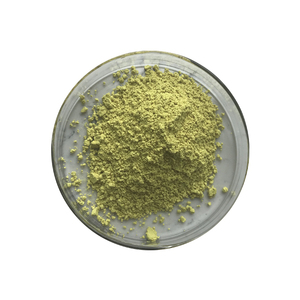
Explore our premium-grade batch-certified Sophora Japonica extracts and botanical monomers. Manufactured in full compliance with European Pharmacopoeia (Ph. Eur.), USP standards, and CE quality protocols for global distribution.
Operating as a specialized botanical extraction house since 2014, RAAG Biotech Co., Ltd. bridges the gap between agricultural raw botanical cultivation and high-purity pharmaceutical-grade ingredient manufacturing.
Our Xi'an production complex features Class 100,000 cleanrooms, automated reflux extraction tanks, membrane concentration loops, and spray-drying towers designed to maintain zero batch-to-batch cross-contamination.
Every single production batch undergoes in-house and third-party laboratory verification (SGS/Eurofins). We provide full COAs covering marker quantification by HPLC/UV-Vis, heavy metals (ICP-MS), pesticide residue panels (>400 screens), and microbiological assays.
For heat-sensitive monomers and oleoresins, our solvent-free supercritical CO2 extraction technology preserves active botanical structures without leaving carcinogenic organic solvent residues (EP/USP residual solvent compliant).
Through our contracted GAP (Good Agricultural Practices) planting bases across China, every batch of raw Sophora Japonica flowers is assigned a unique tracking code detailing harvest date, drying protocol, and regional origin.
We streamline customs clearance and regulatory submission in the EU, North America, and Asia by providing full technical documentation packages: Technical Data Sheets (TDS), MSDS, Flow Charts, Allergen Declarations, Non-GMO Status, and CE Compliance Declarations.
Our R&D engineering unit offers tailor-made formulation solutions including liposomal encapsulation, custom particle sizing (from 80 mesh down to micronized powders), direct-compression granulations, and organic-compliant natural carrier systems.
In the global biopharmaceutical, nutraceutical, and functional food sectors, raw material procurement has evolved from simple cost-per-kilogram pricing evaluations into complex risk-mitigation strategies. For procurement directors, formulation scientists, and regulatory affairs managers, sourcing plant extracts such as Quercetin Powder (CAS 117-39-5) derived from Sophora Japonica requires strict adherence to international safety frameworks, batch-level standardization, and verified quality management systems.
The label "CE Certified" in the realm of B2B chemical and botanical raw material manufacturing signifies compliance with essential European safety, health, and environmental protection standards. When raw material factories integrate CE-aligned quality protocols alongside GMP (Good Manufacturing Practice), ISO 22000, HALAL, and KOSHER systems, global buyers gain the guarantee that the raw materials will seamlessly pass EU customs inspection, EDQM audits, and stringent retail supplement testing.
As consumer awareness deepens around ingredient bio-efficiency and clean-label purity, global supply chains are undergoing four major structural shifts:
A. Shift Toward High-Bioavailability Delivery Systems (Liposomal Encapsulation)
Standard Quercetin dihydrate exhibits limited water solubility and low lipophilic permeability, leading to poor systemic absorption in human trials. Consequently, procurement volume is rapidly transitioning toward advanced delivery systems such as Liposomal Quercetin 50% Powder. By surrounding active bioflavonoids with phospholipid bilayers (derived from non-GMO sunflower or soy lecithin), manufacturers increase active cellular absorption by up to 20-fold, enabling supplement brands to achieve clinically meaningful dosages in smaller capsule formats.
B. Zero-Solvent and Clean-Label Processing Demand
Traditional chemical extraction often relied on organic solvents such as methanol, acetone, or ethyl acetate. Modern European and North American regulations have severely tightened maximum residue limits (MRLs). Future-focused manufacturing facilities are investing heavily in Supercritical Fluid Extraction (SFE-CO2) and closed-loop aqueous/ethanol reflux technology. CO2 extraction leaves zero solvent residue, protecting both the environment and human health while maintaining organic certification eligibility.
C. Mandatory DNA Barcoding & Isotopic Traceability
To combat species substitution and adulteration in the raw material supply chain, European regulatory bodies are increasingly utilizing DNA barcoding and stable isotope ratio mass spectrometry (IRMS). Tier-1 manufacturers must maintain full agricultural traceability—documenting precise geographic planting zones, pesticide application logs, and harvest seasons to ensure 100% Sophora Japonica species authenticity.
D. Direct-Compression & Dust-Free Granulation Formats
In high-speed pharmaceutical tableting operations, fine powders present significant challenges: low bulk density, electrostatic clinging, poor flowability, and airborne dust hazards. The market demand for granular raw materials (such as Direct Compression Quercetin 95% Granular) is growing at a compound annual rate (CAGR) of over 8.5%, allowing contract manufacturers to eliminate binder additives and streamline tableting runs.
Selecting the correct molecular form of Quercetin is critical for formulation stability, shelf-life integrity, and therapeutic efficacy. Below is a technical comparative matrix compiled by RAAG Biotech's Analytical R&D Team:
| Ingredient Grade / Form | Active Assay (HPLC) | Physical Form | Key Technical Feature | Primary Application |
|---|---|---|---|---|
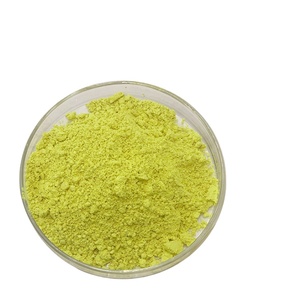
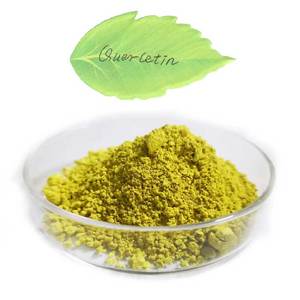
| Quercetin Dihydrate 95% / 98% | ≥ 95.0% - 98.0% | Yellow Fine Powder | Contains 2 molecules of crystal water; highly stable in solid dosage forms. | Hard Gelatin Capsules, Standard Tablets |
| Quercetin Anhydrous 98% | ≥ 98.0% | Fine Crystalline Powder | Desiccated form (<3.0% moisture); ideal for moisture-sensitive formulations. | Effervescent Tablets, Moisture-Sensitive Softgels |
| Liposomal Quercetin 50% | ≥ 50.0% (Encapsulated) | Light Yellow Powder | Phospholipid complex enhances intestinal transport and bioavailability. | Premium Anti-Aging & Immune Supplements |
| Quercetin 95% Granular | ≥ 95.0% | Free-Flowing Granules | High bulk density (>0.55 g/mL); zero dust emission during tableting. | High-Speed Direct Compression Tablets |
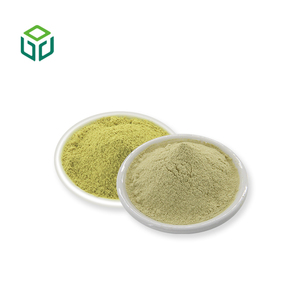
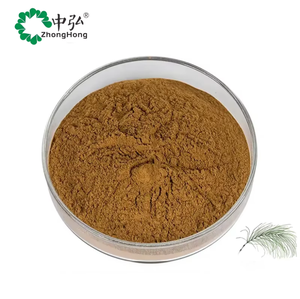
| Horsetail & Quercetin Complex | Standardized Blend | Fine Herbal Powder | Synergistic combination with natural silica for bone & connective tissue support. | Bone Density & Joint Health Formulations |
Search intent mining and market consumption data indicate a major pivot toward targeted health applications. Quercetin is no longer marketed merely as a basic antioxidant; it is now formulated into targeted therapeutic verticals:
• Cellular Senolytic & Anti-Aging Formulations: Quercetin acts as a natural senolytic agent, clearing senescent ("zombie") cells when combined with synergistic compounds like Fisetin, Resveratrol, and Nicotinamide Mononucleotide (NMN).
• Respiratory & Histamine Balance: High-purity Sophora Japonica extracts are widely utilized in seasonal allergy supplements due to Quercetin’s proven mechanism of stabilizing mast cell membranes and inhibiting histamine release.
• Cardiovascular & Endothelial Health: By reducing lipid peroxidation and supporting nitric oxide production, bioflavonoids maintain blood vessel elasticity and healthy blood pressure levels.
• Exercise Performance & Mitochondrial Biogenesis: Sports nutrition brands incorporate water-dispersible Quercetin powders into pre-workout formulations to enhance endurance and mitochondrial density in skeletal muscle.
To ensure total regulatory compliance when purchasing bulk raw botanical materials from overseas factories, quality assurance teams should mandate the following batch documentation:
1. Chromatographic Fingerprint (HPLC Chromatogram): Verifies exact active monomer peak identity and confirms the absence of synthetic bioflavonoid spiking (e.g., adulteration with rutinside derivatives).
2. Heavy Metal Screening (ICP-MS): Limits must strictly satisfy EU Regulation (EC) No 1881/2006: Lead (Pb) < 3.0 mg/kg, Cadmium (Cd) < 1.0 mg/kg, Mercury (Hg) < 0.1 mg/kg, and Arsenic (As) < 1.0 mg/kg.
3. Pesticide Residue Multi-Screen: Must comply with European Pharmacopoeia (Ph. Eur. 2.8.13) screening for over 400 organochlorine, organophosphorus, and pyrethroid compounds.
4. Polycyclic Aromatic Hydrocarbons (PAHs): Benzo(a)pyrene < 10 ug/kg and Sum of 4 PAHs < 50 ug/kg, verified by GC-MS.
5. Microbiological Safety: Total Viable Aerobic Count (TYMC/TAMC) < 1,000 CFU/g, with zero detection of E. coli, Salmonella, or Staphylococcus aureus.
Expert answers from RAAG Biotech’s Quality Assurance and Global Supply Desk regarding technical specifications, custom orders, and regulatory export procedures.
Every commercial batch is dispatched with a lot-specific Certificate of Analysis (COA) detailing HPLC assay values, heavy metal counts, microbiological testing, and particle size distribution. Additionally, we provide Material Safety Data Sheets (MSDS), Technical Data Sheets (TDS), Process Flow Charts, Non-GMO Declarations, Allergen Statements, and CE/EU Regulatory Compliance files.
We operate contracted planting bases under Good Agricultural Practices (GAP) for Sophora Japonica harvest. Each incoming raw material batch is assigned an internal lot ID that records the harvest location, drying methodology, and pesticide application history. This lot code carries through extraction, crystallization, milling, and drum sealing, allowing 100% backward traceability during customer audits.
Our standard Minimum Order Quantity (MOQ) for commercial production lots of standardized extracts and plant powders is 1 kg. For high-purity monomers and liposomal formulations, we offer flexible starter quantities. We provide 10g to 50g free evaluation samples (with batch COA) for accredited R&D laboratories and pilot trial formulations.
Yes. Our particle engineering department can tailor powder specifications to match your exact production lines. Options include micronized powders (>120 mesh), direct-compression free-flowing granules, specific bulk densities (0.35 to 0.65 g/mL), and custom natural carrier matrices (maltodextrin, acacia gum, organic rice starch) for soluble beverage applications.
Our standardized Quercetin extraction process utilizes food-grade aqueous ethanol solutions. We do not use chlorinated hydrocarbons or toxic industrial solvents. Residual ethanol levels are strictly controlled below 5,000 ppm (in compliance with ICH Q3C Guidelines and European Pharmacopoeia limits), with solvent-free supercritical CO2 alternatives available upon request.
Standard catalog products (such as Quercetin 95% Dihydrate and 98% Anhydrous) are maintained in rolling inventory and ship within 3 to 5 business days following order confirmation. Custom pilot batches, specialized mesh sizes, or liposomal encapsulations typically require 10 to 15 business days for production and complete analytical release testing.
Request technical specifications, batch-specific Certificates of Analysis (COA), audit documentation, or complimentary R&D samples today. Our global technical support desk responds within 12 hours.
Send an Inquiry