Industrial Scaling of Standardized Botanical Extracts: A Technical Whitepaper
In the global nutraceutical, pharmaceutical, and functional food sectors, the procurement of standardized herbal extracts has transitioned from basic batch purchasing to rigorous technical validation. Modern regulatory frameworks, led by the European Conformity (CE) principles and cGMP standards, require standardized extract factories to guarantee structural consistency, quantifiable marker compounds, and strict control over contaminants. At RAAG Biotech Co., Ltd., operating out of our state-of-the-art facility in Xi'an, China, we bridge the gap between agrarian botanical harvesting and pharmaceutical-grade chemical processing.
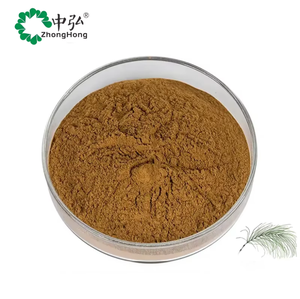
Standardization is not merely an assay percentage on a Certificate of Analysis (COA); it is the mathematical and biological verification that every milligram of raw material produces a predictable physiological response. Whether processing Sophora Japonica L. into pure Quercetin isolates or isolating secondary metabolites from wild-harvested Equisetum Arvense (Horsetail), our factory utilizes advanced thermodynamics, targeted solvent reflux systems, and non-thermal column chromatography to preserve molecular integrity.
Key Insight for Quality Assurance Directors: True standardization requires active control over the ratio of active phytochemicals (e.g., Quercetin Dihydrate vs. Anhydrous crystalline states) alongside zero-tolerance tracking for heavy metals (Pb, Cd, Hg, As), residual solvents (EP/USP Class 2 & 3 limits), and pesticide residues (EU Commission Regulation 396/2005).
Supercritical CO2 Extraction
Non-thermal, solvent-free extraction for lipophilic compounds, preserving heat-sensitive terpenoids and essential volatile fractions without organic residues.
Preparative Column Chromatography
Industrial-scale resin adsorption column system enabling high-purity monomer separation up to 99% HPLC assay levels for pharmaceutical applications.
Low-Temp Vacuum Spray Drying
Instantaneous flash drying maintaining native bio-activity, controlling moisture content under 5.0%, and yielding uniform mesh bulk density.
Phytochemical Standardization & Polymorphic State Profiles
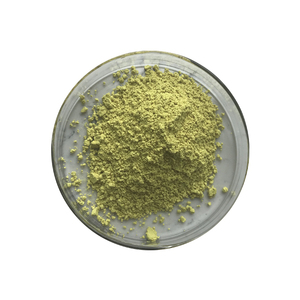
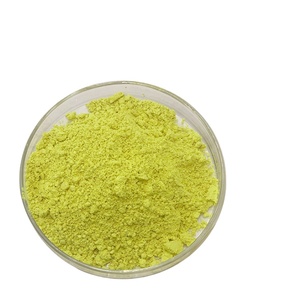
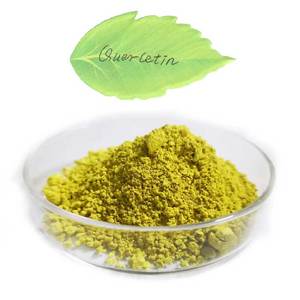
A critical challenge facing B2B supplement formulators is navigating the thermodynamic and solubility differences between botanical polymorphs. For instance, in the manufacturing of Quercetin from Sophora Japonica Extract, the crystal lattice energy differs significantly between Quercetin Dihydrate and Quercetin Anhydrous.
Parameters & Specifications
Quercetin Dihydrate (95% - 98%)
Quercetin Anhydrous (>98%)
Liposomal Quercetin 50%
CAS Registry Number
6151-25-3
117-39-5
117-39-5 (Complexed)
Molecular Formula
C15H10O7 · 2H2O
C15H10O7
Lipid Envelope Matrix
Crystal Structure & Hydration
Stable Monoclinic Dihydrate Lattice
Thermal Dehydrated Form
Phospholipid Bilayer Nanoparticles
Aqueous Solubility Rate
Slightly Soluble (<0.1 g/L at 20°C)
Low Solubility (Requires Solvent)
High Dispersibility & Micro-Emulsion
Intestinal Bioavailability Kinetics
Standard Baseline (Requires Fats)
Standard Baseline
3.8x to 5.2x Enhanced Area Under Curve (AUC)
Recommended Formulations
Standard Hard Capsules, Tablets
Solvents, Liquid Tinctures
Premium Softgels, Direct Gummies, Ready-to-Drink
Understanding these physical parameters allows formulation engineers to avoid tablet capping, dissolution failures, and reduced shelf-life bioactivity. By offering tailored mesh sizes (from 80 mesh standard up to micronized 300 mesh and direct-compression granules), RAAG Biotech ensures seamless integration into high-speed automatic encapsulation machinery.
Operating as an independent plant extract manufacturer since 2014, RAAG Biotech Co., Ltd. has established a rigorous multi-tiered quality control ecosystem that eliminates the risks associated with third-party trading desks. Our 80+ staff including dedicated R&D analytical chemists oversee a 300-ton annual capacity facility built to full GMP guidelines.
In-House Analytical Testing
Every lot is evaluated via Agilent High-Performance Liquid Chromatography (HPLC), UV-Vis Spectrophotometry, and Gas Chromatography-Mass Spectrometry (GC-MS).
Contracted Planting Bases
Raw botanicals are harvested from verified GAP (Good Agricultural Practices) regions with recorded soil mineral profiles and zero synthetic pesticide overload.
Global Audit Certifications
Fully compliant with ISO 9001, ISO 22000 (HACCP), Kosher, Halal, and Organic standard verification for immediate custom clearance worldwide.
Full Batch Traceability Architecture
From the arrival of raw Sophora Japonica buds or wild Horsetail Herb at our raw material intake bay to the final double-bagged fiber drum sealing, each batch receives a unique internal barcode. This barcode logs:
Geographic origin, harvest GPS coordinates, and initial moisture logs.
Solvent volume ratios, extraction temperature profiles, and column flow velocity data.
Retained samples stored for 36 months in climate-controlled archives for post-market auditing.
Global Market Outlook & Future B2B Procurement Trends (2025–2030)
As the global market for botanical extracts shifts toward higher regulatory transparency, brand owners and contract manufacturers must align their supply chains with key macroeconomic and technological trends. The landscape is moving rapidly away from unstandardized raw plant powders toward targeted, high-purity single monomers and functional micro-encapsulated complexes.
1. The Rise of Bioavailability Engineering
Standard polyphenols such as Quercetin face inherent bio-absorption limitations due to their hydrophobic planar structure. B2B purchasers are increasingly demanding delivery platforms such as Liposomal Encapsulation Technology and phospholipid complexes (e.g., Phytosome matrix). These advanced formats protect the active molecule from enzymatic degradation in the stomach, dramatically increasing plasma concentration (AUC) and allowing brand owners to make superior clinical claims.
2. Strict Compliance on Ethylene Oxide (EtO) & PAH Contaminants
European customs authorities have tightened threshold checks for Ethylene Oxide (EtO), Pyrrolizidine Alkaloids (PAs), and Polycyclic Aromatic Hydrocarbons (PAHs). Future procurement mandates certified non-irradiation, steam sterilization protocols, and validated chromatographic cleaning verification to prevent batch rejection at port entry.
3. Green Chemistry & Carbon Neutral Extraction
Sustainable extraction is becoming a key procurement requirement. Factories utilizing closed-loop solvent recovery units (recovering over 95% of ethanol), water-recycling chillers, and solar-assisted drying lines have a strategic cost advantage while helping global brands fulfill their Scope 3 ESG (Environmental, Social, and Governance) targets.
Technical Support & Sourcing FAQ
Frequently Asked Questions for B2B Buyers
Direct technical answers from our QC specialists and export documentation division.
Every shipment from RAAG Biotech is accompanied by a batch-specific Certificate of Analysis (COA) detailing HPLC assay, moisture content, ash content, heavy metal panel (Pb, As, Cd, Hg), microbiological count (TPC, Yeast & Mold, E. coli, Salmonella), and solvent residue limits. Additional documents include Safety Data Sheets (MSDS), Technical Data Sheets (TDS), Flow Charts, Allergen Statements, Non-GMO Declarations, and BSE/TSE Statements.
Quercetin Dihydrate contains two bound water molecules within its crystal lattice, providing excellent stability under standard ambient conditions and making it ideal for standard capsule filling and dry tablet compression. Quercetin Anhydrous has had water removed through controlled thermal drying, resulting in a higher potency per gram by weight, preferred in oil-based suspensions and liquid formulations where water activity must be minimized.
We source our botanical raw materials from contracted GAP planting bases. Before extraction begins, every raw material lot undergoes multi-residue pesticide screening (covering over 500 pesticides listed under EU Regulation 396/2005) via LC-MS/MS and GC-MS/MS. Only compliant raw batches are cleared for extraction.
Yes. We offer custom particle sizing including micronized powder (down to 300 mesh for improved absorption kinetics) as well as spray-granulated Direct Compression (DC) grades. Our granular Quercetin exhibits high flowability and bulk density optimal for direct high-speed tableting without requiring additional binder processing.
Our standard MOQ for commercial orders is 25 kg (one standard fiber drum). However, for laboratory evaluation, trial runs, and high-value single monomers, we offer 1 kg packaging. Free lab testing samples (10g – 50g) with COA are dispatched worldwide via DHL/FedEx within 48 hours of request.
Ready to Optimize Your Phytochemical Supply Chain?
Contact our technical engineering desk today for batch availability, custom specifications, third-party laboratory audit reports, and factory-direct volume pricing.