
Standardized Sophora Japonica Extracts, Liposomal Formulations & Pure Monomers Direct from Factory Stock
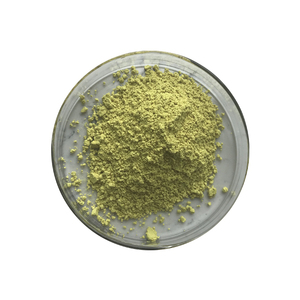
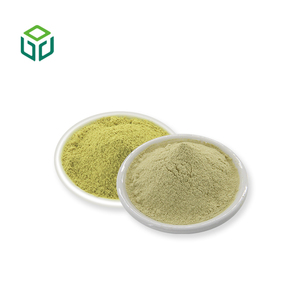
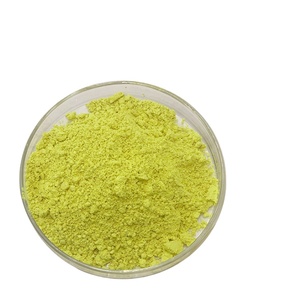
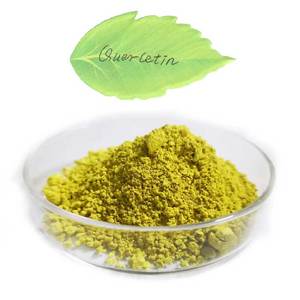
The global functional food ingredient and bio-active additive landscape is experiencing an unprecedented structural shift. B2B procurement managers, pharmaceutical formulators, and global food ingredient buyers increasingly rely on China's high-tech bio-extraction clusters for consistent, scalable, and audit-compliant natural active ingredients. As global demand for clean-label, bio-available polyphenols escalates, identifying reliable China Food Additive Manufacturers & Factories has evolved from a simple cost-minimization strategy into a core strategic supply chain requirement.
China’s botanical extraction and food additive industry has advanced far beyond raw agricultural processing. Driven by rigorous regulatory frameworks, state-of-the-art chromatographic separation systems, and cGMP-compliant production lines, leading manufacturers such as RAAG Biotech Co., Ltd. have established world-class standards in molecular extraction, botanical monomer purification, and liposomal encapsulation. Central to this technological leadership is the processing of Sophora Japonica L. (Japanese Pagoda Tree flower bud), which serves as the primary raw botanical source for high-purity natural Quercetin (CAS 117-39-5), Rutin, and Isoquercitrin.
In modern food science, natural polyphenols like Quercetin function not merely as dietary supplement actives, but as high-performance functional food antioxidants, natural shelf-life extenders, and bio-functional colors. However, global buyers face persistent challenges regarding batch-to-batch consistency, pesticide residues, heavy metal contamination, and solubility constraints. This whitepaper provides a comprehensive evaluation of supply chain mechanics, technological trends, analytical quality assurance standards, and strategic procurement frameworks governing top-tier Chinese food additive producers.
To select the appropriate food additive grade, technical procurement teams must evaluate chemical structures, solubility profiles, and physical delivery matrices. Below is an authoritative technical benchmark comparing standard botanical extract grades, liposomal derivatives, and synthetic alternatives produced within leading Chinese facilities:
| Grade / Parameter | Quercetin Dihydrate 95% | Quercetin Anhydrous 98% | Liposomal Quercetin 50% | Granular Quercetin 95% |
|---|---|---|---|---|
| CAS Number | 6151-25-9 | 117-39-5 | 117-39-5 (Encapsulated) | 6151-25-9 |
| Assay Method (HPLC) | ≥ 95.0% | ≥ 98.0% | ≥ 50.0% Bio-active Payload | ≥ 95.0% |
| Moisture Content | 10.0% - 12.0% | ≤ 4.0% | ≤ 5.0% | ≤ 10.0% |
| Solubility Profile | Slightly soluble in ethanol; insoluble in water | Soluble in ethanol, alkaline solution | Water-dispersible micro-emulsion | Slightly soluble in ethanol |
| Target Application | Capsules, Powder Blends, Standard Supplements | Pharma synthesis, Moisture-sensitive tablets | Functional Beverages, High-absorption liquid gels | Direct Compression Tablets, High-speed filling |
| Bulk Density | 0.30 - 0.45 g/ml | 0.35 - 0.50 g/ml | 0.45 - 0.60 g/ml | 0.60 - 0.75 g/ml |
Understanding these physical variations is vital for downstream production efficiency. For instance, while standard Quercetin Dihydrate 95% provides an economical baseline for conventional dietary capsules, its hydrophobic nature restricts its utility in functional beverages. Conversely, advanced Liposomal Quercetin 50% leverages phospholipid bilayer technology to encapsulate hydrophobic molecules, yielding up to a 5- to 8-fold increase in intestinal bio-accessibility while ensuring homogenous dispersion in liquid matrices.
Key Technological Drivers Reshaping the B2B Food Additive & Botanical Extract Industry
Conventional bio-flavonoids suffer from poor aqueous solubility and rapid metabolic degradation. High-tier Chinese manufacturers are pivoting toward continuous-flow liposomal micro-fluidization. By enveloping Quercetin in non-GMO sunflower or soy lecithin phospholipid matrices, formulators unlock superior cellular uptake, extended plasma half-life, and neutral taste profiles suitable for functional gummies and RTD drinks.
Regulatory pressures from the EU and FDA regarding residual organic solvents (such as dichloroethane or excessive methanol) are accelerating the adoption of Supercritical Fluid Extraction (SFE-CO2). SFE-CO2 eliminates chemical residues, preserves heat-sensitive polyphenolic structures, and drastically reduces carbon footprint, matching global clean-label standards.
Leading Chinese export factories now manage contracted botanical planting bases in Shaanxi, Shanxi, and Henan provinces. By implementing strict GAP (Good Agricultural Practices), every batch of raw Sophora Japonica flower buds is logged with GPS location, harvest timestamp, drying parameters, and zero-pesticide soil verification records prior to factory intake.
Biotechnological advances allow enzymatic conversion of Rutin directly into Isoquercitrin and high-purity Quercetin. Enzymatic processing avoids harsh acid hydrolysis, yields higher isomer purity, eliminates toxic byproduct formation, and results in a dramatically cleaner chromatographic profile required by pharmaceutical-grade compliance auditors.
Downstream tablet manufacturers face production bottlenecks due to the light, fluffy nature and poor flowability of raw Quercetin powders. Advanced factories now offer customized roller compaction and wet granulation services, delivering high-density, low-dust, uniform granules engineered specifically for direct-compression tablet presses.
To streamline global customs clearance and quality verification, top-tier suppliers provide standardized regulatory dossiers for every lot—including batch COAs, ICP-MS heavy metal reports, GC-MS pesticide panels, allergen declarations, non-GMO statements, and ISO/HALAL/KOSHER certifications.
When evaluating China Food Additive Manufacturers & Factories, technical capabilities and quality assurance protocols must be independently verified. Established in 2014 in Xi'an, Shaanxi Province, RAAG Biotech Co., Ltd. has grown into a premier manufacturer of standardized botanical extracts, pure monomers, CO2 supercritical oleoresins, plant powders, and functional food additives.
Operating within a fully cGMP-audited manufacturing complex, RAAG Biotech integrates eight standardized production platforms. The facility is equipped with multi-stage stainless steel extraction tanks, high-efficiency membrane concentration units, column chromatography systems, and clean-room spray drying towers. Unlike standard trading desks, RAAG Biotech operates on a direct manufacturing model backed by robust internal analytical laboratories.
Every production lot undergoes rigorous analytical validation utilizing high-performance liquid chromatography (HPLC), ultraviolet-visible spectroscopy (UV-Vis), and gas chromatography-mass spectrometry (GC-MS) to guarantee active compound assay stability.
Raw plant materials and finished powders are routinely screened via ICP-MS for heavy metals (Lead, Arsenic, Cadmium, Mercury) and multi-residue pesticide screens, fully complying with USP, EP, and EU Novel Food residue thresholds.
Our operational management and quality systems maintain international accreditations including ISO9001, HACCP, HALAL, KOSHER, and Organic compliance, enabling rapid qualification for international pharmaceutical and food-grade supply chains.
Direct Technical & Commercial Guidance from Our Export Quality Assurance Team
Every commercial shipment is accompanied by a complete, lot-specific analytical packet. This includes the Certificate of Analysis (COA) detailing HPLC assay purity, loss on drying, ash content, particle size mesh distribution, heavy metal analysis (ICP-MS), microbiological counts (E. coli, Salmonella, Yeast & Mold), and residual solvent verification. In addition, we supply MSDS, Technical Data Sheets (TDS), Flow Charts, Non-GMO declarations, and Allergen Statements. Third-party testing by SGS or Eurofins can be arranged prior to dispatch upon customer request.
Quercetin Dihydrate contains two bound water molecules within its crystalline matrix, resulting in approximately 10-12% moisture content. It is the standard cost-effective botanical raw material for dry dietary supplements. Quercetin Anhydrous has undergone controlled thermal desiccation to remove bound water (≤4% moisture), making it ideal for moisture-sensitive capsule formulations and pharmaceutical synthesis. Liposomal Quercetin is a high-tech formulation where Quercetin is encapsulated in lipid membranes, rendering it water-dispersible and dramatically boosting intestinal absorption rates for functional drinks and premium supplements.
Our standard Minimum Order Quantity (MOQ) for commercial bulk Quercetin powder and standardized extracts is 1 kg. For specialized compounds, high-purity monomer reference standards, or custom liposomal grades, smaller trial quantities (100g to 500g) are available. We offer complimentary 10g to 50g sample kits complete with batch COAs for qualified laboratory testing, analytical method verification, and pilot trial runs.
Raw material safety is controlled at the source. We maintain long-term contract planting agreements across verified agricultural bases. Each lot of raw Sophora Japonica flower buds is assigned a unique tracking identifier upon arrival at our warehouse. Raw materials undergo mandatory pre-extraction screening for heavy metals and pesticide residues. If raw herbs exceed target safety thresholds, they are immediately rejected before entering the extraction pipeline.
Yes. Our internal R&D and engineering teams specialize in custom physical modification. We can tailor particle sizes from standard 80 mesh down to micronized 200+ mesh powders, produce low-dust granular formats for direct compression machinery, or incorporate specific food-grade carrier matrices (such as maltodextrin, gum arabic, or rice starch) to meet your exact processing parameters.
Standard catalog items held in rolling stock typically ship within 3 to 5 business days after order confirmation. Custom production batches, bespoke granulation orders, or high-volume container shipments generally require a 10 to 18 business day lead time. We provide flexible incoterms (FOB, CIF, DDP, DAP) supported by air express (DHL/FedEx), air freight, and ocean freight logistics with full export customs documentation.
Partner directly with one of China's premier food additive and botanical extract manufacturers. Contact our technical sales engineering team today for real-time pricing, factory audit files, and custom formulation support.
Get a Quote