
Direct Factory Bulk Supply | High-Purity Sophora Japonica & Herbal Extract Monomers
The global dietary supplement and functional ingredient industry is undergoing a structural paradigm shift toward clinical-grade standardization, green extraction technologies, and strict batch-to-batch traceability. China remains the undisputed epicentre for botanical extract manufacturing, producing over 70% of the world's natural flavonoid monomers, standardized herbal powders, and supercritical oleoresins. As brand owners in North America, Europe, and Asia-Pacific tighten quality criteria under stringent regulatory regimes (US FDA 21 CFR Part 111, EU EC 396/2005 pesticide mandates, and EFSA novel food standards), raw material procurement is shifting from transaction-focused buying to direct manufacturer integration.
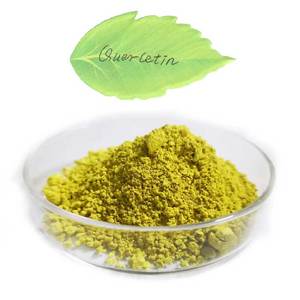
Quercetin (3,3',4',5,7-pentahydroxyflavone) is one of the most thoroughly researched plant polyphenols, widely recognized for its potent antioxidant, anti-inflammatory, senolytic, and immunomodulatory properties. Commercial-scale quercetin is predominantly isolated from the unopened flower buds of Sophora japonica L. (Japanese Pagoda Tree), an botanical source yielding up to 15-20% natural rutin—the primary glycosidic precursor.
At RAAG Biotech Co., Ltd., the conversion of crude Sophora flower buds into pure bioavailable Quercetin (Anhydrous, Dihydrate, Granular, and Liposomal formats) involves precise chemical and physical engineering:
Rutin extracted from Sophora buds undergoes controlled acid-catalyzed hydrolysis. By cleaving the rhamnose-glucose disaccharide sugar moiety, the lipid-soluble flavonol aglycone—Quercetin—is liberated at pure high yield.
Through multi-stage fractional recrystallization utilizing eco-compliant ethanol-water systems, impurities, polyphenolic polymers, and trace metals are systematically purged, delivering purity levels consistently reaching 95% to 98% by HPLC.
Precision thermal vacuum drying dictates the crystal lattice structure. Controlled desiccation yields Quercetin Anhydrous (CAS 117-39-5, moisture <3.0%), whereas standard vacuum drying preserves the stable Quercetin Dihydrate (CAS 6151-25-9, moisture 9.0%-12.0%).
| Specification Parameter | Quercetin Dihydrate 95%/98% | Quercetin Anhydrous 98% | Liposomal Quercetin 50% |
|---|---|---|---|
| CAS Registry Number | 6151-25-9 | 117-39-5 | 117-39-5 (Encapsulated) |
| Assay (HPLC Basis) | ≥ 95.0% / ≥ 98.0% | ≥ 98.0% | ≥ 50.0% Active Bioavailability Load |
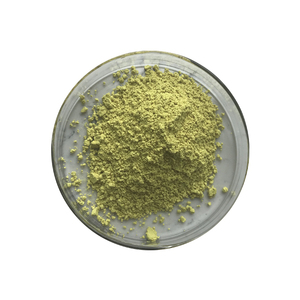
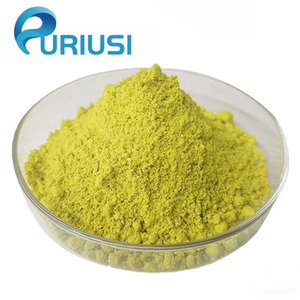
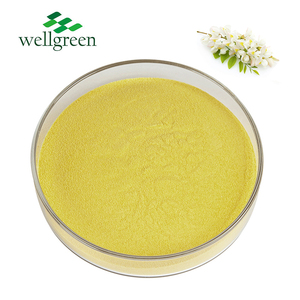
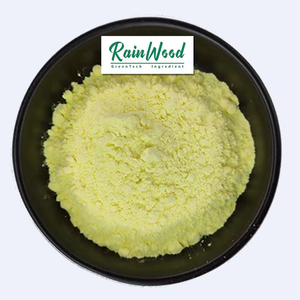
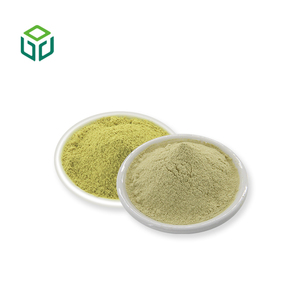
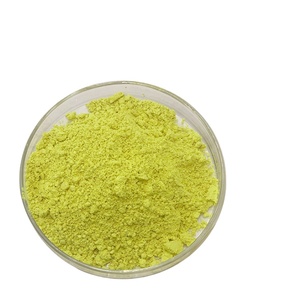
| Appearance | Fine Yellow Powder | Light Yellow Fine Powder | Yellowish Spherical Micro-granules |
| Loss on Drying | 9.0% - 12.0% | ≤ 3.0% | ≤ 5.0% |
| Bulk Density | 0.35 - 0.50 g/ml | 0.40 - 0.55 g/ml | 0.50 - 0.65 g/ml (Enhanced Flow) |
| Solubility Profile | Ethanol-soluble, sparingly in water | Ethanol-soluble, low water solubility | Water-dispersible (Nano-emulsion) |
| Primary Target Application | Hard Capsules, Standard Tablets | Moisture-Sensitive Formulations | High-Absorption Liquids, Softgels, Gummies |
Strategic Insights for Global Supply Chain Directors & R&D Formulators
As the international dietary supplement landscape matures, corporate purchasers must navigate evolving technical hurdles and strategic shifts. Enterprise buyers are no longer simply sourcing raw powder; they are selecting technical manufacturing partners capable of guaranteeing regulatory compliance, batch stability, and technological innovation. Below are four key trends shaping the future of botanical ingredient procurement:
A major historical limitation of native polyphenols—such as Quercetin, Curcumin, Resveratrol, and Silybin—is poor oral bioavailability caused by low aqueous solubility, poor intestinal permeability, and rapid hepatic metabolism. Standard crystalline quercetin exhibits less than 2% intestinal absorption rate in human clinical trials.
To overcome this barrier, global procurement is rapidly shifting toward Liposomal Encapsulation and Phytosome Phospholipid Complexes. Liposomal Quercetin leverages natural sunflower or soy phosphatidylcholine to form nano-sized lipid vesicles (100–200 nm). These vesicles protect the active flavonol from enzymatic degradation in the gastric stomach environment and enable direct lymphatic absorption. Procurement managers must prepare for high market demand for water-dispersible, liposomal powders that deliver up to 5x to 20x higher plasma concentration compared to native powders.
Environmental standards and clean-label consumer mandates are driving toxic organic solvent elimination. Traditional solvent systems utilizing dichloroethane, methanol, or high-volume acetone are being replaced by eco-friendly water-ethanol reflux processes and Supercritical CO2 Fluid Extraction.
Supercritical CO2 operates at mild temperatures without oxygen exposure, completely eliminating residual solvent risk while preserving thermolabile lipophilic actives, carotenoids, and volatile terpenes (such as Gromwell Root CO2 Extract and Saffron essential components). Procurement protocols now mandate strict compliance with International Council for Harmonisation (ICH) Q3C guidelines, demanding Class 1 and Class 2 residual solvent levels to remain far below regulatory thresholds or completely non-detectable.
Global buyers now require comprehensive multi-residue pesticide screens covering over 500 compounds (via LC-MS/MS and GC-MS/MS), complying directly with EU Regulation (EC) No 396/2005 and USP <561> limits.
ICP-MS testing protocols ensure Lead (≤ 2.0 ppm), Arsenic (≤ 1.0 ppm), Cadmium (≤ 1.0 ppm), and Mercury (≤ 0.1 ppm) conform strictly to strict global safety directives for vulnerable demographic groups.
Preventing economic adulteration requires genomic verification. DNA barcoding combined with HPLC fingerprinting guarantees 100% botanical species verification back to Sophora japonica or specified wild herb bases.
Downstream capsule filling and high-speed rotary tabulating machinery require precise physical flow properties. Fine crystalline extracts often display poor bulk density, static charge, and poor powder flowability, leading to weight variation and equipment downtime.
Leading manufacturers now offer customized physical processing services: Direct Compression (DC) Granulation, controlled mesh sizing (from 80 mesh up to 300 micro-mesh), and high-density agglomeration. Purchasing engineered direct-compressible granules allows brand owners to streamline manufacturing, eliminating pre-blending steps and reducing excipient loading in high-potency dosage units.
Supply chain transparency is no longer optional. Brand owners require complete visibility into the raw material lifecycle—including botanical harvest region, agricultural pesticide application records, drying conditions, and extraction lot numbers. Direct partnership with Chinese factories that own or manage contracted planting bases ensures raw material security against seasonal yield fluctuations and price volatility.
Market Dynamic Analysis & Cross-Category Product Convergence
The global nutritional market is witnessing unprecedented cross-category convergence. Bioactive ingredients originally restricted to traditional herbal supplements are rapidly expanding into functional beverages, nutricosmetics, sports nutrition, and veterinary wellness. Below are key formulation trends driving raw material consumption:
Post-global pandemic awareness has elevated respiratory health to a permanent product category. Quercetin acts as a natural zinc ionophore, facilitating the intracellular transport of free zinc ions to inhibit viral replication enzymes. Modern formulations combine High-Purity Quercetin 98% with Vitamin C, Zinc Citrate, Vitamin D3, and Bromelain. Bromelain acts synergistically to increase intestinal absorption of quercetin while providing complementary proteolytic support.
Anti-aging medicine has pivoted toward cellular senolytics—compounds that selectively destroy senescent ("zombie") cells that secrete inflammatory cytokines. In clinical longevity protocols, Quercetin is combined with Fisetin, Spermidine, and NAD+ precursors (such as NMN or Nicotinamide Riboside). This senolytic synergy clears cellular debris, promotes mitochondrial biogenesis, and mitigates systemic low-grade inflammation.
Flavonoids are gaining rapid adoption in sports nutrition due to their capillary-strengthening and vasodilation properties. By upregulating endothelial nitric oxide synthase (eNOS), quercetin improves microvascular blood flow, enhances muscle oxygen uptake, and accelerates recovery by neutralizing exercise-induced reactive oxygen species (ROS).
Formulators working with natural polyphenols must account for pH sensitivity and photo-oxidation. In aqueous beverage systems, free quercetin aglycone can precipitate or discolor over time. Utilizing stabilized Liposomal Quercetin Powder or microencapsulated forms prevents unwanted oxidation, maintains sensory clarity, and ensures shelf-life assay stability throughout 24-month stability testing.
Why Global B2B Buyers Partner with RAAG Biotech Co., Ltd.
RAAG Biotech Co., Ltd. (established in 2014, headquartered in Xi'an High-tech Zone, Shaanxi Province, China) is a modern high-tech biomanufacturing enterprise specializing in the extraction, purification, and technical processing of standardized botanical extracts, plant monomers, supercritical CO2 oleoresins, natural food additives, and fermented nutrition ingredients.
Equipped with multi-function stainless steel extraction tanks, membrane concentration units, column chromatography columns, spray drying towers, and low-temperature vacuum dryers capable of processing 300+ metric tons of raw botanical material annually.
Our production facilities operate strictly under cGMP guidelines and hold comprehensive international accreditations including ISO9001, HACCP, HALAL, KOSHER, and Organic (USDA/EU) certifications, supporting seamless customs entry globally.
Every single batch undergoes rigorous analytical release testing. Our QC laboratory is outfitted with High-Performance Liquid Chromatography (HPLC), UV-Vis Spectrophotometers, Gas Chromatography (GC), Atomic Absorption Spectrometry (AAS), and microbiological testing suites.
We eliminate regulatory risk for importers. Every commercial batch shipped from our factory is accompanied by an extensive technical documentation file:
Direct Answers from Quality Assurance & Global Export Management
Looking to upgrade your raw material specification, secure batch-level COAs, or request free laboratory testing samples? Connect directly with our export engineering desk today.