
Email: [email protected] Bulk botanical extract manufacturing since 2014
Supercritical CO₂ Fluid Extraction Leader

China Top Supercritical Extract Supplier & Suppliers

Industrial-Scale Green Extraction, Monomer Isolation, and Custom Botanical Active Formulation Engineering for Global Pharmaceutical & Nutraceutical Enterprises

High-Purity Bioactive Portfolio

Standardized Botanical & Supercritical Quercetin Extracts

Explore our premium grade active plant monomers and CO₂ supercritical extracts manufactured under strict GMP quality systems with full batch traceability.
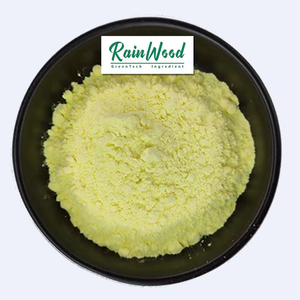
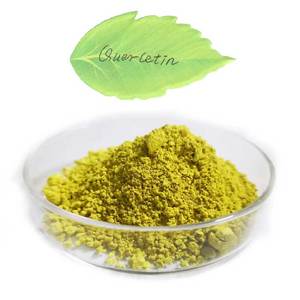
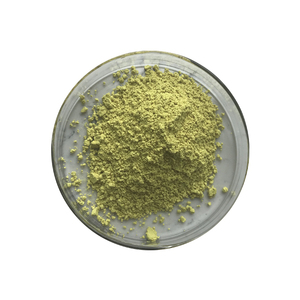
Chinese Factory Provide Competitive Price Quercetin Powder

Chinese Factory Provide Competitive Price Quercetin Powder

Purity Grade: Standardized 95%–98% Source: Sophora Japonica Flower Extract
Natural Quercetin Powder Sophora Japonica Flower Extract 95% Purity

Natural Quercetin Powder 95% Purity (Sophora Japonica)

CAS No: 117-39-5 Assay Method: HPLC Verified Marker Control
Liposomal Quercetin 50% High Absorption Encapsulated Powder

Liposomal Quercetin 50% High Absorption Powder

Technology: Phospholipid Liposome Matrix Bioavailability: Up to 20x Enhancement
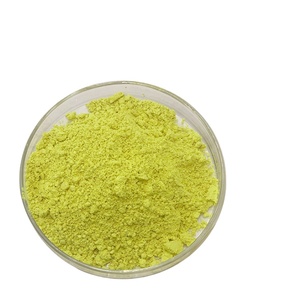
Wholesale Bulk Pure Quercetin Extract 98% Quercetin Powder

Wholesale Bulk Pure Quercetin Extract 98% Powder

Specification: 98% Min by HPLC Application: Dietary Supplement Actives
Sophora Japonica Extract Quercetin Anhydrous/Dihydrate Powder

Quercetin Anhydrous / Dihydrate Pure Powder

Form Options: Anhydrous & Dihydrate Packaging: 25kg Fiber Drum / Bottle
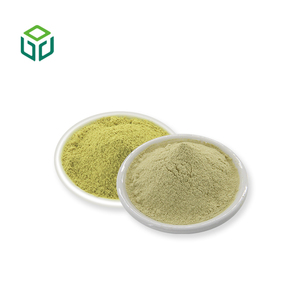
Factory Supply Sophora Japonica Extract Quercetin Powder 95% 98%

Factory Direct Sophora Japonica Quercetin Extract

Certifications: ISO, Halal, Kosher, GMP Solvent Residue: Meets EP & USP Limits
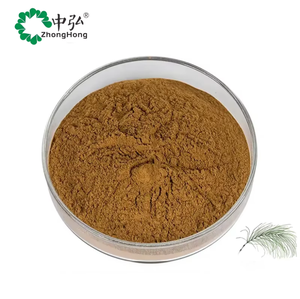
Factory Source Wild Horsetail Herb Extract Powder Food Grade Quercetin

Wild Horsetail Herb Extract Powder (Food Grade)

Key Actives: Silica & Natural Flavonoids Function: Bone & Collagen Strength
Price Powder 95 Granular Extract Dihydrate Anhydrous 98% Bulk Quercetin

Quercetin Granular & Fine Powder (95% / 98% Bulk)

Physical State: Direct Compression Granules Mesh Size: 80–120 Mesh Customisable
Technical Insight & Engineering Whitepaper

Supercritical CO₂ Fluid Extraction: Redefining Botanical Purity

A comprehensive examination of supercritical thermodynamic parameters, solvent-free phytonutrient separation, and industrial scale production in China.

1. Fundamentals of Supercritical CO₂ Fluid Extraction (scCO₂)

Supercritical Fluid Extraction (SFE) using carbon dioxide (CO₂) represents the gold standard in clean-label botanical processing. When carbon dioxide is brought above its critical temperature (31.1°C) and critical pressure (73.9 bar), it enters a thermodynamic state exhibiting properties of both a gas and a liquid. In this supercritical domain, CO₂ possesses liquid-like density and solvent power combined with gas-like diffusivity and low viscosity.

For high-value phytoconstituents—such as lipophilic polyphenols, terpenes, essential oleoresins, and delicate active flavonoids like Quercetin from Sophora Japonica—scCO₂ provides an ideal extraction medium. By precisely adjusting extraction temperature and vessel pressure, process engineers can fine-tune the fluid's density to selectively target specific hydrophobic or moderately polar molecular weights while leaving behind undesirable tars, heavy waxes, and inorganic impurities.

2. Solving Solvent Residue & Thermal Degradation Challenges

Traditional botanical extraction methods relying heavily on organic solvents (such as hexane, acetone, methanol, or chlorinated hydrocarbons) present significant regulatory, safety, and environmental hurdles. Solvent traces retained in finished powders often fail stringent European Pharmacopoeia (EP) and United States Pharmacopeia (USP) residual solvent thresholds (<50 ppm for Class 2 solvents). Furthermore, elevated thermal reflux during solvent evaporation can degrade heat-sensitive bioactives, destroying molecular integrity and reducing antioxidant potency.

Supercritical CO₂ processing completely eliminates these risks:

Zero Solvent Residue: Carbon dioxide is non-toxic, chemically inert, food-safe (GRAS), and completely evaporates upon depressurization, yielding a 100% solvent-free botanical concentrate or purified active monomer.

Low Processing Temperatures: Operating typically between 35°C and 55°C, scCO₂ protects thermolabile active compounds from thermal isomerisation or hydrolytic degradation.

Oxidation-Free Environment: Because the extraction environment is entirely saturated with inert CO₂, atmospheric oxygen is excluded, preventing oxidative deterioration of delicate lipophilic components during processing.

3. Industrial Comparison: scCO₂ vs. Conventional Extraction Methods

To assist global procurement managers and regulatory QA teams in evaluating raw material suppliers, the matrix below details the performance parameters across extraction technologies.

Supercritical CO₂ (scCO₂)

  • Solvent Residue: 0.0 ppm (Solvent-Free)
  • Thermal Degradation: Near Zero (35–45°C)
  • Selectivity: Extremely High (Density Tunable)
  • Environmental Impact: Green / Closed-Loop Recycled
  • Regulatory Compliance: EP / USP / Organic Compliant
  • Target Bioactives: Oils, Monomers, Oleoresins

Ethanol / Water Reflux

  • Solvent Residue: Traces Present (Requires Vacuum Drying)
  • Thermal Degradation: Moderate (60–80°C Exposure)
  • Selectivity: Medium (Co-extracts Sugars/Gums)
  • Environmental Impact: Requires Solvent Recovery Plants
  • Regulatory Compliance: Standard Food/Nutra Grade
  • Target Bioactives: Hydrophilic Flavonoids, Glycosides

Petrochemical Solvents (Hexane)

  • Solvent Residue: Strict Limits (<10–50 ppm)
  • Thermal Degradation: High Desolventizing Heat
  • Selectivity: Low to Moderate
  • Environmental Impact: High VOC Emissions Risk
  • Regulatory Compliance: Restricted in Clean-Label Lines
  • Target Bioactives: Crude Fats, Industrial Oils
Enterprise Scale & Reliability

RAAG Biotech Manufacturing Footprint

A decade of specialized botanical extraction, monomer purification, and global compliance.

2014
Established Year
300+
Annual Tons Capacity
80+
Global Enterprise Clients
99.8%
Batch Verification Rate
Strategic Sourcing Insights

Future Procurement Trends in Botanical Actives & Supercritical Extracts

How leading global pharmaceutical and nutraceutical buyers are reshaping their plant extract supply chains for 2025–2030.

⚡

1. High-Absorption Bioavailability Technologies

Standard raw plant powders often suffer from low intestinal absorption. Sourcing is shifting rapidly toward liposomal encapsulation (such as Liposomal Quercetin 50%) and phospholipid complexation (such as Silybin Phospholipids) to maximize bio-efficiency at lower clinical dosages.

🌱

2. Clean-Label & Zero-Solvent Mandates

Consumers and regulatory bodies (FDA, EFSA) are tightening limits on synthetic excipients and petrochemical extraction aids. Supercritical CO₂ extracts and water-based reflux powders are becoming mandatory for premium health brands.

🔬

3. Monomer Precision & Chromatographic Isolation

Global buyers are demanding narrow assay tolerances. Rather than variable ratio extracts (e.g., 10:1), contract manufacturers are standardizing on isolated monomer compounds purified via column chromatography up to 98%–99% assay limits.

🛡️

4. DNA & Farm-to-Drum Batch Traceability

Supply chain transparency is paramount. Leading Chinese manufacturers like RAAG Biotech link every production lot directly to contracted botanical growing bases, providing harvest verification, pesticide panels, and complete process logs.

⚙️

5. Customized Physical Particle Engineering

Formulators require powders tailored to specific dosage formats. Procurement teams are specifying custom bulk density, particle size distribution (80–200 mesh), directly compressible granules, and specific carrier systems (maltodextrin, gum arabic, or carrier-free).

Purchasing Guidance

Frequently Asked Questions for B2B Sourcing

Technical and commercial answers for QA managers, procurement directors, and formulation scientists.

What specific documentation accompanies each batch of extract?
Every export shipment is accompanied by a batch-specific Certificate of Analysis (COA) detailing marker assay by validated HPLC or UV testing, heavy metals (Pb, As, Cd, Hg), pesticide residue screening (compliant with EP/USP), moisture content, ash content, particle mesh size, and microbiological counts. Additional compliance files including MSDS, Technical Data Sheets (TDS), Flow Charts, Allergen Statements, Non-GMO Declarations, and BSE/TSE Certificates are provided.
What is the difference between Quercetin Dihydrate and Quercetin Anhydrous?
Quercetin Dihydrate contains two bound water molecules in its crystalline lattice structure, typically yielding a Quercetin content of approximately 85%–90% on an as-is basis (or 95%+ on a dried basis). Quercetin Anhydrous undergoes controlled thermal processing to remove water of crystallization, resulting in a minimum assay of 98% pure Quercetin powder. Anhydrous forms are preferred in moisture-sensitive oral solid formulations and softgel capsules.
How does RAAG Biotech control pesticide residues and heavy metals?
Raw botanical materials harvested from our contracted planting bases undergo mandatory quarantine screening prior to entering production. We operate in-house High-Performance Liquid Chromatography (HPLC), Gas Chromatography (GC), and Atomic Absorption Spectroscopy (AAS) equipment. Batches are tested against over 400 pesticide residue markers to meet strict European Union and North American food safety regulations.
What are the standard Minimum Order Quantities (MOQ) and lead times?
Our standard MOQ for commercial standardized extracts and plant powders is 25 kg (1 fiber drum). For high-purity isolated monomers or custom supercritical CO₂ trials, MOQs start at 1 kg. Pre-shipment samples (10–50 g) with COA are provided free of charge for laboratory evaluation. Standard lead time for stock items is 3–5 business days, while custom manufactured lots require 10–18 business days.
Can you provide OEM/ODM custom processing, particle sizing, and carriers?
Yes. Our R&D team offers custom physical granulation (direct compression grades), micro-milling down to 200 mesh, spray-drying with specified carrier matrices (maltodextrin, rice starch, sunflower lecithin), and water-dispersible micro-encapsulations to match your specific formulation machinery requirements.

Ready to Source High-Purity Supercritical & Botanical Extracts?

Contact our technical sales team today for batch documentation, current market pricing, detailed specifications, or to request your free evaluation sample.

Send an Inquiry