
Direct Factory Supply with Batch-Specific COA, HPLC Assay Verification, and Third-Party Lab Qualification
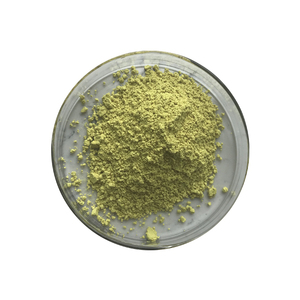
In the global nutraceutical and botanical market, Ashwagandha (Withania somnifera) has established itself as the cornerstone of adaptogenic formulations, stress-support protocols, cognitive health complexes, and performance nutrition. As international demand scales exponentially, global procurement directors, quality assurance managers, and contract manufacturers face an increasingly complex sourcing landscape. Navigating raw material variability, analytical methodology discrepancies (gravimetric vs. UV-Vis vs. high-performance liquid chromatography), solvent residue mandates, and heavy metal contamination thresholds requires a transparent, scientifically backed manufacturing partner.
China's botanical extraction industry has undergone a technological revolution over the past decade. Modern extraction facilities in China have integrated advanced column chromatography purification, membrane concentration, and supercritical CO2 extraction technology with strict international quality systems (cGMP, ISO 22000, KOSHER, HALAL, and USDA/EU Organic standards). This whitepaper offers an exhaustive analysis of the industrial extraction process, analytical standardization protocols, market trends, compliance frameworks, and formulation mechanics for wholesale buyers seeking high-efficiency B2B supply partnerships.
The therapeutic efficacy of Ashwagandha root extract is primarily attributed to a group of naturally occurring steroidal lactones known as Withanolides, including Withanolide A, Withanolide B, Withaferin A, Withanone, and 12-deoxywithastramonolide, alongside associated glycowithanolides (Indocidoside VIII, Withanoside IV, and Withanoside VI). However, a persistent technical challenge in wholesale procurement is the analytical discrepancy between testing methodologies.
Historically, legacy suppliers utilized gravimetric or spectrophotometric (UV-Vis) methods, which often measure total polyphenols or non-specific steroidal compounds, artificially inflating reported Withanolide concentrations to 10% or higher. Modern B2B procurement standards, aligned with the United States Pharmacopeia (USP) and European Pharmacopoeia (EP), mandate High-Performance Liquid Chromatography (HPLC) testing. HPLC isolations differentiate between active therapeutic Withanolides and undesirable cytotoxic alkaloids or adulterants.
| Extract Grade | Standardized Marker | Analytical Method | Solvent Profile | Primary Industrial Application |
|---|---|---|---|---|
| Ashwagandha Root Extract 2.5% | Total Withanolides ≥ 2.5% | HPLC / Reverse Phase | 100% Water / Clean Extract | Standard Dietary Capsules, Powders |
| Ashwagandha Standardized 5.0% | Total Withanolides ≥ 5.0% | USP / HPLC Method | Water & Food-Grade Ethanol | Nootropic Formulas, Stress Gummies |
| High-Potency Withanolide 10% | Total Withanolides ≥ 10.0% | HPLC (Withaferin A < 0.5%) | Ethanol Reflux & Chromatography | Pharmaceutical & Clinical Formulations |
| Water-Soluble Beverage Grade | Withanolides 2.5%–5.0% | HPLC / 100% Soluble | Aqueous Extraction & Spray Dry | Functional Beverages, RTD Mixes |
| Liposomal Ashwagandha Powder | Encapsulated Active Complex | Particle Size < 200nm HPLC | Phospholipid Complex Matrix | High Bioavailability Supplements |
| Organic Ashwagandha Powder | Whole Root Ratio 10:1 / 20:1 | TLC Marker Identification | Water Hydro-extraction | Organic Certified Clean-Label Lines |
A vital detail evaluated by regulatory agencies (such as EFSA and US FDA) is the concentration of Withaferin A. While Withaferin A exhibits specific cytotoxic activity studied in pharmaceutical research, high concentrations in daily adaptogenic health supplements are undesirable due to potential cellular toxicity. Premier Chinese manufacturing facilities utilize sophisticated column chromatography and solvent partition technologies to selectively concentrate beneficial Withanolide glycosides while maintaining Withaferin A at safe, compliant levels (< 0.5% or undetectable limits depending on client specifications).
Isolation of target Withanolides using food-grade resin columns, achieving precise concentration ranges (1% to 10% HPLC) while stripping out residual impurities.
Every production batch undergoes ICP-MS heavy metal testing (Pb < 0.5ppm, As < 0.5ppm, Cd < 0.5ppm, Hg < 0.1ppm) and GC-MS/MS multi-pesticide residue analysis matching USP <561>.
Contracted growing bases record harvest region, drying methods, and agricultural inputs, providing complete audit records from seed to finished drum.
The global market for botanical extracts is shifting rapidly from low-cost commodity buying toward value-added technical partnerships. B2B buyers must anticipate several structural trends when establishing long-term contract manufacturing agreements with Chinese suppliers:
Standard herbal extracts often suffer from low oral bioavailability due to degradation in the gastrointestinal tract and poor lipophilic absorption. Next-generation supplement brands are demanding Liposomal Ashwagandha and Liposomal Quercetin powders. By wrapping active compounds within a phospholipid bilayer matrix (utilizing non-GMO sunflower or soy lecithin), bioavailability increases by 300% to 500%. Factories equipped with high-pressure homogenization and microencapsulation machinery represent the future of functional ingredient supply.
Regulatory scrutiny around organic solvent residues (such as methanol, ethyl acetate, or methylene chloride) has driven major consumer shifts. The EU and US markets now heavily favor extracts manufactured exclusively via Aqueous (Water) Extraction or Supercritical CO2 Extraction. Supercritical fluid technology uses carbon dioxide under pressurized liquid states, extracting lipophilic actives without leaving a single molecule of chemical solvent residue in the finished powder.
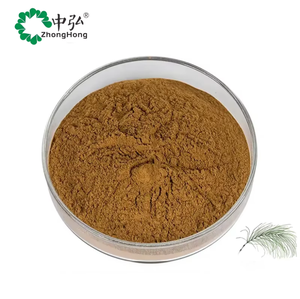
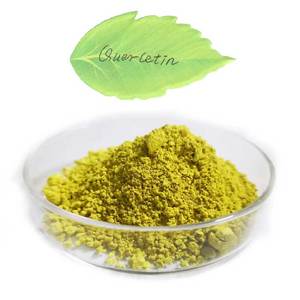
Finished product manufacturers are moving away from single-ingredient SKUs. Strategic brand formulators combine Ashwagandha root extract with synergistic botanical actives like Quercetin Powder (Sophora Japonica Extract), Horsetail Herb Extract (for natural organic silica), and Phosphatidylserine for comprehensive hypothalamic-pituitary-adrenal (HPA) axis balance. Sourcing multiple standardized actives from a unified, GMP-audited factory significantly reduces logistics overhead and analytical testing costs.
To maximize commercial success, brand procurement teams must align raw material specifications with end-user category demands. Below is a breakdown of how standardized Ashwagandha extract is being formulated into emerging product verticals:
RAAG Biotech Co., Ltd. (founded in 2014) operates as a primary manufacturer and specialized extraction house in Xi'an, Shaanxi Province, China. Unlike trading desks that buy open-market batches of unknown heritage, our production lines operate under strict quality management systems (cGMP, ISO, HALAL, KOSHER, and Organic verification).
Our infrastructure covers over 15,000 square meters of modern clean-room production, utilizing 8 extraction lines, membrane concentration units, vacuum drying ovens, and high-capacity spray drying towers. Our internal Quality Control (QC) laboratory is equipped with state-of-the-art analytical tools:
Every shipment dispatched from our warehouse carries a batch-specific Certificate of Analysis (COA), Safety Data Sheet (MSDS), Technical Data Sheet (TDS), Flow Chart, and Allergen/GMO-Free Declaration. We provide retained samples for every manufactured lot for up to 3 years, giving global buyers full confidence during internal audits or third-party testing by Eurofins, SGS, or Intertek.
Technical & Commercial Clarifications for Procurement Directors and Quality Control Laboratories
We primarily utilize High-Performance Liquid Chromatography (HPLC) in accordance with USP/EP standards. HPLC allows us to separate and accurately quantify individual Withanolides (including Withanolide A, Withaferin A, and Withanone) rather than relying on non-specific UV spectrophotometry which can yield false high readings due to interfering compounds.
Yes. As a direct extraction facility, we control physical and chemical parameters during processing. We can supply fine powders (80–120 mesh) for capsule filling, direct-compression granules (20–40 mesh) for tableting, or 100% water-soluble instant grades for functional drink mixes. Solvent residues are maintained strictly below European Pharmacopoeia limits (Ethanol < 5000ppm, Ethyl Acetate < 1000ppm).
All raw botanical materials pass identity, moisture, and contaminant screening prior to extraction. Finished lots undergo ICP-MS testing for Lead, Arsenic, Cadmium, and Mercury, ensuring full compliance with California Proposition 65 and EU Regulation (EC) No 1881/2006. Pesticide profiles are screened against over 500 analytes under USP <561> and EP guidelines.
Our standard MOQ for standardized extracts is 1 kg for high-purity compounds/monomers and 25 kg (one standard fiber drum) for commercial bulk powders. We maintain rolling inventory for core specifications (5% HPLC Withanolides, 98% Quercetin), enabling dispatch within 3–5 working days. Custom production runs typically take 10–15 business days.
Yes. We offer free 10g–50g pre-shipment samples complete with batch-specific COAs for laboratory assay verification. For international buyers, we provide full regulatory support including ISO, HALAL, KOSHER, Organic certificates, allergen statements, BSE/TSE-free declarations, and customs documentation.
Absolutely. We operate dedicated liposomal encapsulation lines utilizing non-GMO lecithin matrices. We produce liposomal powders with high bio-absorption profiles for Ashwagandha, Quercetin, Phosphatidylserine, and other lipophilic actives, verified by dynamic light scattering (DLS) particle size analysis.
Request a competitive bulk price quote, batch COA, or request a free sample for lab evaluation. Our technical team responds within 12 hours.
Contact Us