
Explore our export-grade Sophora Japonica derivatives, manufactured under strict GMP compliance with full certificate of analysis (COA) verification for global B2B buyers.
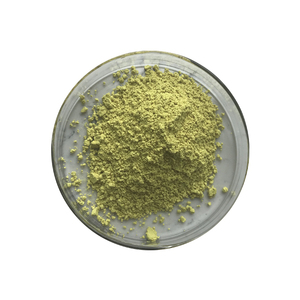
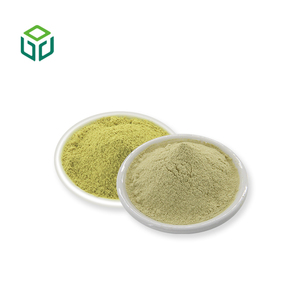
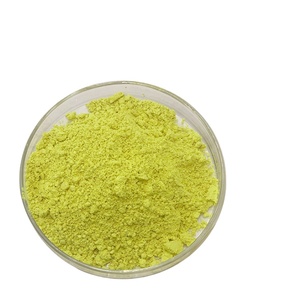
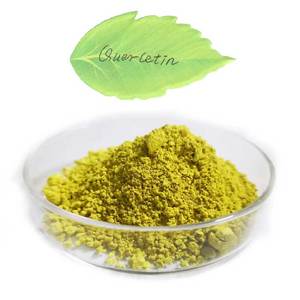
As a leading China wholesale herbal extract manufacturer & exporter, RAAG Biotech Co., Ltd. maintains rigorous industrial control over the conversion of raw botanical biomass into high-purity flavonoid compounds. Quercetin (3,3',4',5,7-pentahydroxyflavone) derived from the flower buds of Sophora japonica L. (Flos Scrophulariae / Huai Mi) represents one of the most commercially critical polyphenolic monomers in global clinical nutrition and pharmaceutical manufacturing.
Technical Insight: The molecular structure of Quercetin contains a chromone core substituted with five hydroxyl groups. Its bioaccessibility, solid-state stability, and analytical quantification depend heavily on controlling the crystal hydration state (Dihydrate vs. Anhydrous) and optimizing enzymatic cleavage during primary extraction.
The concentration of Rutin (Quercetin-3-O-rutinoside) in Sophora japonica flower buds reaches peak levels during the pre-anthesis stage, yielding raw biomass with 15% to 25% total glycoside content. RAAG Biotech establishes contracted plantation bases across Shaanxi and Henan provinces, implementing strict agricultural controls to prevent heavy metal uptake (Lead, Cadmium, Arsenic, Mercury) and minimize synthetic pesticide residue accumulation.
To produce commercial Quercetin Dihydrate (CAS 6151-25-3) and Quercetin Anhydrous (CAS 117-39-5) at 95%–98% purity, raw Rutin undergoes precise acid-catalyzed hydrolytic cleavage. The rutinoside sugar moiety (consisting of glucose and rhamnose) is cleaved off, leaving the aglycone flavonol core:
Rutin (C27H30O16) + H2O —[H+ / Heat]→ Quercetin (C15H10O7) + Rhamnose (C6H12O5) + Glucose (C6H12O6)
Post-hydrolysis, raw Quercetin is purified using food-grade ethanol recrystallization and column chromatography. This process eliminates residual glycosides, kaempferol impurities, and inorganic salts, yielding an ultra-pure powder with uniform crystal morphology.
| Specification Parameter | Quercetin Dihydrate 95% | Quercetin Anhydrous 98% | Liposomal Quercetin 50% | Granular Quercetin 95% |
|---|---|---|---|---|
| CAS Number | 6151-25-3 | 117-39-5 | 117-39-5 (Complexed) | 6151-25-3 |
| Assay (HPLC-DAD) | ≥ 95.0% (Dried Basis) | ≥ 98.0% (Dried Basis) | ≥ 50.0% Active Load | ≥ 95.0% |
| Water Content (KF) | 9.0% - 12.0% | ≤ 3.0% | ≤ 5.0% | ≤ 10.0% |
| Bulk Density | 0.25 - 0.40 g/mL | 0.30 - 0.45 g/mL | 0.45 - 0.60 g/mL | 0.55 - 0.70 g/mL |
| Particle Size | 100% through 80 Mesh | 100% through 100 Mesh | Nano-dispersed (<200nm) | 20 - 60 Mesh Granules |
| Primary Target Application | Standard Capsules & Tablets | Moisture-Sensitive Premixes | High-Bioavailability Formulations | Direct Direct-Compression (DC) |
Strategic purchasing insights for enterprise procurement managers, R&D formulators, and supply chain directors in the global nutraceutical and functional food space.
Standard raw Quercetin powder exhibits low aqueous solubility (<0.01 mg/mL at 25°C) and limited intestinal lipophilicity, leading to poor systemic oral bioavailability (<2%).
The market is rapidly shifting toward Liposomal Encapsulated Quercetin and phospholipid complexes. By coating the active monomer in a phospholipid lipid bilayer, mucosal absorption is enhanced up to 450%, opening new opportunities for low-dose, high-efficacy formulations.
Global regulatory bodies (US FDA, EFSA, Health Canada) have tightened limits on ethylene oxide (EtO), pyrrolizidine alkaloids (PAs), and residual extraction solvents.
B2B importers now mandate zero-tolerance for chlorinated solvents. RAAG Biotech utilizes purely aqueous-ethanol extraction systems, ensuring compliance with ICH Q3C Class 3 solvent safety limits and EU Regulation (EC) No 396/2005 for pesticide residues.
Traditional fine powders suffer from electrostatic charging, poor flowability, and dusting during high-speed tableting operations.
Procurement teams are increasingly requesting Direct Compression (DC) Quercetin Granules. Processed with binder-free roll compaction, these granules optimize flowability, reduce capping risks, and lower overall manufacturing costs in capsule filling lines.
Established in 2014 in Xi'an, Shaanxi Province, RAAG Biotech Co., Ltd. operates as a specialized primary manufacturer of standardized botanical extracts, plant monomers, essential oils, and CO2 supercritical oleoresins. Unlike general trading agencies, our foundation is built on technical precision, analytical rigor, and sustainable supply chains.
Our extraction lines feature multi-stage stainless steel reflux extractors, continuous membrane concentration systems, spray-drying towers, and supercritical CO2 extraction units. Operating under cleanroom environments, our factory delivers a combined annual output exceeding 300 metric tons.
Every production lot undergoes comprehensive testing prior to quarantine release. Our internal testing suite is equipped with High-Performance Liquid Chromatography (HPLC-DAD), Gas Chromatography (GC-MS), Atomic Absorption Spectrophotometry (AAS), and UV-Vis Spectrophotometers for absolute marker verification.
We log every step of the supply chain—from crop planting geographic coordinates, drying parameters, and solvent lot numbers to final drum sealing dates. Each exported batch comes complete with a lot-specific COA, MSDS, Allergen Statement, Non-GMO Certificate, and Flow Chart.
Clear, direct answers regarding technical parameters, analytical methods, customization, and logistics.
Quercetin Dihydrate (CAS 6151-25-3) contains two bound water molecules within its crystalline matrix, resulting in a theoretical water content of around 9% to 12%. Quercetin Anhydrous (CAS 117-39-5) undergoes controlled thermal vacuum desiccation to strip away bound water, maintaining moisture levels under 3%. Anhydrous quercetin is preferred for moisture-sensitive formulations, softgel oils, and hygroscopic vitamin blends.
UV-Vis spectrophotometry measures total light absorption at specific wavelengths (e.g., 370 nm) and can over-quantify potency by counting related flavonol impurities like Kaempferol or Isorhamnetin. High-Performance Liquid Chromatography (HPLC-DAD) physically separates compound peaks on a C18 column, providing a precise, isolated quantification of pure Quercetin. RAAG Biotech standardizes all commercial guarantees against validated HPLC methods.
We utilize an aqueous ethanol (food-grade ethanol and purified water) reflux system for extraction and isolation. We do not use toxic chlorinated solvents such as dichloromethane, chloroform, or ethylene dichloride. All final product lots comfortably meet the stringent residual solvent safety limits set by ICH Q3C guidelines and the European Pharmacopoeia (EP).
Yes. We offer custom micronization down to 200 mesh, direct-compression granulations (20–60 mesh), low-density micronized powders, and pre-blended liposomal complexes. Standard bulk packaging is supplied in 25 kg fiber drums with double food-grade polyethylene inner liners. Smaller trial quantities (1 kg to 5 kg aluminium foil bags) are available for R&D pilots.
Every commercial order is dispatched with a batch-specific Certificate of Analysis (COA), Material Safety Data Sheet (MSDS), Technical Data Sheet (TDS), Process Flow Diagram, Non-GMO Declaration, BSE/TSE-Free Certificate, and Country of Origin Certification. Third-party testing via SGS or Eurofins can be arranged prior to vessel departure.