Email: [email protected] Bulk botanical extract manufacturing since 2014

China Wholesale Seed Extract Factory & Supplier

Industrial-Scale Standardized Botanical Extracts, Liposomal Bioavailability Solutions & Monomers for Global B2B Procurement

Factory Direct Supply

Standardized Quercetin & Botanical Seed Extract Catalog

High-purity botanical monomers, liposomal formulations, and customized ratio powders verified by HPLC/UV analysis with full batch traceability.
Chinese Factory Provide Competitive Price Quercetin Powder
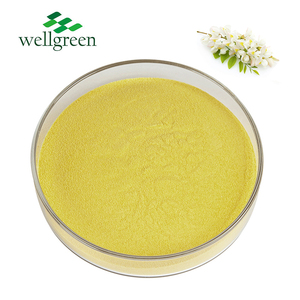
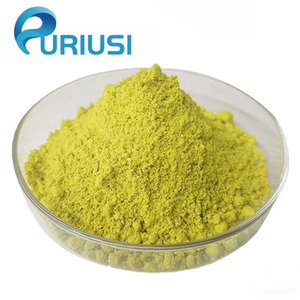
Natural Quercetin Powder Sophora Japonica Flower Extract 95% Purity
Natural Quercetin Powder (Sophora Japonica Flower Extract) 95% Purity Solvent Extracted CAS 117-39-5 Puriusi Brand Yellow
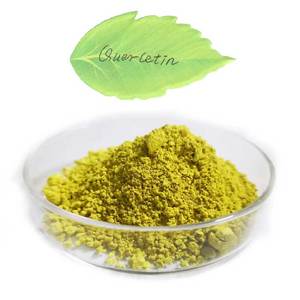
Liposomal Quercetin 50% High Absorption Liposome Encapsulated Quercetin Powder
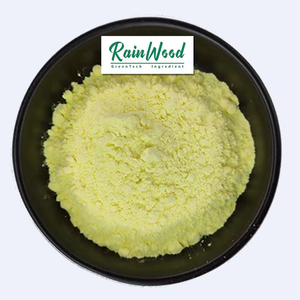
Wholesale Bulk Pure Quercetin Extract 98% Quercetin Powder
Dietary Supplement Food Sophora Japonica Extract Quercetin Anhydrous Dihydrate
Dietary Supplement Food Sophora Japonica Extract Quercetin Anhydrous/Dihydrate Pure Quercetin Powder Bottle Drum Organic
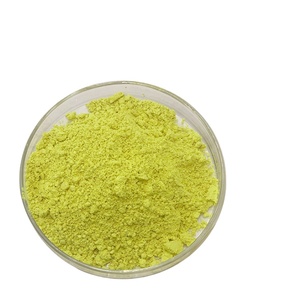
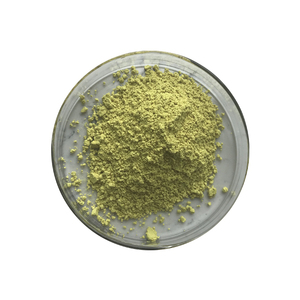
Factory Supply Sophora Japonica Extract Quercetin Powder 98% 95%
Factory Supply Sophora Japonica Extract Quercetin Powder 98% 95% Quercetin
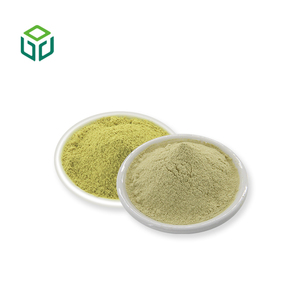
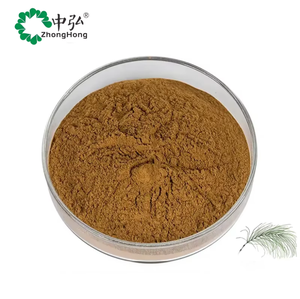
Factory Source Wild Horsetail Herb Extract Powder Food Grade Quercetin
Factory Source Wild Horsetail Herb Extract Powder Food Grade Quercetin for Bone Strength Supplements-Wholesale Herb Extracts
Price Powder 95 Granular Extract Dihydrate Anhydrous 98% 1Kg Bulk Quercetin
10+
Years Manufacturing Experience
300+
Metric Tons Annual Capacity
98%
Max Assay Purity Standard
40+
Countries Exported Worldwide
Industrial Excellence

Core Competencies & Advanced Extraction Technologies

Why premier global pharmaceutical, nutraceutical, and functional food brands partner with our manufacturing ecosystem.

Supercritical CO2 & Reflux Distillation

Operating multi-stage eco-friendly supercritical fluid extraction (SFE-CO2) lines alongside solvent-reflux distillation to guarantee ultra-low residual solvents complying strictly with EP 2.4.24 and USP <467> standards.

GMP-Audited Quality Control

Fully equipped analytical testing laboratory featuring high-performance liquid chromatography (HPLC), UV-Vis spectroscopy, GC-MS, and ICP-MS for rigorous lot-level assay, heavy metal, and pesticide profiling.

End-to-End Field Traceability

Direct oversight of contracted agricultural bases (GAP compliant) for botanical seed raw materials, ensuring complete backward lot tracking from final sealed drum to specific harvest geographic regions.

Analytical Insights

Quercetin Formulations Technical Comparison Matrix

Selecting the optimal active pharmaceutical ingredient (API) or nutraceutical grade based on molecular state and formulation requirements.

Product Grade / Variant Active Marker / Assay Physical State In-Vitro Bioavailability Primary Application Target Bulk Density Range
Quercetin Dihydrate (Sophora) ≥ 95% or 98% (HPLC) Yellow Micro-Crystalline Powder Standard (Lipophilic baseline) Dietary Capsules, Tablets, Hard-Shells 0.35 – 0.50 g/mL
Quercetin Anhydrous ≥ 98% (HPLC) Fine Dehydrated Powder Moderate (< 2% Moisture Content) High-Potency Compressed Formulations 0.40 – 0.55 g/mL
Liposomal Quercetin Powder 50% Encapsulated Quercetin Free-Flowing Granular / Micro-Powder Ultra-High (4x - 8x Enhanced) Effervescent Sachets, Liquid Shots, Functional Foods 0.45 – 0.60 g/mL
Horsetail Extract (Quercetin Silicates) Ratio 10:1 / Standardized Silica Fine Light-Brown Powder High Synergistic Mineral Absorption Bone Density & Collagen Support Formulations 0.30 – 0.45 g/mL

China Wholesale Seed Extract Industry: Technical Whitepaper & B2B Procurement Manual

As the global health and wellness sector pivots toward evidence-based phytotherapy and high-efficacy bio-actives, China has established itself as the undisputed epicenter for plant extraction processing, botanical seed raw material refining, and flavonoid monomer isolation. Within this industrial framework, RAAG Biotech Co., Ltd. operates at the leading edge of technical innovation, synthesizing natural raw materials—such as Sophora japonica flower buds, specialized oilseeds, and traditional botanical seeds—into bioavailable compounds supplied globally.

This technical whitepaper outlines the structural parameters of wholesale seed extract manufacturing, evaluating extraction pathways, regulatory requirements, molecular stability, and future market trajectories for global procurement managers, formulators, and QA specialists.

1. Chemistry & Molecular Characterization of Sophora-Derived Quercetin

Quercetin (3,3',4',5,7-pentahydroxyflavone) is a naturally occurring aglycone flavonoid belonging to the flavonol subclass. Commercial production primarily utilizes the flower buds and seed pods of Sophora japonica L. (Japanese Pagoda Tree), which offer unmatched concentration levels of rutin (quercetin-3-O-rutinoside). The manufacturing process requires controlled acid hydrolysis to cleave the glycosidic linkage, yielding high-purity quercetin monomers.

1.1 Dihydrate vs. Anhydrous Structural Dynamics

B2B buyers frequently weigh the structural differences between Quercetin Dihydrate (CAS 6151-25-9) and Quercetin Anhydrous (CAS 117-39-5):

  • Quercetin Dihydrate: Contains two water molecules within its crystal lattice. This is the most thermodynamically stable form under standard ambient storage conditions. It demonstrates excellent long-term shelf stability without hygroscopic degradation.
  • Quercetin Anhydrous: Produced via thermal vacuum dehydration, removing bound lattice water to achieve moisture levels under 2.0%. Anhydrous quercetin is preferred for moisture-sensitive delivery vehicles, such as direct-compression tablet matrices or non-aqueous liquid suspensions.

2. Technological Breakthroughs in Bioavailability: The Liposomal Revolution

A persistent technical barrier for native plant-derived quercetin and lipophilic seed extracts has been poor intestinal absorption, rapid phase-II metabolic clearance, and minimal water solubility (less than 0.01 mg/mL at 25°C). Standard crystalline quercetin exhibits low oral bioavailability (~2%), requiring elevated dosing that can cause formulation challenges.

2.1 Phospholipid Encapsulation Mechanisms

To overcome these pharmacokinetic limitations, RAAG Biotech Co., Ltd. has scaled industrial production of Liposomal Quercetin 50% Powder. Utilizing sunflower or soy lecithin carrier matrices, hydrophobic quercetin molecules are entrapped within the lipid bilayer of spherical nanovesicles (average particle diameter: 100nm – 250nm).

This liposomal architecture provides critical operational benefits:

  • Protection Against Gastric Degradation: The lipid bilayer shields the active polyphenol core from acidic breakdown within the stomach.
  • Enhanced Cellular Transport: Liposomal vesicles fuse directly with intestinal enterocyte membranes, facilitating lymphatic transport while bypassing hepatic first-pass metabolism.
  • Formulation Flexibility: Liposomal quercetin powder disperses evenly into aqueous environments, allowing inclusion in functional beverages, stick-packs, and gummy formulations without gritty mouthfeel or precipitation.

3. Enterprise Manufacturing Strengths & Quality Systems

Modern botanical extraction requires balancing industrial volume with analytical precision. As an established manufacturer, our facility integrates comprehensive quality frameworks to maintain batch consistency across multi-ton production cycles.

3.1 Advanced Unit Operations & Extraction Pathways

Our processing cleanrooms (Class 100,000 GMP standard) utilize customized unit operations tailored to target molecular profiles:

  • Supercritical Fluid Extraction (SFE-CO2): Employs carbon dioxide in its supercritical state (>31.1°C, >73.9 bar) to extract lipophilic seed fractions, seed essential oils, and volatile oleoresins without toxic organic solvents.
  • Hydro-Ethanolic Reflux & Column Chromatography: Utilizes food-grade ethanol-water solutions followed by macroporous resin column chromatography to selectively enrich active flavonoids to 95% and 98% purity levels.
  • Low-Temperature Vacuum Drying & Spray Drying: Preserves heat-sensitive molecular structures, preventing oxidation and thermal degradation during phase transitions.

3.2 Rigorous Analytical Protocol & Quality Assurance

Every commercial batch is accompanied by a full Certificate of Analysis (COA) backed by internal laboratory testing and third-party audit verification (SGS, Eurofins):

  • High-Performance Liquid Chromatography (HPLC): Quantifies active marker assay percentage against recognized USP/EP reference standards.
  • Inductively Coupled Plasma Mass Spectrometry (ICP-MS): Enforces strict heavy metal limits (Lead < 0.5 ppm, Arsenic < 0.5 ppm, Cadmium < 0.5 ppm, Mercury < 0.1 ppm).
  • Gas Chromatography-Mass Spectrometry (GC-MS): Screens for 400+ pesticide residues and verifies solvent residues remain below ICH Q3C safety thresholds.
  • Microbiological Control: Enforces total plate counts under 1,000 CFU/g, zero tolerance for E. coli, Salmonella, and Staphylococcus aureus.

4. Future Procurement & Global Market Trends (2025–2030)

The global market for seed extracts and plant monomers is experiencing structural shifts driven by regulatory tightening, sustainability directives, and consumer demand for clean-label, bio-enhanced ingredients. B2B procurement teams must navigate several key market dynamics:

4.1 Transition Toward Clean-Label & Green Chemistry

Global regulatory bodies, particularly the European Chemicals Agency (ECHA) and the European Food Safety Authority (EFSA), are accelerating restrictions on residual industrial solvents (such as dichloromethane and hexane). Procurement workflows are prioritizing manufacturers using CO2 supercritical extraction, water-based enzymatic digestion, and food-grade ethanol processing systems.

4.2 Custom Particle Engineering & Mesh Control

Finished dose manufacturers increasingly demand tailored physical properties. Fine micronized powders (mesh sizes 80 to 200) are required for rapid dissolution capsules, while low-dust granular quercetin (mesh 20 to 60) is preferred for high-speed automated direct-compression tableting lines to optimize flowability and prevent equipment binding.

4.3 Sustainable Sourcing & ESG Compliance

Corporate sustainability mandates require full agricultural traceability. Brand owners must verify that raw botanical seeds are sourced from GAP-certified farms practicing responsible land management, minimal pesticide application, and fair-trade labor practices. Farm-to-drum traceability is no longer optional—it is a core qualification criterion for international brand registration.

Buyer Knowledge Base

Frequently Asked Questions for B2B Procurement

Technical and logistical insights to streamline supplier qualification and import clearance.

What documentation package accompanies each bulk shipment of seed extract?
Every standard shipment includes a batch-specific Certificate of Analysis (COA featuring HPLC/UV assay results), Material Safety Data Sheet (MSDS), Technical Data Sheet (TDS), Flow Chart diagram, Allergen Statement, Non-GMO Certification, BSE/TSE-Free Statement, and Pesticide/Heavy Metal Screening Reports. Third-party testing by SGS or Eurofins can be arranged prior to vessel dispatch.
What is the Minimum Order Quantity (MOQ) and sample evaluation protocol?
Our standard MOQ for commercial batch production of standardized extracts and plant powders is 25 kg (supplied in sealed food-grade fiber drums with double PE inner bags). For high-purity monomers or specialized liposomal grades, MOQs start at 1 kg. We offer complimentary 20g to 50g sample kits with COAs for qualified R&D laboratories and analytical evaluation.
How do you manage batch-to-batch color stability and active marker consistency?
Batch consistency is achieved by controlling raw material intake at our contracted planting bases and blending qualified agricultural lots prior to extraction. Our automated extraction equipment monitors extraction temperature, pressure, and solvent ratios in real time, preventing thermal degradation and ensuring active content remains within a tight target range (+/- 0.5% for 95% quercetin grades).
Can you customize powder physical properties like bulk density, mesh size, or soluble carriers?
Yes. Our R&D team offers custom physical engineering. We can adjust mesh sizes (80 to 200 mesh), supply granular direct-compression formats, adjust bulk density, or formulate water-dispersible complexes using organic maltodextrin, acacia gum, or sunflower lecithin carriers tailored to your specific formulation machinery.
What are your international compliance standards for European and North American markets?
Our production plant operates under certified ISO 9001, ISO 22000, HACCP, HALAL, and KOSHER quality management systems. Our extracts comply with US FDA dietary supplement regulations, USP/EP monographs for residual solvents, heavy metals, and micro-limits, as well as EU Novel Food guidelines where applicable.

Request Custom Specifications, COA & Technical Samples

Partner directly with China's leading wholesale seed extract facility. Contact our technical sales desk today to request batch pricing, specification sheets, or R&D evaluation samples.

Contact Us