
Explore our standardized SOP-driven plant monomer isolates and high-purity Quercetin derivatives, manufactured under ISO, HALAL, KOSHER & GMP-audited protocols for global pharmaceutical and nutraceutical formulators.
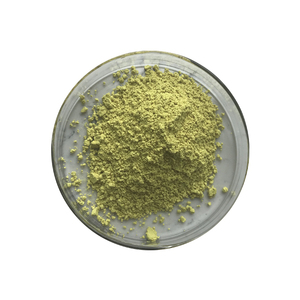
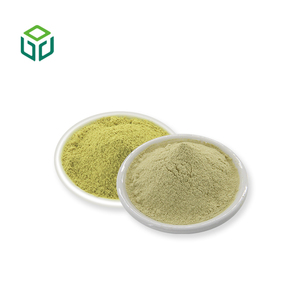
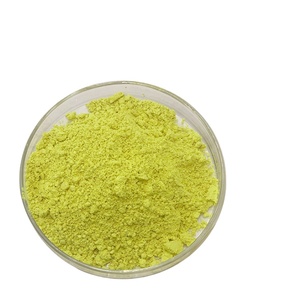
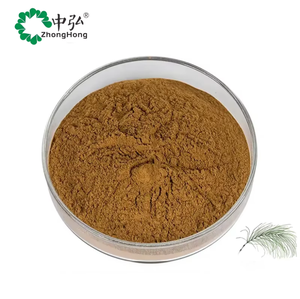
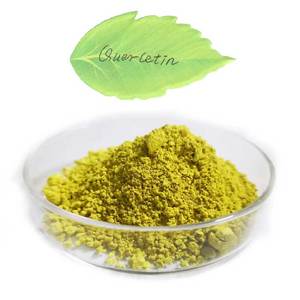
In the evolving landscape of global phytopharmaceuticals and advanced nutraceutical formulations, the procurement paradigm has fundamentally shifted from crude botanical extracts toward highly purified single-compound isolates—known in industrial chemistry as Pure Monomers. As a premier Custom OEM Pure Monomer Supplier & Exporter, RAAG Biotech Co., Ltd. bridges the critical gap between raw botanical harvesting and pharmaceutical-grade chemical isolation.
Pure monomers represent the pinnacle of phytochemical processing. Unlike standard ratio extracts (e.g., 10:1 or 20:1) or crude standardized mixtures, a plant monomer is a single, well-defined molecular entity with a verified purity profile typically exceeding 95%, 98%, or 99% by High-Performance Liquid Chromatography (HPLC). The flagship exemplar of this technology is Quercetin (CAS 117-39-5), a pentahydroxyflavone isolated primarily from the flower buds of Sophora Japonica L. (Japanese Pagoda Tree).
Information Gain Principle: Why Modern Formulators Prefer Pure Monomers over Crude Extracts: Standardized monomers eliminate phytochemical variance caused by soil composition, weather fluctuations, and regional harvesting differences, guaranteeing exact active dosage, reduced batch-to-batch variation, and predictable pharmacokinetic activity in clinical trials and finished consumer products.
The manufacturing process of custom monomers involves complex multi-stage separation operations, including high-efficiency reflux extraction, specialized enzymatic hydrolysis (converting Rutin into Quercetin), column chromatography purification, fractional crystallization, and controlled vacuum drying. Operating from our state-of-the-art production base in Xi'an, Shaanxi Province, RAAG Biotech executes these advanced bioprocesses under strict GMP guidelines to supply international B2B clients with audit-ready documentation and verified batch consistency.
Procurement teams require comprehensive analytical parameters to ensure seamless integration into solid dosage forms (tablets, hard-shell capsules), liquid suspensions, liposomal emulsions, and cosmetic matrices. Below is the standardized technical spectrum maintained by RAAG Biotech Co., Ltd. for our OEM pure monomer grades.
| Parameter | Quercetin Dihydrate (Standard Grade) | Quercetin Anhydrous (High Assay) | Liposomal Quercetin Powder | Granular Quercetin (DC Grade) |
|---|---|---|---|---|
| CAS Registry Number | 6151-25-9 | 117-39-5 | 117-39-5 (Encapsulated) | 6151-25-9 / 117-39-5 |
| Assay Concentration (HPLC) | ≥ 95.0% or ≥ 98.0% | ≥ 98.0% (On Dry Basis) | 50.0% Active Monomer | ≥ 95.0% / 98.0% Active |
| Physical Appearance | Fine Yellow Crystalline Powder | Yellow-Green Powder | Light Yellow/Cream Powder | Free-Flowing Granules |
| Loss on Drying | 9.5% – 12.0% | ≤ 4.0% | ≤ 5.0% | ≤ 8.0% |
| Solubility Profile | Soluble in Ethanol, Alkaline Water | Soluble in Ethanol & DMSO | Water-Dispersible (Nano Emulsion) | Dispersible in Organic Phase |
| Bulk Density | 0.35 – 0.55 g/mL | 0.40 – 0.60 g/mL | 0.45 – 0.65 g/mL | 0.60 – 0.75 g/mL |
| Heavy Metal Limits | Pb ≤ 2ppm, As ≤ 1ppm, Cd ≤ 1ppm, Hg ≤ 0.1ppm (ICP-MS Verified) | Pb ≤ 1ppm, As ≤ 1ppm, Cd ≤ 0.5ppm, Hg ≤ 0.1ppm | Compliant with USP <232> / EP standards | Strict compliance with EU regulation 2023/915 |
| Microbiological Profile | Total Plate Count < 1,000 cfu/g, Yeast & Mold < 100 cfu/g, E. Coli Negative, Salmonella Negative | Total Plate Count < 1,000 cfu/g, Microbe Controlled | Low-bioburden food & cosmetic grade | Ultra-low micro count for direct compression |
RAAG Biotech Co., Ltd. is a specialized extraction manufacturer, not a trading company. Our infrastructure is engineered to satisfy global regulatory scrutiny, supplying clients with full transparency and verified operational excellence.
Our plant operates specialized stainless-steel multi-stage glass-lined reactors dedicated solely to high-purity monomer separation, eliminating cross-contamination risk and ensuring batch-to-batch chemical identity.
We manage direct agricultural partnerships in prime growing regions across Shaanxi, Henan, and Shanxi provinces. Raw Sophora Japonica buds are monitored from soil preparation through harvest, documenting drying methods and eliminating unauthorized pesticide usage at the source.
Every lot undergoes rigorous analytical clearance in our internal testing center equipped with Agilent High-Performance Liquid Chromatographs, Gas Chromatographs with Headspace Solvents Analyzer, and Atomic Absorption Spectrometers (AAS).
Beyond molecular extraction, we offer physical modifications tailored to client formulation needs: particle micronization (down to 500 mesh), custom jet milling, granulating for direct tablet compression, and liposomal encapsulation for superior intestinal uptake.
We provide full batch documentation required by FDA, EFSA, and TGA regulatory frameworks, including CoA, MSDS, Flow Charts, Residual Solvent Limits (USP <467>), Allergen Statements, Non-GMO Declarations, and Ethylene Oxide (EtO)-Free Certificates.
Standard packaging includes double-layer food-grade polyethylene inner bags sealed inside fiber drums (25kg net weight). We support customized trial samples (10g to 1kg) and facilitate rapid air, sea, or express delivery with dedicated customs documentation.
The global botanical monomer market is undergoing rapid evolution driven by technological breakthroughs, tightening environmental legislation, and shifting consumer expectations for clean-label, bioavailable ingredients. Forward-looking procurement directors must align their supply chains with four major structural trends:
A classic challenge of hydrophobic flavonoids like Quercetin is their limited aqueous solubility and modest oral bioavailability (often under 2% in unformulated crystalline form). To overcome this physiological bottleneck, procurement is pivoting rapidly toward modified delivery vehicles. Liposomal Quercetin—utilizing phospholipid bilayer structures—increases cellular uptake by up to 20 times. RAAG Biotech's R&D facility has commercialized stabilized liposomal powders that maintain high loading capacity while remaining stable during encapsulation and tableting.
Global regulatory bodies, particularly in the European Union (under REACH and updated food safety mandates), are placing unprecedented restrictions on traditional organic solvents such as dichloromethane, dichloroethane, and high-volume methanol. The future of OEM monomer production belongs to closed-loop green chemistry platforms—utilizing food-grade ethanol reflux, enzymatic hydrolysis, and Supercritical CO2 Extraction. These techniques reduce volatile solvent residues to near-zero levels, fulfilling ultra-clean label requirements.
Conventional acid-catalyzed hydrolysis of glycosides (such as converting Rutin into Quercetin) generates hazardous acidic wastewater and risks degradation of the core flavonoid nucleus. Modern industrial chemical architecture relies on specific recombinant enzyme complexes to cleave sugar moieties cleanly at mild temperatures and neutral pH. This biotransformation approach enhances yield purity, decreases chemical oxygen demand (COD) in wastewater, and yields a purer monomer crystal requiring minimal solvent recrystallization.
Global buyer specifications have broadened beyond simple assay testing. Importers in North America and Europe now mandate comprehensive screening for micro-contaminants. Key criteria include complete absence of Ethylene Oxide (EtO) sterilization residues, compliance with strict European limits on Pyrrolizidine Alkaloids (PAs), pesticide screening covering over 400 compounds via LC-MS/MS, and low-level heavy metal quantification via ICP-MS. Formulators are systematically excluding suppliers unable to provide lot-specific certified testing for these parameters.
Direct technical answers provided by RAAG Biotech's Quality Assurance & Export Engineering Departments to assist qualified B2B buyers during supplier evaluation.
Whether you are developing a novel dietary supplement, upgrading an existing product to high-bioavailability Liposomal Quercetin, or seeking a certified, reliable bulk supply of USP/EP grade plant monomer isolates, RAAG Biotech Co., Ltd. provides the technical rigor, production capacity, and analytical transparency your brand demands.