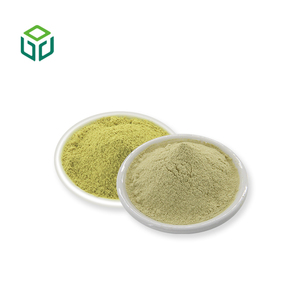
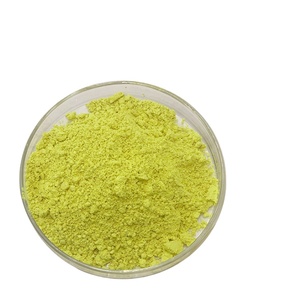
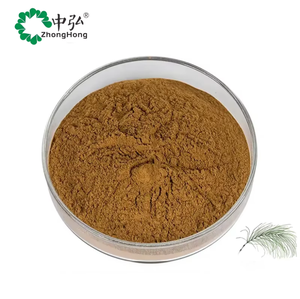
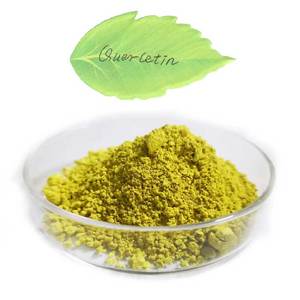
In the rapidly expanding global nutraceutical and dietary supplement ecosystem, procurement directors and formula developers face growing scrutiny regarding supply chain transparency, batch-to-batch chemical uniformity, heavy metal contamination, and solvent residue thresholds. RAAG Biotech Co., Ltd. (operating out of Xi'an High-tech Industrial Zone, Shaanxi, China) has operated since 2014 as an audit-ready, cGMP-compliant botanical extract manufacturer specializing in plant monomers, standardized extracts, CO2 supercritical fractions, and targeted liposomal delivery systems.
Unlike commercial trading intermediaries, RAAG Biotech operates fully integrated extraction lines encompassing raw material intake, enzymatic pretreatment, counter-current extraction, column chromatography isolation, crystallization, ultra-fine spray drying, and cleanroom packaging. By maintaining direct management over contracted planting bases for Sophora japonica L. (Japanese pagoda tree flower bud), Equisetum arvense (Horsetail), and saffron (Crocus sativus), we ensure complete field-to-drum traceability.
Information Gain Insight: Sourcing high-purity Quercetin (CAS 117-39-5) requires strict control over raw Rutin bio-conversion and crystallization thermal curves. Our proprietary multi-stage ethanol reflux and membrane filtration systems yield Quercetin Dihydrate and Quercetin Anhydrous with heavy metal counts consistently below 5 ppm and pesticide residue panels adhering to European Pharmacopoeia (EP 10.0) and US FDA Title 21 CFR standards.
Supercritical CO2 & Reflux Technology
Solvent-free lipophilic extraction and temperature-controlled hydro-alcoholic extraction lines designed to preserve thermo-labile polyphenols and bioflavonoids.
In-House Analytical Center
Every lot undergoes identity and assay validation using High-Performance Liquid Chromatography (HPLC), Ultra-Violet Spectrophotometry (UV-Vis), and Gas Chromatography-Mass Spectrometry (GC-MS).
Full Dossier Support
Complete regulatory documentation supplied per batch: Certificate of Analysis (COA), Technical Data Sheets (TDS), Safety Data Sheets (SDS), Allergen Declarations, Non-GMO verification, and Halal/Kosher certificates.
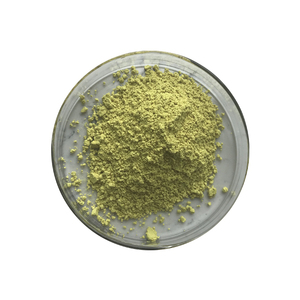
Quercetin (3,3',4',5,7-pentahydroxyflavone) is one of the most rigorously studied plant bioflavonoids globally. Naturally occurring as an aglycone bound to sugar moieties (such as Rutin), commercial production relies on acid-catalyzed hydrolysis or enzymatic transformation of raw Sophora japonica flower extract to isolate pure Quercetin aglycone at purity levels between 95% and 98% HPLC.
1. Quercetin Dihydrate vs. Quercetin Anhydrous
Understanding the physical hydrate state is critical for formulation stability, bulk density calculation, and dissolution profile optimization in hard-shell capsules, tablets, and functional powders:
Quercetin Dihydrate (C15H10O7·2H2O): Contains approximately 9.5% to 12% bound crystal water. It exhibits higher solubility in organic polar solvents and is the standard industry raw material for solid oral dosage formulations.
Quercetin Anhydrous (C15H10O7): Thermally vacuum-dried to reduce moisture content below 3.0%. Anhydrous grades are selected for moisture-sensitive formulations, effervescent tablets, and oily suspensions where water activity must be strictly controlled to prevent active degradation.
A major limitation of standard Quercetin powder is its low aqueous solubility and rapid phase-II metabolic clearance, yielding an oral bioavailability of under 2%. To solve this procurement challenge, RAAG Biotech has commercialized Liposomal Quercetin 50% Powder. Utilizing sunflower-derived phosphatidylcholine complexes, Quercetin aglycone molecules are encapsulated within phospholipid double layers via high-pressure homogenization.
Product Grade
Botanical Source
Assay Method
Specification Target
Apparent Density
Primary Industrial Use
Quercetin Powder 95% Solvent Extracted
Sophora japonica L.
HPLC / UV
≥ 95.0% Quercetin
0.35 - 0.50 g/mL
Standard Dietary Supplements, Dietary Formulations
Global Procurement Trends & Industry Forecast (2025–2030)
The global market for botanical extracts and high-purity phytochemical monomers is entering a phase of structural evolution. B2B buyers across North America, Europe, Asia-Pacific, and the Middle East are shifting from opportunistic spot-market purchasing toward strategic, long-term OEM/ODM factory partnerships. Four key macro trends dominate the procurement landscape:
1. Clean-Label Solvent Compliance & Green Extraction Protocols
Regulatory bodies such as EFSA (European Food Safety Authority) and the US FDA are enforcing lower limits on residual organic solvents, particularly Class 2 solvents like hexane, methanol, and ethylene dichloride. Modern manufacturing protocols prioritize water reflux, food-grade ethanol, and Supercritical Fluid Extraction (SFE-CO2). SFE-CO2 eliminates solvent residue risks entirely while retaining delicate lipophilic markers and terpene profiles.
2. Transition to Advanced Delivery Formulations (Liposomes & Microencapsulation)
Formulators are moving away from un-granulated raw plant powders in favor of engineered particles. Liposomal powders, self-emulsifying drug delivery systems (SEDDS), and phytosome technology allow brand owners to claim enhanced cellular absorption and reduced dosage sizes—driving higher customer retention and brand equity.
Corporate Social Responsibility (CSR) initiatives and ESG mandates now heavily influence vendor qualification. Buyers require verifiable evidence that botanical raw materials are ethically harvested without depletion of wild ecosystems. Contracted agricultural bases operating under Good Agricultural and Collection Practice (GACP) ensure consistent seasonal yields and mitigate weather-induced supply shocks.
4. Demand for Direct Compression (DC) Granular Grades
In high-speed tablet manufacturing, traditional ultra-fine plant powders frequently suffer from poor flowability and static charge accumulation. OEM/ODM factories capable of producing wet-granulated or spray-dried granular forms (e.g., Quercetin 95% Granular) allow contract manufacturers to streamline direct tableting without requiring complex excipient binders.
Below are expert responses to the most frequent technical, regulatory, and commercial inquiries received by our international sales engineering team:
Q1: What is the primary botanical source for your wholesale Quercetin Powder?+
Our wholesale Quercetin Powder (CAS 117-39-5) is derived primarily from the dried flower buds of Sophora japonica L. (Japanese Pagoda Tree), which contains one of the highest natural concentrations of Rutin (up to 20-15% dry weight). Through controlled acid hydrolysis, Rutin is efficiently converted into high-purity Quercetin aglycone.
Q2: What documentation accompanies each commercial batch of plant extract?+
Every shipment includes a lot-specific Certificate of Analysis (COA) detailing physical appearance, mesh size, loss on drying, heavy metals (Pb, As, Cd, Hg by ICP-MS), microbiological limits (Total Plate Count, Yeast & Mold, E. coli, Salmonella), pesticide residue screening, and active assay content by HPLC. Additional regulatory files including SDS, TDS, Flow Chart, Non-GMO Declaration, and Allergen Statements are provided upon request.
Q3: How does Liposomal Quercetin compare to standard Quercetin 98% in formulation performance?+
Standard Quercetin 98% is hydrophobic and poorly absorbed through gastrointestinal membranes. Liposomal Quercetin 50% embeds the active flavonoid within a phospholipid bilayer matrix, creating amphiphilic nanostructures. This significantly enhances lymphatic absorption, bypasses first-pass hepatic metabolism, and drastically improves cellular bio-accessibility.
Q4: What are your minimum order quantities (MOQ) for OEM/ODM and bulk powder orders?+
Our standard commercial MOQ for bulk plant powders and standardized extracts is 25 kg (shipped in standard fiber drums with double inner PE bags). For high-value purified monomers or trial pilot runs, we support MOQs starting at 1 kg. Free 10g-50g evaluation samples are available for qualified R&D laboratories.
Q5: Can RAAG Biotech customize particle size, mesh density, or blend excipients?+
Yes. Our custom processing capabilities include micronization (down to 80-300 mesh), spray granulation for direct compression, custom carrier blending (maltodextrin, acacia gum, rice flour), and pre-formulated premixes. We also offer private label manufacturing, hard-shell encapsulation, and custom packaging solutions.
Q6: How do you guarantee the absence of ethylene oxide (EtO) and pyrrolizidine alkaloids (PAs)?+
We strictly prohibit Ethylene Oxide (EtO) sterilization across all our processing facilities; steam sterilization and gamma irradiation options are utilized where required. Furthermore, raw herbs undergo strict LC-MS/MS testing to screen for Pyrrolizidine Alkaloids (PAs) and Polycyclic Aromatic Hydrocarbons (PAHs) to guarantee full compliance with European Union regulation (EU 2023/915).
Q7: What is the typical lead time from order confirmation to dispatch?+
Standard catalog items maintained in warehouse inventory ship within 3 to 5 business days following quality release. Custom OEM/ODM manufacturing, specific mesh micronization, or specialized extraction runs typically require 10 to 15 business days. Sea, air, and express door-to-door courier logistics are supported globally.
Partner with a Leading OEM/ODM Botanical Extract Manufacturer
Accelerate your product development pipeline with factory-direct pricing, HPLC-certified purity, and custom contract manufacturing support. Contact our technical sales division today for instant pricing, specifications, and sample evaluation.