
GMP-Audited, HPLC-Verified Bulk Actives Manufactured by RAAG Biotech Co., Ltd.
Navigating Bioactive Yields, Regulatory Compliance, and Sourcing Risk in 2025
The global phytochemical powder market is undergoing a structural transition. Driven by consumer demand for preventive healthcare, clean-label dietary supplements, and botanical pharmaceutical actives, contract manufacturers and procurement executives no longer buy raw botanical powders on price alone. Modern B2B purchasing strategies prioritize information gain, batch-to-batch assay consistency, solvent-residue mitigation, and full supply chain traceability from farm to extractor.
Strict Technical and Commercial Benchmarks for Global B2B Sourcing
Evaluation of HPLC/UV testing accuracy, control of active isomer profiles (e.g., Quercetin Anhydrous vs. Dihydrate), and verification of residual solvent limits under ICH Q3C standards.
Verification of cGMP, ISO 22000, HACCP, HALAL, KOSHER, and Organic certifications, alongside comprehensive documentation (COA, MSDS, Allergen, Non-GMO statements).
Auditing agricultural raw material origins (e.g., Sophora Japonica growing bases in Shaanxi), harvest batch records, drying controls, and pesticide residue management.
Comparative Assessment of Core Extraction Capabilities, Product Ranges, and B2B Strengths
| Rank | Supplier Name | Core Phytochemical Flagship | Key Extraction Tech | Global Certifications | Primary B2B Advantage |
|---|---|---|---|---|---|
| 01 | RAAG Biotech Co., Ltd. | Quercetin 95%-98%, Liposomal Quercetin, Saffron Extract | Supercritical CO2, Column Chromatography | cGMP, ISO, HALAL, KOSHER, Organic | Direct Manufacturer, 300T Capacity, Full Batch Traceability |
| 02 | Indena S.p.A. | Phytosome Polyphenols, Curcumin | Phytosome Technology, Solvent Reflux | EU-GMP, ISO 14001, CEP | Pharmaceutical-Grade Botanical Active Research |
| 03 | Naturex (Givaudan) | Rosemary Extract, Anthocyanins | Hydro-thermal Extraction, Spray Drying | FSSC 22000, Organic, ISO 9001 | Global Food & Beverage Flavor Integration |
| 04 | Euromed S.A. | Milk Thistle (Silymarin), Saw Palmetto | Water Purified Reflux, Vacuum Drying | EU-GMP, US-FDA Registered | Standardized Clinical Phytotherapy Ingredients |
| 05 | Sabinsa Corporation | Curcuminoids, Boswellic Acids | Chemical Isolation, Biotransformation | IP Protection, ISO 22000, Kosher | Patented Botanical Compounds & Clinical Validation |
| 06 | Layn Natural Ingredients | Monk Fruit, Stevia, Flavonoid Blends | Membrane Separation, Crystallization | BRCGS, USDA Organic, ISO 9001 | High-Volume Sweetener & Polyphenol Extracts |
| 07 | Martin Bauer Group | Herbal Tea Powders, Botanical Extracts | Decaffeination, Agglomeration Granulation | GMP, ISO 17025, Fairwild | Massive Botanical Raw Material Processing Infrastructure |
| 08 | Kalsec Inc. | Hop Actives, Spice Oleoresins | Solvent Extraction, CO2 Oleoresin | GFSI, Kosher, Halal | Natural Colors & Antioxidant Preservation Systems |
| 09 | Vidya Herbs | Coleus Forskohlii, Chlorogenic Acid | Supercritical Fluid Extraction | GMP, ISO, Organic, FSSAI | Integrated Herbal Farming in Subtropical Regions |
| 10 | Synthite Industries | Capsaicin Powder, Essential Oleoresins | Continuous Counter-Current Extraction | ISO 22000, Spice Board Certified | Industrial Scale Spice & Bioactive Pigments |
Founded in 2014 and headquartered in Xi'an's High-Tech Development Zone, RAAG Biotech Co., Ltd. has established itself as an authoritative GMP-audited manufacturer specializing in high-purity phytochemical monomers, standardized extracts, and liposomal delivery powders.
Unlike traditional trading intermediaries, RAAG Biotech maintains direct control over contracted planting bases in Shaanxi Province, enabling complete farm-to-factory lot traceability. The company operates state-of-the-art production lines featuring supercritical CO2 extraction, continuous chromatography columns, low-temperature vacuum drying, and spray drying.
4 Key Shifts Transforming Global Nutraceutical & Pharmaceutical Supply Chains
Standard flavonoids like Quercetin and Curcumin suffer from poor hydrophobic solubility and low oral bioavailability. Modern procurement managers actively seek Liposomal Encapsulated Quercetin Powder (50%) and Phytosome complexes. These lipid-based carriers protect active molecules through gastric transit, boosting intestinal uptake by up to 20-fold compared to unformulated powders.
Global regulatory authorities (FDA, EFSA) are tightening limits on Class 1 and Class 2 residual organic solvents (such as Dichloromethane and Methanol). Future purchasing prefers Supercritical CO2 Fluid Extraction and pure water/ethanol reflux. CO2 extraction leaves zero solvent residues, yielding cleaner botanical oleoresins and crystalline powders.
Dusty, ultra-fine powders disrupt high-speed rotary tablet presses and hard-capsule filling machines. B2B buyers are demanding direct compression granular Quercetin (95% DC Grade) with controlled bulk density, uniform flowability, and low dust generation, eliminating the need for expensive secondary binder blending.
Leading nutraceutical brands require instant access to harvest lot databases. Every batch of Sophora Japonica Extract must be accompanied by multi-residue pesticide screens (GC-MS/MS covering 400+ compounds), heavy metal limits (Pb <3ppm, As <1ppm, Cd <1ppm, Hg <0.1ppm), and microbials (USP <61/62> compliant).
Where Botanical Chemistry and Modern Pharmacology Converge
In clinical and translational nutrition, single-ingredient botanical extracts are increasingly combined with complementary phytochemicals to achieve synergistic therapeutic effects. A prime example is the Quercetin + Bromelain + Zinc triad for immune health, and the Quercetin + Dasatinib / Fisetin formulation in cellular longevity research.
Quercetin acts as a potent natural senolytic agent—selectively inducing apoptosis in senescent cells. As cellular health, metabolic support, and anti-aging supplements accelerate, demand for ultra-pure Quercetin Anhydrous (CAS 117-39-5) and water-soluble liposomal suspensions is projected to reach unprecedented high volumes.
While Quercetin can be derived from various botanical sources, Sophora Japonica (Japanese Pagoda Tree flower buds) yields the highest natural concentration of Rutin (up to 20%), which is enzymatically hydrolyzed into high-purity Quercetin Dihydrate with minimal seasonal variance.
Formulators must choose between Quercetin Dihydrate (containing ~10% bound crystal water, ideal for standard hard capsules) and Quercetin Anhydrous (water content <3%, essential for moisture-sensitive softgels, effervescent powders, and oil-based suspensions).
Replacing synthetic excipients (e.g., Silicon Dioxide, Magnesium Stearate) with natural tapioca maltodextrin, gum arabic, or organic rice hull powder ensures compliance with European clean-label standards and non-GMO project verification.
An Established Extract House Delivering Precision Chemistry and Reliable Commercial Scale
Our 10,000 m² cleanroom manufacturing facility operates under strict cGMP protocols. Equipped with stainless steel extractors, falling-film evaporators, and spray drying towers, we ensure contaminant-free production for global dietary supplement brands.
Every production lot undergoes rigorous analytical testing in our ISO 17025 compliant lab equipped with High-Performance Liquid Chromatography (HPLC), Ultraviolet-Visible Spectroscopy (UV-Vis), Atomic Absorption Spectroscopy (AAS), and GC-MS.
We provide tailored solutions for custom assay targets (e.g., Quercetin 98.5%+), specific mesh sizes (from coarse granules down to sub-micron liposomal powders), particle coating, microencapsulation, and premix blending.
Direct Insights from Our Quality Assurance and Global Freight Logistics Desk
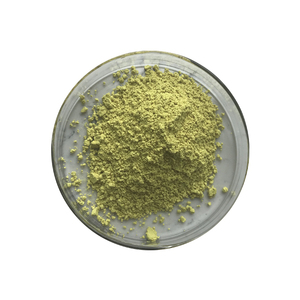
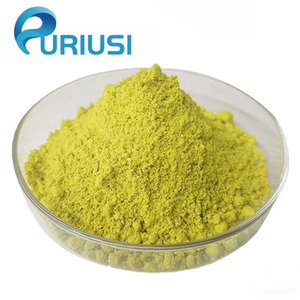
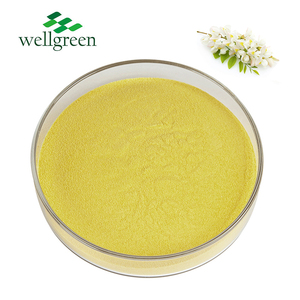
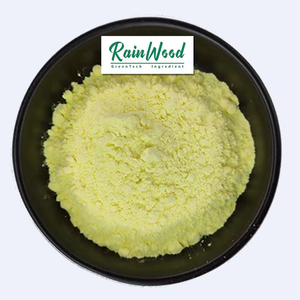
Quercetin Dihydrate (C15H10O7·2H2O) contains two bound water molecules within its crystalline structure, resulting in an active assay of ~85%-90% on an as-is basis and ~95%-98% on a dried basis. Quercetin Anhydrous (C15H10O7) has had all bound water removed through specialized vacuum drying, yielding a pure active concentration >98% as-is. Anhydrous grade is mandatory for softgels, moisture-sensitive tablets, and oil formulations to prevent hydrolysis or capsule softening.
We utilize High-Performance Liquid Chromatography (HPLC) with a reverse-phase C18 column and UV detector set at 370 nm in accordance with USP/EP compendial standards. While cheaper UV spectrophotometry can overestimate purity by detecting related flavonols, our HPLC method accurately quantifies exact Quercetin content, separating it from Kaempferol, Isorhamnetin, and Rutin residues.
Every shipment sent by RAAG Biotech includes a comprehensive document package: Batch-Specific Certificate of Analysis (COA), Safety Data Sheet (MSDS/SDS), Technical Data Sheet (TDS), Flow Chart of Extraction, Non-GMO Declaration, Allergen Statement, BSE/TSE-Free Certificate, and Country of Origin Certificate. Pesticide screening (covering 400+ compounds under EP 10.0) and Heavy Metal reports (ICP-MS) are provided per lot.
Our standard Minimum Order Quantity (MOQ) for commercial bulk orders is 25 kg (packaged in standard food-grade fiber drums with double polyethylene inner bags). For pilot trials, R&D testing, and supplier qualification, we offer 100g to 1kg sample orders, along with complimentary 20g verification samples sent via DHL/FedEx worldwide.
Raw Sophora Japonica buds are collected exclusively from GAP (Good Agricultural Practices) certified planting bases. Before extraction, raw herbs undergo mandatory screening for heavy metals (Lead, Cadmium, Arsenic, Mercury) and organochlorine/organophosphorus pesticides. In-process filtration and continuous water washing further remove trace contaminants, guaranteeing compliance with strict California Proposition 65 and European Commission Regulation (EU) 2023/915 limits.
When stored in original unopened drums in a cool, dry, and dark environment (temperature <25°C, relative humidity <60%), standardized Quercetin powder has a verified shelf life of 24 to 36 months. Re-testing of assay, moisture, and microbial limits is recommended after 24 months of storage.
Yes. We produce Liposomal Quercetin 50% Powder using sunflower-derived phosphatidylcholine lipid carrier matrixes, which dramatically improves dispersion in water and enhances bioavailability. We also manufacture Quercetin Granular 95% designed for direct compression tableting without additional wet granulation steps.