
High-purity botanical actives produced under ISO, GMP, HALAL, and KOSHER certified quality management systems.
Operating state-of-the-art cleanrooms compliant with global GMP standards. Every production line undergoes strict environmental monitoring to ensure zero microbiological contamination in finished plant powders.
Advanced eco-friendly solvent recovery systems and supercritical fluid extraction technology preserve delicate polyphenols, bioflavonoids, and lipophilic compounds without residual chemical solvents.
Equipped with in-house High-Performance Liquid Chromatography (HPLC), Ultraviolet-Visible Spectrophotometry (UV-Vis), and Gas Chromatography-Mass Spectrometry (GC-MS) for comprehensive compound verification.
In the contemporary B2B health and nutrition supply chain, plant powders and botanical extracts serve as foundational raw materials for pharmaceuticals, nutraceuticals, functional beverages, and cosmeceuticals. Identifying a top-tier manufacturer requires an in-depth understanding of active compound standardization, extraction yield chemistry, particle size engineering, and batch-to-batch consistency metrics.
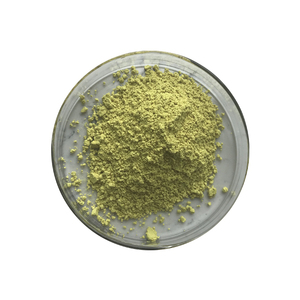
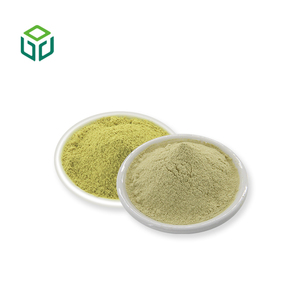
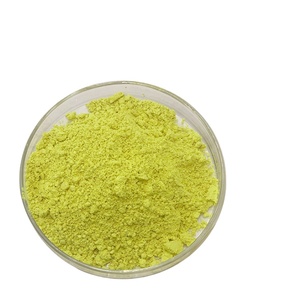
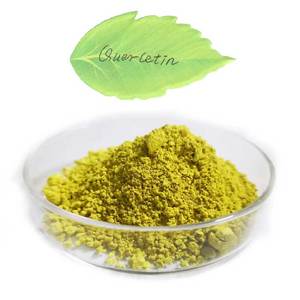
As a specialized extraction enterprise, RAAG Biotech Co., Ltd. (established in 2014) operates at the convergence of agronomic control and advanced phytochemistry. The production of standardized botanical powders—such as high-purity Quercetin Powder (CAS 117-39-5) derived from Sophora Japonica L.—demands precise thermal management and crystallization protocols to eliminate structural degradation of active polyphenols.
Information Gain Key Insight: Pure direct-milled herbal powders often contain variable active constituent ratios (typically 1%–3%), high moisture content, and micro counts. Standardized plant powder extracts isolate and concentrate key markers (e.g., 95%–98% Quercetin by HPLC), yielding consistent physiological efficacy per unit dose for supplement formulators.
Selecting the appropriate extraction process dictates the biological utility, solvent-residue profile, and thermal stability of the resulting plant powder. Modern industrial phytochemistry employs four dominant extraction methodologies:
| Extraction Methodology | Target Marker Class | Solvent System Used | Solvent Residue Level | Thermal Stress Index |
|---|---|---|---|---|
| Supercritical CO2 Fluid Extraction | Lipophilic Monomers, Essential Oils | Supercritical CO2 (Solvent-Free) | 0 ppm (Solvent Free) | Low (31°C–45°C) |
| Hydro-Ethanolic Reflux Extraction | Flavonoids (Quercetin, Rutin) | Food-Grade Ethanol & Purified Water | < 50 ppm (ICH Compliance) | Moderate (60°C–80°C) |
| Enzymatic-Assisted Extraction (EAE) | Polysaccharides, Bound Polyphenols | Aqueous + Pectinase / Cellulase | 0 ppm | Low-Moderate (40°C–50°C) |
| Membrane Separation & Chromatography | High-Purity Monomers (>98%) | Aqueous / Organic Gradient Elution | Controlled per USP <467> | Ambient (20°C–25°C) |
The botanical source Sophora Japonica L. (Japanese Pagoda Tree flower bud) represents the industrial benchmark source for natural bioflavonoid extraction. The transformation of raw flower buds into pharmaceutical-grade Quercetin Dihydrate and Quercetin Anhydrous involves several critical chemical unit operations:
The global botanical raw material marketplace is undergoing a structural transition driven by stringent regulatory frameworks, consumer demand for clean labels, and the integration of novel delivery technologies. Contract manufacturing organizations (CMOs) and brand owners must adapt their sourcing strategies to match these emerging market vectors.
One of the primary historical limitations of natural plant powders—specifically crystalline flavonoids like native Quercetin—is poor intestinal epithelial absorption caused by low water solubility and rapid phase II metabolic elimination. The commercial emergence of Liposomal Quercetin 50% Powder solves this pharmacokinetic bottleneck.
By encapsulating pure quercetin molecules within a phospholipid bilayer (typically derived from non-GMO sunflower or soy lecithin), liposomal plant powders pass through the gastric acidic environment intact. Clinical bio-availability benchmarking indicates up to a 20-fold increase in plasma area-under-the-curve (AUC) compared to unformulated active pharmaceutical ingredients (APIs).
Regulatory authorities such as the US FDA, EFSA (European Food Safety Authority), and Health Canada have intensified scrutinization of class 1 and class 2 residual solvents in imported botanical ingredients. Top global plant powder exporters are transitioning away from chlorinated solvents (such as dichloromethane or chloroform) toward 100% green extraction parameters utilizing water and certified organic ethanol.
B2B buyers in Western markets now require full supply chain visibility before issuing vendor approval. Essential documentation components include:
To maintain market leadership, plant powder manufacturers are investing heavily in processing technologies that enhance the physical and chemical properties of final extracts. The modern phytomanufacturing facility integrates advanced chemical engineering to tailor ingredient performance for tablet compression, hard-gel filling, liquid stick-packs, and functional foods.
Standard spray-dried plant powders often suffer from low bulk density (0.2–0.3 g/mL), static charge, and poor flowability, leading to weight variation during high-speed encapsulation. Advanced roller-compaction and fluid-bed wet granulation produce high-density Direct Compression (DC) Quercetin Granules with bulk densities exceeding 0.55 g/mL, eliminating the requirement for complex synthetic excipients.
Biotransformation via microbial fermentation represents the next frontier in plant powder utility. By exposing raw botanical matrices to specific strains of Lactobacillus or Aspergillus, complex high-molecular-weight glycosides are broken down into active aglycones with reduced allergenicity and enhanced gut microbiome compatibility.
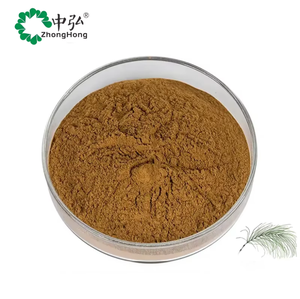
Formulation trends show a transition from single-monomer supplements toward targeted synergistic complexes. For instance, pairing Wild Horsetail Herb Extract (rich in natural organic silica) with high-purity Quercetin and Vitamin C creates a dual-action matrix targeting collagen synthesis, bone density maintenance, and systemic antioxidant response.
As an industry-leading herbal extract manufacturer and global plant powder supplier, RAAG Biotech Co., Ltd. provides comprehensive solutions designed for B2B brand owners, pharmaceutical buyers, and global distributors.
We operate over 5,000 mu of contracted botanical planting bases in pristine ecological zones, securing steady raw material supply and eliminating batch variations caused by wild-harvested biomass fluctuations.
Our internal Quality Control center features Agilent HPLC systems, Shimadzu UV Spectrophotometers, Atomic Absorption Spectrometers (AAS), and dedicated microbiology testing facilities for end-to-end lot verification.
We provide full customization options including particle size mesh adjustments (from 80 to 500 mesh), customized carrier systems (Maltodextrin, Rice Flour, Gum Arabic), and water-dispersible microencapsulation.
With verified certifications including ISO9001, HACCP, HALAL, KOSHER, and Organic Compliance, every shipment leaves our facility backed by a comprehensive audit trail, retained laboratory samples, and zero-defect quality guarantees.
Addressing core technical, logistical, and compliance inquiries encountered during global ingredient purchasing.
Quercetin Dihydrate contains two bound water molecules within its crystalline lattice, typically resulting in an assay of 95%–98% quercetin on an as-is basis. Quercetin Anhydrous undergoes controlled thermal dehydration to remove molecular water, yielding an active quercetin content of ≥98% on a dry basis. Anhydrous forms are preferred for moisture-sensitive formulations like softgels and moisture-hygroscopic blend matrices.
Every commercial shipment includes a lot-specific Certificate of Analysis (COA) containing assay values (HPLC/UV), heavy metals, pesticide panels, microbiological counts, and physical constants. Additionally, we provide MSDS, Technical Data Sheets (TDS), Flowcharts, BSE/TSE Free Statements, Non-GMO Certificates, and Allergen declarations.
Our raw herbs are screened before entering the extraction pipeline. We utilize specialized column chromatography steps and supercritical carbon dioxide purification to remove non-polar organochlorine and organophosphorus pesticides, ensuring strict compliance with USP <561> and European Pharmacopoeia (EP) maximum residue limits (MRLs).
Yes. Our facility is equipped with jet-milling and micro-encapsulation technology. We can standardize particle size distributions from coarse 60 mesh (ideal for direct compression tablets) down to fine 300+ mesh for smooth mouthfeel in powder drinks, as well as liposomal microencapsulated grades.
For standard stocked items like Quercetin Powder 95%/98%, our minimum order quantity is 1 kg for sample trials and pilot batches, with commercial drums starting at 25 kg. Stocked items ship within 3–5 business days, while custom extraction lots typically require 10–15 business days lead time.
Partner with a leading global plant powder manufacturer. Contact our technical sales engineering team to receive full batch COAs, HPLC chromatograms, and competitive B2B volume pricing.