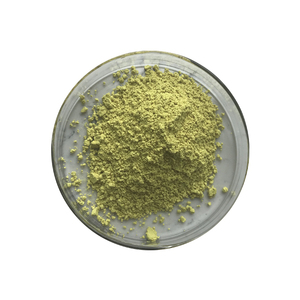
Chinese Factory Provide Competitive Price Quercetin Powder
Grade: Pharma / Food Grade
Assay: 95% - 98% by HPLC
Feature: High Bulk Density
Contact Us

Direct supply from GMP-certified facilities featuring controlled assay percentages, HPLC purity testing, and batch-level traceability for global B2B buyers.
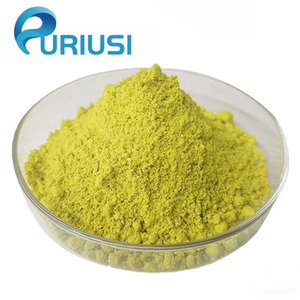
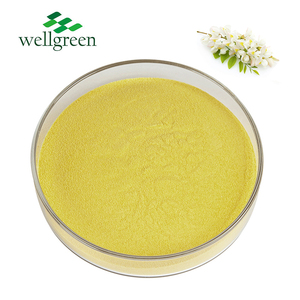
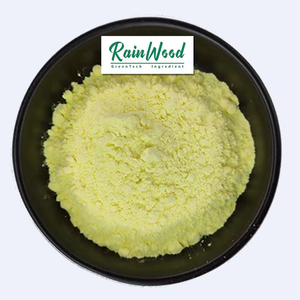
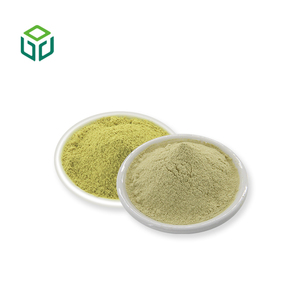
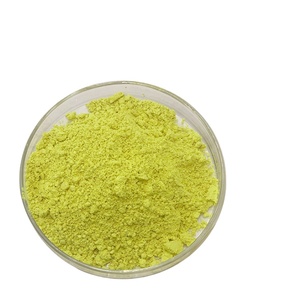
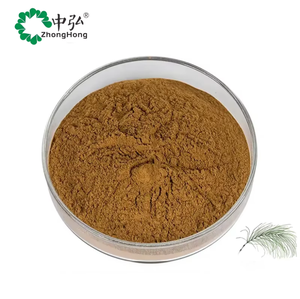
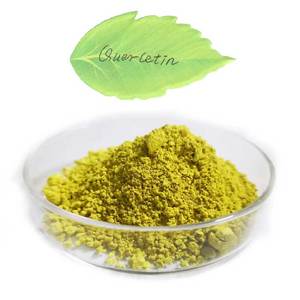
The global market for plant-derived bioactive polysaccharides and bioflavonoid monomers (such as Quercetin, Rutin, and β-Glucans) has transitioned from simple herbal grind powders toward highly refined, molecular-weight-controlled active pharmaceutical ingredients (APIs) and nutraceutical ingredients. Functional foods, dietary supplements, and clinical nutrition formulations demand standardized active components with precise structural integrity, predictable dissolution rates, and validated analytical verification via High-Performance Liquid Chromatography (HPLC) and Ultraviolet-Visible Spectroscopy (UV-Vis).
Polysaccharides serve as fundamental structural and bioactive carbohydrates across botanical species including Astragalus membranaceus, Ganoderma lucidum, Tremella fuciformis, and various marine algae. Concurrently, polyphenolic bioflavonoids extracted from Sophora Japonica flower buds represent critical synergistic co-factors in antioxidant and immunomodulatory applications. Procurement officers, technical buyers, and formulation scientists evaluate potential manufacturing partners based on their extraction precision, solvent purification technology, and complete regulatory compliance files (including USP, EP, FCC, and GB standards).
Modern B2B botanical sourcing requires looking beyond surface-level ratio specifications (e.g., 10:1 or 20:1). True manufacturing leadership is defined by quantitative marker verification, residual solvent removal efficiency (ethanol-only refluxing vs toxic chlorinated solvents), molecular weight distribution analysis via SEC-MALLS, and full supply-chain auditability down to the cultivation base.
| Evaluation Parameter | Standard Commercial Grade | Pharma & Advanced Nutraceutical Grade (RAAG Benchmark) | Analytical Verification Method |
|---|---|---|---|
| Active Assay (Quercetin / Polysaccharides) | 90.0% – 95.0% Titration / UV | ≥ 98.0% HPLC (Monomers) / Standardized MW (Polysaccharides) | HPLC-DAD / SEC-MALLS |
| Extraction Solvents | Methanol, Acetone, Water | Food-Grade Ethanol & Supercritical CO2 Hydro-distillation | Gas Chromatography (GC-HS) |
| Heavy Metal Limits (Pb, As, Cd, Hg) | < 20.0 ppm Total | < 10.0 ppm Total (Pb < 2.0ppm, As < 1.0ppm, Cd < 1.0ppm) | ICP-MS (Inductively Coupled Plasma) |
| Pesticide Residue Limits | National Basic Standards | Full EP 2.8.13 Multi-Residue Screen (>400 Compounds) | GC-MS/MS & LC-MS/MS |
| Bioavailability Profiles | Native Crystalline (Low Solubility) | Liposomal Encapsulated / Micronized 800 Mesh / Granular | In-Vitro Dissolution Profiling |
Evaluating raw botanical material processors demands deep technical due diligence across processing engineering, QA protocols, and global certification infrastructure.
Advanced extraction houses utilize low-temperature Supercritical CO2 and continuous multi-stage ethanol reflux units. This preserves heat-sensitive polysaccharide branching structures and prevents degradation of bioflavonoids such as Quercetin Anhydrous.
Top factories maintain complete regulatory documentation, including Certificate of Analysis (COA), MSDS, Technical Data Sheets (TDS), Allergen Declarations, Non-GMO Statements, and Process Flow Charts matching international customs criteria.
From fine 800-mesh liposomal micro-encapsulated powders for oral suspensions to high-density granular formats designed for direct compression tableting, leading facilities provide physical particle tailoring.
Securing high-purity botanical extracts requires vertical integration. Contracted planting bases ensure rigorous oversight of crop genetics, harvest timing, solar/oven drying parameters, and zero contamination from heavy industrial zones.
Addressing hydrophobic bioavailability constraints (e.g., standard Quercetin's poor intestinal absorption), advanced manufacturers engineer liposomal phospholipid delivery systems that dramatically enhance cellular uptake.
Facilities equipped with internal High-Performance Liquid Chromatography (HPLC), Gas Chromatography (GC), Atomic Absorption Spectroscopy (AAS), and microbiological testing suites verify quality prior to third-party shipping.
As global regulatory bodies (such as the US FDA, EFSA, and NMPA) tighten dietary supplement identity testing requirements, industrial buyers are upgrading their procurement criteria. The traditional focus on spot-market pricing has evolved into long-term strategic relationships with fully audited manufacturers capable of offering contract security, price stability, and technological innovation.
Native plant flavonoids like Quercetin possess hydrophobic chemical structures, resulting in low oral bioavailability (often under 2%). Strategic buyers are shifting orders toward liposomal encapsulated powders and phytosome phospholipid complexes. By surrounding the active hydrophobic molecule with a sunflower or soy lecithin membrane, liposomal forms achieve up to 20 times higher plasma concentration, allowing supplement brands to claim superior efficacy at lower dosages.
In the polysaccharide domain, massive macromolecular structures (MW > 1,000,000 Da) frequently present viscosity challenges in liquid formulations and limited cell-membrane permeability. Future procurement strategies emphasize targeted enzymatic degradation, yielding low-molecular-weight polysaccharides (MW 5,000 – 50,000 Da) that retain immunomodulatory signaling while fully dissolving in cold water without gelling.
Global environmental awareness and consumer demand for clean-label products are driving the phase-out of harsh organic solvents like chloroform, ethyl acetate, and hexane. Manufacturers adopting closed-loop Supercritical CO2 extraction and water-ethanol reflux pathways avoid hazardous chemical residues while minimizing carbon footprints during industrial scale-up.
Following strict European regulatory crackdowns on Ethylene Oxide (EtO) residues and heavy metal accumulation in plant extracts, B2B buyers mandate full gas chromatography-mass spectrometry (GC-MS/MS) screening. Steam sterilization and gamma irradiation protocols must be carefully documented to ensure complete pathogen control without generating harmful radiolytic byproducts or chemical residues.
Established as a specialized botanical extract manufacturer and bulk plant extract supplier, RAAG Biotech Co., Ltd. operates state-of-the-art production infrastructure designed to serve global pharmaceutical, nutraceutical, cosmetics, and food-additive sectors. Operating from our modern manufacturing base in Xi'an, China, we combine natural botanical raw materials with precise chemical engineering.
Our extraction lines operate under strict GMP, ISO, HACCP, HALAL, and KOSHER management systems, ensuring seamless audit readiness for international buyers.
Our in-house research team of 8+ botanical specialists refines extraction yields, eliminates solvent residues, and customizes particle mesh sizes to customer specifications.
Scalable commercial production lines provide stable volume commitments, preventing supply chain disruptions for major global brand manufacturers.
Direct technical answers to common questions raised by procurement managers and formulation scientists.
Every commercial batch is dispatched with a lot-specific Certificate of Analysis (COA) containing HPLC/UV active assay data, moisture content, ash analysis, bulk density, particle size mesh verification, heavy metal testing (ICP-MS), total plate counts, yeast/mold counts, and pathogen screens (E. coli, Salmonella). Technical Data Sheets (TDS), MSDS, and flowcharts are provided upon request.
Our standard Minimum Order Quantity for commercial bulk production is 25 kg (packaged in food-grade fiber drums with double internal polyethylene liners). For R&D evaluation, laboratory verification, and pilot trial formulations, we supply 1 kg sample quantities and complimentary 10–20 g laboratory testing samples with matching COA.
We utilize multi-stage vacuum drying and clean food-grade ethanol reflux systems. Final residual solvent levels are monitored using Gas Chromatography Headspace (GC-HS) analysis, consistently maintaining ethanol levels well below USP/EP limits (< 5,000 ppm, with custom batches engineered below 1,000 ppm) and completely free of toxic class-1 solvents.
Yes. Our engineering suite provides custom micronization (up to 800 mesh fine powder), non-dusting direct compression granules, water-dispersible carrier spray drying (using maltodextrin, gum arabic, or rice starch), and liposomal phospholipid micro-encapsulation to match your specific formulation delivery system.
Each production lot is assigned a unique batch tracking code linked to our contracted planting bases. This records the raw herb origin harvest date, initial drying parameters, incoming raw ID testing, in-process extraction logs, and final packaging records, ensuring full backward and forward auditability.
Standard inventory items ship within 3 to 5 business days following order confirmation. Custom production lots or specialized mesh requirements typically take 10 to 15 working days. We support express courier air shipping for urgent samples and door-to-door sea/air freight options with complete export customs documentation.
Connect with our technical export specialists today for full specification sheets, recent COAs, factory direct pricing, and complimentary evaluation samples.