
Explore our standardized bulk active pharmaceutical ingredients (APIs) and nutraceutical compounds manufactured under strict ISO/GMP/HACCP protocols.
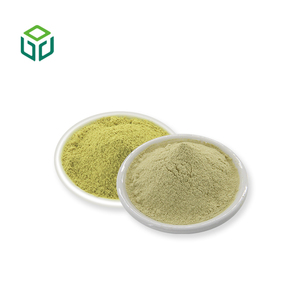
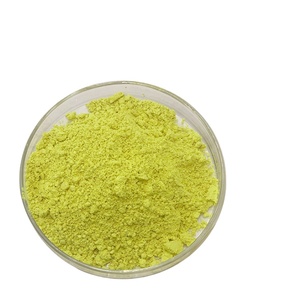
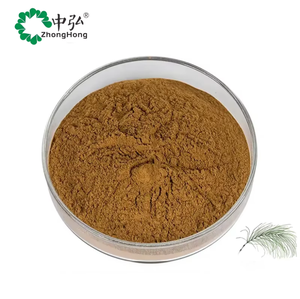
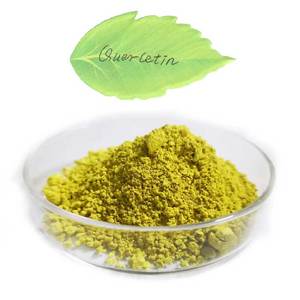
In the evolving global health and nutrition market, sourcing raw materials from certified China herbal ingredient factories and suppliers requires an in-depth understanding of analytical validation, extraction thermodynamics, and regulatory compliance. As pharmaceutical and nutraceutical formulators transition toward bioavailable and clean-label active compounds, China has established itself as the world’s primary center for raw botanical cultivation, extraction, and monomer purification.
Among the vast spectrum of phytocompounds derived from Chinese botanical bases, Quercetin (CAS 117-39-5)—extracted predominantly from the flower buds of Sophora japonica L. (Huai Mi)—represents a fundamental bioflavonoid utilized globally for its antioxidant, anti-inflammatory, and immune-modulating properties. This whitepaper provides a comprehensive technical overview of industrial botanical extraction, analytical purity verification, procurement trends, and quality assurance protocols for global B2B buyers.
Traditional B2B procurement focused heavily on simple plant-to-extract ratios (e.g., 10:1 or 20:1). Modern pharmaceutical formulation demands precise quantitative marker assays validated by High-Performance Liquid Chromatography (HPLC-DAD). True manufacturing value lies in particle engineering (direct-compression granulates), liposomal bioavailability enhancement, and strict compliance with European Regulation (EU) 2023/915 regarding polycyclic aromatic hydrocarbons (PAHs) and pesticide residues.
Industrial production of high-purity Quercetin begins with raw material selection. Sophora japonica L. flower buds contain up to 20%–26% natural Rutin (quercetin-3-O-rutinoside). To yield pure Quercetin aglycone, raw botanical materials undergo specialized chemical transformations:
Rutin undergoes acid-catalyzed hydrolysis in aqueous media under controlled temperature (85°C–95°C) and pH conditions. The glycosidic bond connecting the quercetin aglycone to the rutinose disaccharide is cleaved, yielding crude Quercetin aglycone and rhamnose/glucose byproducts. The precise control of temperature prevents oxidative degradation of the polyphenolic ring system.
Following hydrolysis, crude quercetin is purified via multi-stage ethanol reflux extraction. Solvent ratios (typically 70%–95% food-grade ethanol) and recrystallization parameters are modulated to isolate pure Quercetin Dihydrate ($C_{15}H_{10}O_7 \cdot 2H_2O$). Subsequent controlled thermal drying under vacuum yields either Dihydrate or Anhydrous Quercetin depending on the target water content (<12% for dihydrate, <3% for anhydrous).
| Specification Parameter | Quercetin Dihydrate 95% | Quercetin Anhydrous 98% | Liposomal Quercetin 50% |
|---|---|---|---|
| CAS Registry Number | 6151-25-3 | 117-39-5 | Complex Formulation |
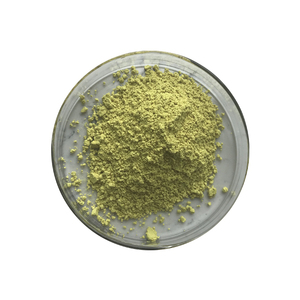
| Appearance | Fine Yellow Powder | Light Yellow Fine Powder | Off-White / Yellow Granular |
| Assay Method (HPLC) | ≥ 95.0% (Dry Basis) | ≥ 98.0% (Dry Basis) | ≥ 50.0% Total Actives |
| Loss on Drying | 8.0% – 12.0% | ≤ 4.0% | ≤ 5.0% |
| Melting Point Range | 314°C – 317°C | 316°C – 318°C | N/A (Encapsulated) |
| Primary Application | Dietary Capsules & Tablets | Pharma & High-Potency Formulas | Functional Liquids & High-Absorption |
A major technical hurdle for standard Quercetin aglycone is its low aqueous solubility (<0.01 g/L at 25°C) and poor oral bioavailability (<2%). Modern OEM/ODM manufacturers are implementing liposomal nanocarrier technology to overcome these pharmacokinetic limitations.
By encapsulating purified Quercetin molecules within phospholipid bilayers (derived from non-GMO soy or sunflower lecithin), manufacturers create Liposomal Quercetin powders. This structure shields the active compound from enzymatic breakdown in the stomach while increasing gastrointestinal absorption by up to 20-fold compared to standard crystalline powder. B2B procurement managers are increasingly shifting purchase orders toward these specialized bio-engineered forms to provide consumer brands with demonstrable efficacy claims.
Solvent-free lipophilic extraction preserving volatile fractions without thermal damage. Zero chemical residue, ideal for clean-label certified botanical oils and oleoresins.
Industrial-scale resin adsorption chromatography enabling the isolation of specific monomolecular plant compounds at purities ranging from 90% up to 99.5% HPLC.
Custom mesh sizing and fluid-bed spray granulation designed specifically for high-speed automated encapsulation and direct tablet compression machinery.
Purchasing directors and raw material buyers must navigate increasingly stringent international regulatory frameworks. China's leading botanical suppliers are adapting through comprehensive batch-level documentation and upgraded production line engineering.
The European Pharmacopoeia (EP) and United States Pharmacopeia (USP) set rigorous maximum residue limits (MRLs) for hundreds of pesticides, heavy metals (Lead <3.0 ppm, Cadmium <1.0 ppm, Mercury <0.1 ppm, Arsenic <1.0 ppm), and mycotoxins. Direct farm-contracted sourcing bases in Shaanxi, Yunnan, and Sichuan allow top factories to enforce strict agricultural practices before the raw herb reaches the extraction facility.
Environmental management systems certified under ISO 14001 are becoming standard requirements for enterprise suppliers. Modern extraction hubs utilize closed-loop water recirculation systems, solar heating pre-treatments, and bio-energy boilers to minimize the environmental footprint of heavy water-and-ethanol extraction processes.
As a dedicated manufacturer rather than a trading intermediary, RAAG Biotech Co., Ltd. provides full batch-to-batch traceability. From wild-harvested or base-cultivated Sophora Japonica to the sealed export drum, every lot travels with a comprehensive Certificate of Analysis (COA), GC-MS chromatograms, heavy metal panels, and allergen-free declarations verified by internal HPLC and third-party laboratories such as SGS or Eurofins.
To ensure total regulatory acceptance in target markets across North America, Europe, and Asia-Pacific, top China factories follow a rigorous 5-stage Quality Assurance framework:
Clear technical and commercial answers for international supply managers and formulation specialists.
Need custom specifications, pilot batch samples, or direct factory quotation? Our technical specialists respond within 12 business hours.
Get a Quote