Direct factory supply of bio-standardized Sophora Japonica derivatives, liposomal complexes, and functional phytochemical monomers produced under ISO/GMP quality management systems.
In the modern global nutraceutical, pharmaceutical, and cosmeceutical sectors, securing high-purity raw botanical materials requires moving beyond simple commodity trading. B2B procurement managers, regulatory officers, and principal formulation chemists face strict quality hurdles: batch-to-batch assay reproducibility, heavy metal compliance, zero-solvent residual limits, and verifiable raw material origin traceability. As a premier GMP-audited botanical extract manufacturer headquartered in Xi'an, China, RAAG Biotech Co., Ltd. bridge the gap between agrarian bio-resources and industrial-grade phytochemical isolates.
Among standardized botanical actives, Quercetin (CAS 117-39-5)—derived predominantly from the flower buds of Sophora Japonica L. (Japanese Pagoda Tree)—stands out as a vital antioxidant flavonoid, senolytic therapeutic agent, and anti-inflammatory benchmark. However, evaluating bulk extract suppliers necessitates an in-depth technical understanding of extraction pathways, polymorphic crystalline behaviors (Anhydrous vs. Dihydrate), liposomal bioavailability enhancement, and analytical validation methodologies (HPLC-DAD, UV-Vis, and GC-MS).
The therapeutic potency of botanical extracts starts at the agricultural source. RAAG Biotech operates contracted GAP (Good Agricultural Practices) planting bases across Shaanxi and Shanxi provinces. Sophora Japonica flower buds (Flos Scapharinae) are harvested precisely prior to full blooming when the concentration of Rutin (quercetin-3-O-rutinoside) peaks at 15% to 20% dry weight.
Through acid-catalyzed enzymatic hydrolysis, Rutin undergoes cleavage of its rhamnoglucoside disaccharide moiety, yielding pure Quercetin aglycone. The stoichiometric reaction control determines whether the resulting isolate crystallizes as a stable Dihydrate form (containing two bound water molecules in the crystal lattice) or an Anhydrous polymorph (obtained via controlled thermal vacuum desiccation).
To assist formulation scientists and sourcing teams in selecting the exact botanical grade for their target dosage forms (tablets, softgels, liposomal liquids, or functional dry-blend powders), the following standardized comparative matrix provides clear specification criteria:
| Specification Parameter | Quercetin Dihydrate 95% | Quercetin Anhydrous 98% | Liposomal Quercetin 50% | Sophora Japonica Crude Extract |
|---|---|---|---|---|
| CAS Registry No. | 6151-25-9 | 117-39-5 | 117-39-5 (Complexed) | N/A (Natural Ratio) |
| Active Assay (HPLC) | ≥ 95.0% (Dried Basis) | ≥ 98.0% (Pharma Grade) | ≥ 50.0% Encapsulated | 20% – 50% Rutin/Quercetin |
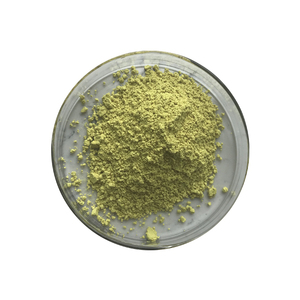
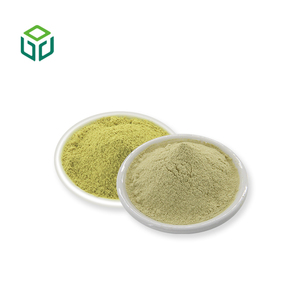
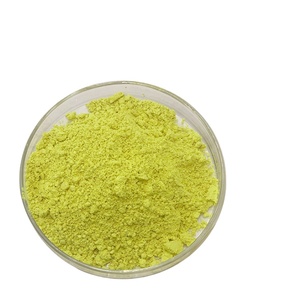
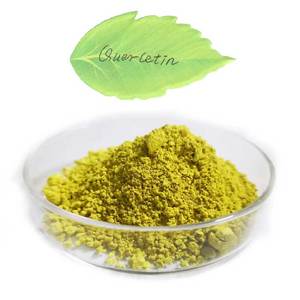
| Physical Appearance | Fine Yellow Powder | Bright Yellow Powder | Light Yellow Granular | Brownish-Yellow Powder |
| Loss on Drying (LOD) | 10.0% – 12.0% | ≤ 3.0% | ≤ 5.0% | ≤ 5.0% |
| Bulk Density | 0.35 – 0.50 g/mL | 0.40 – 0.60 g/mL | 0.50 – 0.65 g/mL | 0.45 – 0.55 g/mL |
| Aqueous Solubility | Low (< 0.1 mg/mL) | Very Low (< 0.05 mg/mL) | High Dispersibility | Moderate (Depends on ratio) |
| Primary Target Application | Hard Capsules, Tablets | Pharma Formulations | Softgels, Liquid Elixirs | Functional Beverages |
| Regulatory Compliance | USP / EP Grade | USP / CP Grade | Food Grade / NDI | Nutraceutical Grade |
Utilizing clean-technology isolation pathways to guarantee maximum bio-activity retention and zero toxic chemical residue.
Operates at ambient temperatures using liquid carbon dioxide as a solvent-free extraction medium, ideal for lipid-soluble monomers, volatile terpenes, and heat-sensitive phytosterols.
Employs sunflower or non-GMO soy phosphatidylcholine to coat hydrophobic Quercetin molecules in lipid bilayers, exponentially enhancing intestinal membrane absorption.
Utilizes selective macroporous resin adsorption columns to achieve targeted flavonoid isolation up to 99% purity, systematically eliminating trace impurities and heavy metals.
Converts purified liquid concentrates into free-flowing, uniform mesh powders without thermal degradation, preserving molecular bio-activity and natural pigment fidelity.
As the global botanical extract market shifts toward tighter regulatory frameworks and heightened consumer scrutiny, procurement strategies among major dietary supplement brands are undergoing structural evolution. B2B buyers can no longer rely solely on spot-market pricing; long-term vendor stability hinges on four macroeconomic procurement trends:
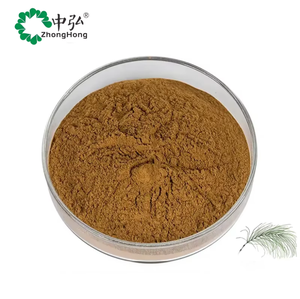
While standard Quercetin Dihydrate remains a cornerstone raw material, functional supplement brands are rapidly introducing advanced derivative matrices. Incorporating Wild Horsetail Herb Extract (Equisetum arvense)—rich in organic silica—alongside Quercetin creates synergistic formulas targeted at bone mineral density and collagen structural integrity. Furthermore, combining Quercetin with Vitamin C or Bromelain prevents premature oxidation and optimizes cellular ionophore transport.
With the European Commission updating its maximum residue limits (MRLs) for ethylene oxide (ETO), pyrrolizidine alkaloids (PAs), and heavy metals (Lead, Cadmium, Arsenic, Mercury), leading manufacturers must enforce stringent raw batch testing. Every drum of extract supplied by RAAG Biotech undergoes comprehensive ICP-MS heavy metal screening (Pb < 1.0 ppm, As < 1.0 ppm, Cd < 0.1 ppm, Hg < 0.1 ppm) and multi-residue pesticide screen covering over 400 compounds in compliance with the European Pharmacopoeia (EP 10.0).
Modern consumers demand absolute clean-label transparency. Buyers require 100% botanical origin statements, solvent residue compliance under EP/USP limits (Ethanol residual < 5,000 ppm, Methanol residual < 50 ppm), allergen-free assurances, and non-irradiation certificates. Synthetic substitutes or chemically spiked adulterants are completely excluded through rigorous HPLC-DAD fingerprinting and stable carbon isotope ratios verification.
RAAG Biotech Co., Ltd. is a modern high-tech enterprise dedicated to the R&D, extraction, and global distribution of active botanical ingredients. Our manufacturing facility in Shaanxi operates cleanroom suites built to strict cGMP standards.
Every batch of bulk plant extract shipped overseas carries a comprehensive quality release file comprising:
Expert answers covering technical specifications, ordering logistics, quality assurance, and custom processing capabilities.
Quercetin Dihydrate contains two bound water molecules in its crystalline lattice, typically yielding a Loss on Drying (LOD) of 10% to 12%. It is the standard cost-effective form for hard shell capsules and tablets. Quercetin Anhydrous has had its hydration water removed through controlled vacuum drying, resulting in an LOD below 3.0% and an active assay of ≥98.0%. Anhydrous is preferred for moisture-sensitive formulations, softgel oil suspensions, and pharmaceutical applications.
Native Quercetin aglycone possesses extremely low aqueous solubility and poor lipophilicity, limiting intestinal epithelial absorption. Liposomal encapsulation coats the fine Quercetin particles within phospholipid bilayer spheres. This protects the active flavonoid from gastrointestinal enzymatic degradation and allows direct absorption via the lymphatic pathway, increasing systemic plasma concentrations by up to 20 times compared to unencapsulated powder.
We primarily utilize High-Performance Liquid Chromatography paired with Diode-Array Detection (HPLC-DAD) against USP/EP reference standards. HPLC assay provides true quantitative analysis of Quercetin aglycone without interference from related glycosides (like Rutin or Isoquercitrin). Additionally, UV-Vis spectrophotometry is available for baseline batch testing upon buyer request.
Our standard Minimum Order Quantity for commercial orders is 25 kg (supplied in sealed fiber drums with double polyethylene inner bags). For pilot tests, trial batches, and R&D formulation verification, we offer standard 1 kg orders as well as complimentary 10g–50g laboratory sample packs accompanied by batch-specific COAs.
Yes. Our processing lines include air-jet micro-milling and wet-granulation technology. We can produce ultra-fine 200-mesh powders for smooth suspension mixing, or direct-compression (DC grade) free-flowing granules suitable for high-speed tablet presses without additional binders.
Every commercial shipment includes a full export documentation bundle: Commercial Invoice, Packing List, Bill of Lading / Airway Bill, Certificate of Origin (Form E or CO), Batch COA, MSDS, Specification Sheet, Allergen Declaration, Non-GMO Certificate, and BSE/TSE Free Statement. We also provide technical dossier files to assist with local regulatory registration (FDA NDI, EU Novel Food filing, etc.).
Looking for a reliable supply of standardized Quercetin, high-purity plant monomers, or custom liposomal botanical ingredients? Request a quote, technical specification sheet, or free sample from our technical export team.
Send an Inquiry