
Technical Whitepaper: Pure Monomer Extraction Chemistry and Application Engineering for the US Market
In the rapidly evolving landscape of North American dietary supplements, functional foods, and nutraceutical therapeutics, raw ingredient standardisation has undergone a fundamental shift. Formulators are transitioning away from crude, ratio-based botanical powders toward highly characterized, high-purity **pure monomers** and liposomal matrix-encapsulated actives. As a premier CE Certified Pure Monomer Manufacturer & Supplier serving the United States market, RAAG Biotech Co., Ltd. delivers the precise phytochemical controls, physical particle engineering, and regulatory dossier support required by contract manufacturers and brand owners across the US.
Key Takeaway for US Procurement & Formulators
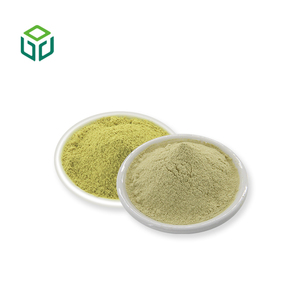
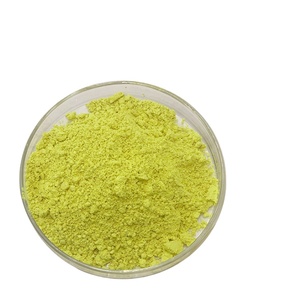
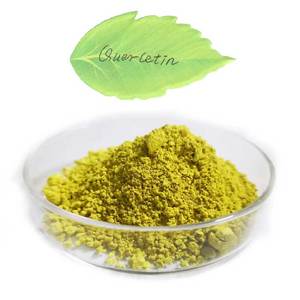
Pure monomer polyphenols such as Quercetin (3,3',4',5,7-pentahydroxyflavone) require strict polymorphic control during isolation. The balance between Anhydrous (CAS 117-39-5) and Dihydrate crystalline forms directly dictates dissolution kinetics, bioavailability, and mechanical behavior during high-speed capsule filling.
1. Botanical Sourcing and Chromatographic Monomer Isolation
The industrial extraction of high-purity Quercetin begins with raw material selection. While Quercetin occurs natively across various flora—including Equisetum arvense (Horsetail) and Allium cepa (Onion skin)—the commercial benchmark for high-yield, pure monomer isolation is the un-opened flower bud of Sophora Japonica L. (Japanese Sophora / Huai Mi). Sophora buds contain up to 20% to 30% naturally occurring Rutin (Quercetin-3-O-rutinoside), providing an ideal glycoside precursor for enzymatic hydrolysis and catalytic conversion into pure Quercetin aglycone.
At RAAG Biotech's GMP-audited processing facilities in Xi'an, China, the extraction process follows a rigorous, SOP-controlled multi-stage refinery:
- Hydro-Alcoholic Extraction: Raw botanical buds are extracted using optimized food-grade ethanol and aqueous solvent systems under controlled reflux temperatures to preserve active flavonoid ring structures.
- Acid-Catalyzed Acidolysis / Glycoside Cleavage: Rutin is cleaved under precisely monitored pH and thermal parameters to yield raw Quercetin aglycone precipitate, removing the rutinoside disaccharide chain.
- Preparative Column Chromatography: The crude precipitate undergoes preparative column chromatography utilizing macroporous adsorption resins. This isolates the target 3,3',4',5,7-pentahydroxyflavone monomer from structural isomers, Kaempferol traces, and related botanical tannins.
- Recrystallization & Polymorphic Control: Controlled crystallization steps dictate whether the resulting monomer forms pure Quercetin Dihydrate or Quercetin Anhydrous, controlling moisture content from < 0.5% (Anhydrous) to 9.0–12.0% (Dihydrate).
2. Comparative Specification Matrix: Quercetin Active Variants
To assist US product developers in selecting the optimal raw material substrate for specific finished dosage formats, the following comparison details the key analytical parameters of our primary pure monomer grades:
| Parameter / Variant | Quercetin 95% Dihydrate | Quercetin 98% Anhydrous | Liposomal Quercetin 50% | Direct Compression Granular |
|---|---|---|---|---|
| CAS Number | 6151-25-3 | 117-39-5 | 117-39-5 (Encapsulated) | 6151-25-3 / 117-39-5 |
| Assay Method (HPLC) | ≥ 95.0% | ≥ 98.0% | ≥ 50.0% Active Load | 95.0% – 98.0% |
| Moisture Content | 9.0% – 12.0% | ≤ 3.0% (Anhydrous) | ≤ 5.0% | 8.0% – 10.0% |
| Particle Mesh Size | 80 – 100 Mesh Fine | 100 – 120 Mesh Ultra-Fine | Micro-encapsulated (< 200 nm) | 20 – 60 Mesh Free-Flowing |
| Aqueous Solubility | Low (< 0.01 g/L) | Low (< 0.01 g/L) | High Dispersibility | Standard Dissolution |
| Primary US Application | Two-piece Hard Capsules | Moisture-Sensitive Formulations | Softgels, Liquids, RTD Powders | Direct Tableting (No binder) |
3. Addressing Bioavailability Limitations: The Liposomal Quercetin Breakthrough
A primary challenge faced by US brand formulators when developing pure flavonoid supplements is hydrophobic lipophilicity. Standard crystalline Quercetin exhibits poor aqueous solubility and low oral bioavailability, with less than 2% of unformulated powder reaching systemic circulation in vivo. Much of the ingested dose undergoes rapid phase II intestinal glucuronidation and sulfation prior to reaching systemic circulation.
To eliminate this physiological bottleneck, RAAG Biotech engineered Liposomal Quercetin 50% Powder. Utilizing non-GMO sunflower-derived phosphatidylcholine phospholipid bilayers, our micro-encapsulation process creates stable spherical vesicles (average particle size 100nm to 200nm) encapsulating the pure Quercetin monomer core.
Transcellular Lymphatic Uptake
Liposomal vesicles bypass first-pass liver metabolism by absorbing directly through the intestinal lymphatic system via chylomicron pathways, increasing biological plasma half-life.
Gastric Acid Protection
The phospholipid bilayer shields the encapsulated bioflavonoid from gastric degradation in stomach acid (pH 1.5–2.0), ensuring intact delivery to the small intestine absorption site.
Enhanced Formulation Versatility
Enables clean integration into functional RTD beverages, liquid wellness shots, and chewable gummies without sediment fallout or harsh, bitter tannic astringency.
4. Localized US Application Scenarios & Market Intent Drivers
Driven by modern consumer demand for preventative wellness, cellular longevity, and natural immune support, the United States market for Quercetin and botanical monomers has expanded far beyond simple dietary antioxidants. Key localized application verticals in the US include:
- Cellular Senolytics & Longevity Stacks: Quercetin is widely recognized in US clinical longevity research as a potent senolytic agent. Formulators frequently combine our 98% Pure Quercetin Monomer with Fisetin, Resveratrol, Spermidine, and Nicotinamide Mononucleotide (NMN) to target senescent cell clearance and NAD+ cellular preservation.
- Allergy & Histamine Support Formulations: The US seasonal respiratory wellness segment heavily utilizes Quercetin for its mast cell stabilizing properties. It is commonly paired with Vitamin C, Bromelain, and Stinging Nettle Extract to inhibit histamine release.
- Sports Performance & Mitochondrial Biogenesis: US athletic nutrition brands integrate high-purity Quercetin into pre-workout and endurance supplements. Quercetin promotes mitochondrial biogenesis via PGC-1α upregulation, improving VO2 max and reducing exercise-induced oxidative stress.
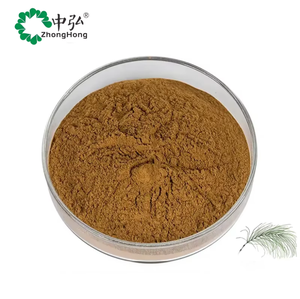
- Bone Strength & Structural Matrix Synergy: Utilizing our specialized Equisetum arvense (Wild Horsetail) extract rich in natural Quercetin bioflavonoids and organic silica, US bone health brands formulate clean-label minerals targeting collagen cross-linking and bone mineral density.
5. US Regulatory Compliance, cGMP, and Quality Verification (E-E-A-T)
Navigating US FDA import compliance requires comprehensive documentation transparency. Under the Foreign Supplier Verification Program (FSVP) and 21 CFR Part 111 cGMP regulations for dietary supplements, importers of record must qualify overseas ingredient suppliers with rigorous scientific data.
RAAG Biotech Co., Ltd. operates as an audit-ready raw material partner. Every commercial batch shipped to US ports (including Los Angeles, Long Beach, New York/New Jersey, and Savannah) is accompanied by a full technical package:
| Testing Category | Analytical Protocol | US Regulatory Reference Limit |
|---|---|---|
| Purity & Active Identification | HPLC-DAD against USP Reference Standard | Conforms to Label Claim (95.0% - 99.0%) |
| Heavy Metal Limits (ICP-MS) | Inductively Coupled Plasma Mass Spectrometry | Lead < 0.5 ppm, Arsenic < 0.5 ppm, Cadmium < 0.5 ppm, Mercury < 0.1 ppm (Prop 65 Compliant) |
| Pesticide Residue Screening | GC-MS/MS & LC-MS/MS Multi-Residue Panel | Fully Compliant with USP <561> (500+ Screened Compounds) |
| Residual Solvents | Headspace GC-FID (USP <467>) | Ethanol < 5,000 ppm; Class 1 & Class 2 Solvents ABSENT |
| Microbial Safety | USP <2021> / <2022> Microbial Enumeration | Total Plate Count < 1,000 cfu/g; Yeast/Mold < 100 cfu/g; Salmonella & E. coli ABSENT |