Direct factory supply of marker-controlled botanical extracts, pure monomers, and bioavailable liposomal complexes optimized for North American compliance.
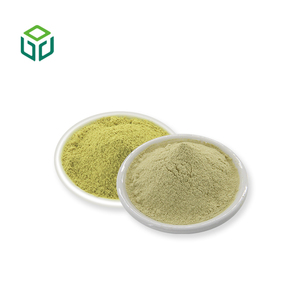
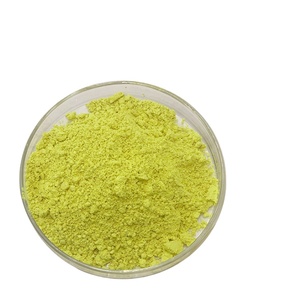
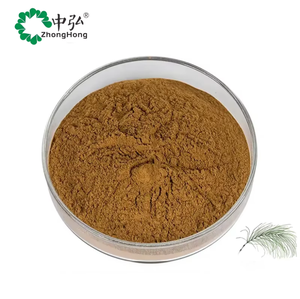
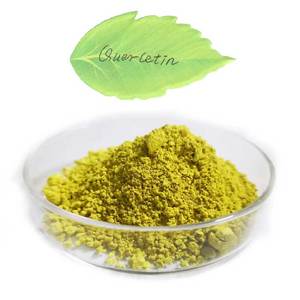
The New York metropolitan area—spanning Manhattan’s biohacking and premium nutraceutical brand headquarters, Long Island’s pharmaceutical manufacturing corridor, and New Jersey’s contract manufacturing plants—represents the most demanding B2B market for standardized plant extracts in North America. Formulators, Chief Scientific Officers (CSOs), and procurement heads in this region face a dual challenge: satisfying consumer demand for high-potency, clean-label plant actives while navigating rigorous regulatory frameworks mandated by the FDA (FSMA/FSVP) and New York State enforcement standards.
Among standardized botanical monomers, Quercetin (CAS 117-39-5) derived from Sophora japonica (Japanese Pagoda Tree flower bud) has emerged as an indispensable raw material. Driven by clinical research into cellular senescence, immune system modulation, respiratory health, and mast-cell stabilization, New York supplement brands are rapidly upgrading their formulations from crude herbal powders to high-purity crystalline monomers and advanced liposomal delivery formats.
This whitepaper provides a comprehensive technical audit of the top 10 herbal extract suppliers serving the New York market, analyzing global manufacturing capabilities, HPLC assay methodologies, supply chain resilience, and the critical information gain parameters required to de-risk B2B ingredient sourcing.
Procurement intent in the New York market varies significantly by borough and industrial zone. Successful ingredient integration requires precise alignment with target finished-product delivery formats:
In Manhattan’s executive wellness hubs and Brooklyn’s artisanal beverage labs, demand centers on Liposomal Quercetin 50% Powder and instant water-soluble flavonoid complexes. Standard quercetin dihydrate exhibits poor aqueous solubility (approximately 0.00215 g/L at 25°C), presenting significant formulation hurdles for Ready-to-Drink (RTD) functional shots and clear stick-packs. Encapsulating quercetin within lipid bilayers (sunflower or soy lecithin phospholipids) increases oral bioavailability by up to 800% and resolves turbidity issues, allowing beverage formulators in Williamsburg and Soho to create clear, shelf-stable longevity elixirs.
Long Island hosts one of the dense clusters of cGMP-certified dietary supplement contract manufacturers (CMOs) in the United States. Here, physical flowability and compression kinetics are paramount. Formulators require Direct Compression (DC) Granular Quercetin 95%–98%. Native crystalline quercetin powder exhibits electrostatic cohesive properties that cause bridging in tablet press hoppers. Direct-compressible micro-granules (20–60 mesh) eliminate the need for wet granulation stages, reducing manufacturing downtime and boosting tablet throughput for high-volume contract orders in Hauppauge and Melville.
Brands catering to natural product channels across the Hudson Valley emphasize non-GMO, solvent-free, and organic-certified botanical profiles. Procurement managers prioritize Supercritical CO2 Botanical Oleoresins and water-extracted Sophora japonica flavonoids with total residual solvent levels tested below USP <467> Option 1 limits. Full batch traceability from field cultivation base to finished drum is mandatory for organic certification compliance under USDA NOP standards.
A data-driven comparison of critical quality metrics, testing parameters, and compliance standards necessary for B2B vendor qualification.
| Evaluation Parameter | RAAG Biotech Co., Ltd. | Standard Trader / Broker | Generic Commodity Supplier |
|---|---|---|---|
| Primary Raw Material | Sophora Japonica (Flavonoid rich 20%+) | Unspecified Botanical Waste | Variable Harvest Origin |
| Assay Methodology | HPLC-DAD (Validated USP/EP) | UV-Vis (Over-reports purity) | Titration / Non-Specific |
| Bioavailability Technology | Liposomal Encapsulation (50% Active) | None (Standard Powder Only) | Crude Extract Granulation |
| Solvent Residue Assurance | Ethanol Only / CO2 (Zero Class 1/2) | Unmonitored Methanol/Acetone | High Residual Hydrocarbons |
| Traceability Level | Field-to-Drum (Lot Code Linked) | Warehouse Batch Level Only | No Origin Records |
| US East Coast Delivery | DDP NY Warehouse (3–5 Days) | FOB Asian Port (30+ Days) | CIF Port (Customs Friction) |
| Documentation Package | COA, MSDS, GMO, Allergen, FSVP File | Basic COA Only | Incomplete Specification Sheet |
To maintain a competitive edge, procurement teams operating in the New York market must align their purchasing strategies with emerging regulatory and consumer shifts:
Recent legislative proposals in New York State aimed at regulating weight-loss and muscle-building supplements have heightened regulatory scrutiny across all dietary ingredient categories. New York buyers are increasingly auditing their foreign manufacturers under the Foreign Supplier Verification Program (FSVP). Importers of record in NY must verify that international factories operate under standards equivalent to FDA 21 CFR Part 111 (cGMP for Dietary Supplements). Suppliers like RAAG Biotech, equipped with ISO22000, HACCP, HALAL, and KOSHER credentials, provide comprehensive FSVP audit packages including annual third-party facility audits, environmental monitoring logs, and heavy metal heavy-panel screens (Lead < 0.5 ppm, Cadmium < 0.5 ppm, Mercury < 0.1 ppm, Arsenic < 1.5 ppm by ICP-MS).
A critical source of quality discrepancy in the bulk Quercetin market is the testing protocol. Spectrophotometric (UV-Vis) assay methods measure general conjugated double bonds and cannot differentiate pure Quercetin (CAS 117-39-5) from closely related rutin, isoquercitrin, or degradation products. UV testing frequently over-reports assay strength by 3% to 7%. Advanced New York laboratories enforce high-performance liquid chromatography (HPLC-DAD) with certified reference standards. B2B buyers must demand HPLC-validated COAs to guarantee label claim integrity and prevent costly finished-product batch rejections.
Formulation trends across East Coast wellness brands favor multi-target botanical synergies. Combining Sophora japonica extract with Wild Horsetail Herb Extract Powder (rich in natural bio-available silica) supports dual structural collagen synthesis and anti-inflammatory bone matrix protection. Similarly, pairing Quercetin Anhydrous with Bromelain enhances enzymatic intestinal transport. Supplying factories capable of delivering custom dry-blends or micronized mesh powders directly simplifies supply chains for NY manufacturing facilities.
Founded in 2014, RAAG Biotech Co., Ltd. has established itself as an authority in standardized plant extract manufacturing, pure monomer isolation, and liposomal delivery engineering. Operating dedicated production facilities engineered to international GMP standards, RAAG Biotech transforms raw botanical biomass into audit-ready bulk ingredients for clients in over 40 countries.
Direct answers from our compliance, R&D, and international export logistics divisions.
Request technical specifications, full HPLC assay Certificate of Analysis files, or complimentary 10–20g pilot samples directly from our engineering team.
Send an Inquiry